China Delivers First 10,000-ton Fully Electric Smart Container Vessel, Setting Global Record
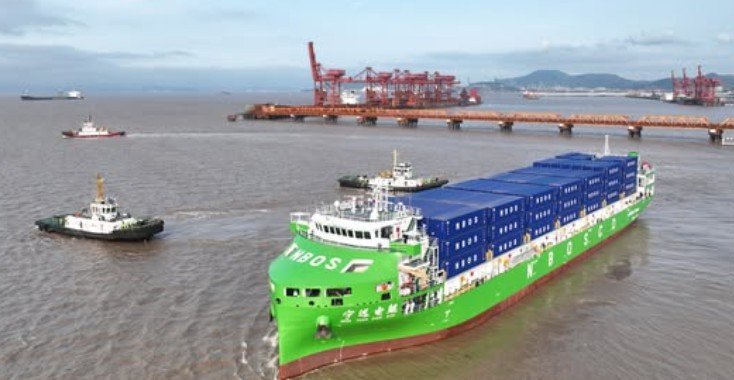
The launch of the world’s largest all-electric container ship marks a major milestone for smart shipping technology, zero emission maritime transport, and green shipping innovation, as China continues to push the boundaries of electric vessel development and intelligent navigation systems. The vessel, named Ningyuan Diankun, has officially entered commercial service, reinforcing the global momentum toward sustainable maritime transport and advanced AI-driven shipping solutions.
Sailing from Ningbo-Zhoushan Port to the Zhapu Port area in Jiaxing, the vessel’s debut highlights the growing role of electric vessel China initiatives in reshaping coastal logistics. With increasing demand for battery powered container ships and coastal electric shipping, the project reflects how intelligent navigation shipping and green propulsion systems are becoming central to modern maritime strategies.
Developed by Ningbo Ocean Shipping Co, the Ningyuan Diankun measures 127.8 meters in length and 21.6 meters in width, with a carrying capacity of 742 standard containers. What truly sets it apart is its fully electric propulsion system. The vessel is powered by 10 standardized battery containers, delivering a total energy storage capacity of approximately 20,000 kilowatt-hours. This is comparable to the combined battery power of around 300 household electric vehicles, underscoring the scale of innovation in sustainable maritime transport.
Operational efficiency is another key achievement. The ship is expected to save around 580 tons of fuel annually while reducing carbon dioxide emissions by more than 1,400 tons. These figures position the vessel as a benchmark for zero emission maritime operations, demonstrating how green shipping innovation can deliver both environmental and economic benefits.
The introduction of the Ningyuan Diankun is aligned with broader industry efforts to accelerate decarbonization. A representative from Ningbo Ocean Shipping described the project as a critical step toward supporting global green transition goals and advancing low-carbon shipping practices. The company itself has made significant progress in this direction, with 57 percent of its fleet categorized as green and energy-efficient vessels, and 34 percent classified as intelligent ships.
The Ningyuan Diankun is not alone in this transformation. Its sister vessel, Ningyuan Dianpeng, is expected to begin trial voyages soon, with full delivery scheduled shortly thereafter. Once both vessels are operational, they will provide scaled-up services on designated coastal routes, further strengthening the role of coastal electric shipping in regional trade networks.
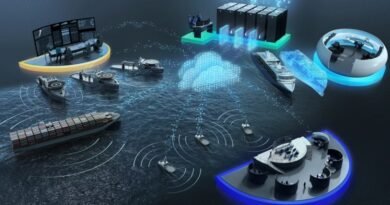
Beyond its environmental credentials, the vessel represents a major leap in smart shipping technology. It is equipped with a fully integrated intelligent platform and advanced engine-room systems, enabling a high degree of automation and operational control. The ship features real-time panoramic monitoring, all-weather visual perception, autonomous route planning, and automatic collision-avoidance systems.
These capabilities allow the vessel to collect and analyze navigation data in real time, calculate optimal routes, and proactively mitigate risks. By reducing reliance on human intervention, the system significantly lowers the likelihood of operational errors. The seamless switching between manual and intelligent navigation modes ensures both flexibility and safety, making it a model for future intelligent navigation shipping systems.
Industry experts see this development as part of a broader technological evolution. Analysts note that China has established a comprehensive industrial ecosystem in new energy technologies, particularly in batteries, electric drives, and motors. These advancements, already widely used in electric vehicles and drones, are now being applied to maritime transport, creating a shared technological foundation for innovation.
However, challenges remain. Battery technology continues to be the primary constraint, particularly in terms of range. While the current generation of electric ships is well-suited for inland waterways and short-haul coastal routes, full electrification of long-distance oceangoing vessels is still limited. Despite this, most other technical barriers have been addressed, making large-scale adoption increasingly feasible.
The significance of electric ships extends beyond replacing traditional fuels. Much like the transformation seen in the automotive sector, the shift toward electric propulsion is expected to drive a broader intelligent upgrade across the shipping industry. This includes the integration of AI in shipping industry operations, enhanced automation, and the development of smarter logistics networks.
Global energy challenges have further accelerated interest in alternative propulsion systems. As more countries explore the potential of zero emission maritime solutions, China’s leadership in both shipbuilding and electrification could play a decisive role in shaping the future of the industry and boosting related exports.
This momentum is supported by national policy initiatives. A recent action plan outlines a roadmap for integrating artificial intelligence with shipping, aiming to create a new generation of smart vessels and operational systems. By 2027, the plan targets the establishment of multiple smart shipping pilot zones, the deployment of over 100 intelligent vessels, and the development of scalable smart shipping scenarios.
Looking ahead to 2030, the vision is even more ambitious. The goal is to achieve full mastery of core technologies and establish a globally competitive model that integrates technology, industry, and governance. This strategic direction underscores the importance of combining green shipping innovation with smart shipping technology to create a more efficient and sustainable maritime future.
The launch of the Ningyuan Diankun is not just a technological achievement—it is a clear signal of where the global shipping industry is heading. As electric vessel China projects continue to expand and evolve, they are setting new standards for sustainability, intelligence, and operational excellence in maritime transport.