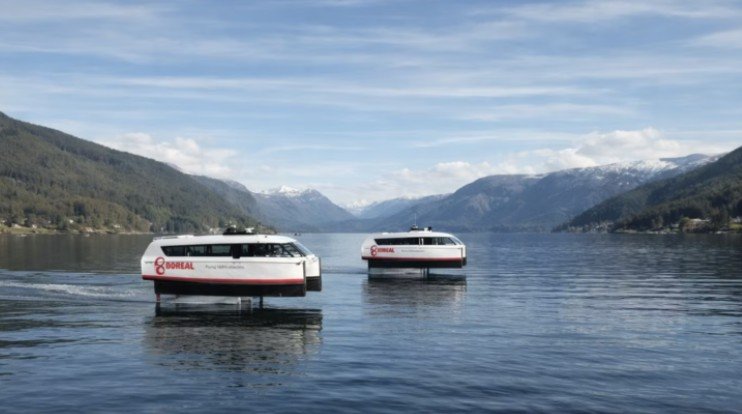
Norway Orders 20 Candela P-12 Electric Hydrofoiling Ferries to Boost Zero-Emission Maritime Transport
Norway is accelerating its clean maritime transition as Boreal AS moves ahead with a major investment in next-generation electric ferries, ordering 20 Candela P-12 electric hydrofoiling ferries from Sweden’s Candela Technology. The development marks a significant step in zero-emission shipping, electric passenger vessels, and sustainable maritime transport, positioning Norway as a global leader in maritime electrification and high-speed electric ferry innovation.
The deployment of these electric hydrofoiling ferries is expected to transform coastal mobility by increasing commuting speeds while reducing emissions across key routes in Norway’s coastal network. The Candela P-12 fleet introduces advanced hydrofoiling technology designed for fast, silent and energy-efficient operation, supporting Norway’s ongoing efforts to expand electric ferries, reduce dependence on diesel vessels, and strengthen sustainable maritime transport infrastructure.
With cruising speeds of 25 knots, the Candela P-12 aims to overcome previous limitations in electric vessel range and speed that have challenged full electrification of ferry operations. The vessels offer a range of around 40 nautical miles, enabling fully electric operations on routes traditionally served by diesel-powered ferries. Once operational from 2027, they are expected to significantly enhance zero-emission high-speed ferry services across both urban and rural waterways.
According to Boreal AS, the Candela P-12 is uniquely capable of combining extended range with high speed without requiring extensive charging infrastructure. The company emphasized that this investment will open new high-speed electric ferry routes and expand opportunities for electrified maritime transport beyond major cities into remote coastal regions.
Norway has already established itself as a pioneer in maritime decarbonization, and this latest order further strengthens its position in global sustainable shipping trends. The vessels have also demonstrated rapid charging capability, with full recharge possible in approximately one hour using standard DC fast-charging systems, improving operational efficiency and turnaround times.
Read:Barbados Advances Green Shipping Initiatives with IMO-Backed Study
Following initial deliveries of two vessels in 2027, the remaining units are scheduled for phased delivery between 2028 and 2030, supporting long-term expansion of electric hydrofoiling ferry networks and reinforcing the shift toward zero-emission maritime transport solutions worldwide.