
UK Approves New Trawling Ban at Beachy Head to Protect Marine Ecosystems
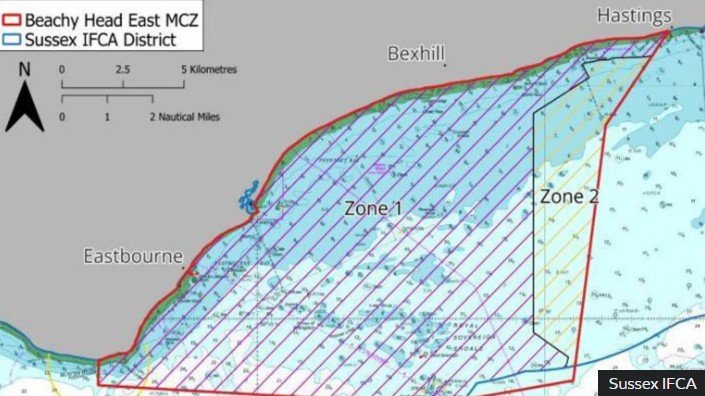
A new marine conservation zone protection measure combined with a strict bottom trawling ban impact strategy and enhanced sustainable fishing policy has been officially approved by the UK government, marking a major step in UK fisheries regulation and seabed protection law. The decision establishes a protected zone of 101 square miles off Beachy Head, aimed at strengthening marine biodiversity conservation while limiting destructive fishing practices.
The newly enforced Sussex coastal fishing ban, aligned with eco-friendly fishing methods and improved fisheries management UK, will safeguard habitats that support species such as short-snouted seahorses and reef-building worms. Authorities emphasize that this marine habitat restoration effort builds on earlier protections introduced five years ago, when bottom-towed gear was restricted across a wider section of Sussex waters.
With the latest law in place, nearly 30% of Sussex inshore waters are now protected from trawling activities. The Sussex Inshore Fisheries and Conservation Authority (IFCA) confirmed that the Beachy Head East Marine Conservation Zone (MCZ) contains vital chalk reef ecosystems that provide essential nursery and feeding grounds for fish species.
Bottom trawling, widely criticized by conservationists, involves dragging heavy nets across the seabed, often leading to damage of fragile marine ecosystems. Under the new regulation, trawls, seines, dredges, and similar gear are prohibited within a 164 sq km zone, although limited trawling will still be permitted in a smaller 28 sq km area where sensitive habitats are not present. Low-impact fishing methods such as pots, nets, and rod-and-line fishing will continue.
Authorities will monitor compliance through patrol operations, focusing on vessel speed and activity patterns to detect illegal trawling. Since earlier restrictions were introduced, enforcement agencies report no major violations.
However, not all stakeholders support the move. Local fishermen, including long-time trawlerman Michael Scott from Newhaven, argue that expanding no-trawl zones could reduce fishing income and question whether the restrictions will significantly increase fish stocks, particularly given seasonal migration patterns.
Despite concerns, conservation groups highlight measurable improvements following earlier restrictions. Research linked to the Sussex Kelp Recovery Project indicates rising populations of species such as lobster, brown crab, angel shark, and short-snouted seahorse in protected areas.
Read:Archaeologists Discover Centuries-Old Shipwrecks in Bay of Gibraltar
The UK government is also reviewing plans to introduce additional bottom trawling bans in Marine Protected Areas across the country, including further sites in Sussex and Kent, signaling a broader shift toward long-term marine ecosystem protection.