How a $500 Million Russian Superyacht Quietly Slipped Through the Blockaded Strait of Hormuz, and Why the World Is Watching
A vessel tied to one of Russia’s wealthiest men made a rare, unexplained passage through one of the world’s most dangerous and contested shipping lanes, raising urgent questions about sanctions enforcement and geopolitical maneuvering in the Middle East.
A passage nobody expected
In a body of water where oil tankers are turning back and military vessels are on permanent alert, a gleaming private superyacht managed to do something almost nobody else has done in months ,pass through the Strait of Hormuz without incident.
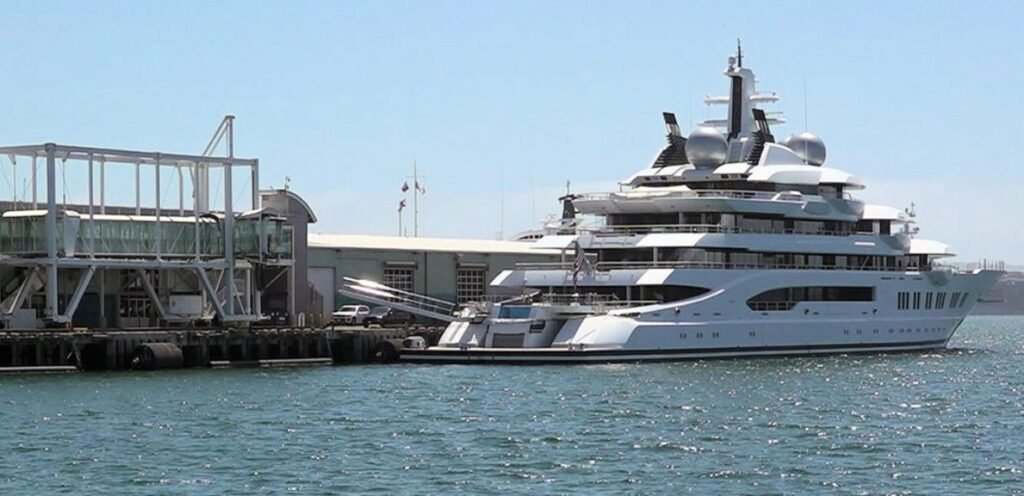
Maritime tracking data confirmed that the Nord , a 464-foot mega-yacht widely estimated to be worth half a billion dollars ,departed Dubai on Friday and crossed through the blockaded strait on Saturday morning local time. By Sunday, the vessel was transmitting its AIS position off Muscat, the capital of Oman, sailing calmly along one of the world’s most militarized coastlines.
Why this matters: The Strait of Hormuz is the world's single most critical chokepoint for global oil shipping. Since late February, Iran has been attacking vessels attempting to transit, while U.S. military assets are turning back Iranian ships and any vessel headed to or from Iranian ports. The Nord's passage cuts through both blockades , unexplained.
Who owns the Nord , and why it’s complicated
The Nord is officially linked to Alexei Mordashov, the controlling shareholder of Russian steel giant Severstal. Bloomberg’s Billionaires Index puts his personal net worth at $29.4 billion, while Forbes values his family’s fortune at approximately $37 billion, making him widely regarded as Russia’s richest individual.
Mordashov doesn’t hold formal title to the vessel, but vessel registration records from 2022 showed the yacht held under a firm registered in his wife’s name , a structure that is common among sanctioned oligarchs seeking to insulate assets from seizure. He is broadly considered the de facto owner by governments, journalists, and investigators alike.
“U.S. authorities have been trying to seize the Nord for years. Watching it sail through a warzone , unimpeded is a significant moment for sanctions enforcement globally.”
With Mordashov placed under sweeping international sanctions following Russia’s invasion of Ukraine, American authorities have actively pursued the yacht. It previously drew global headlines in 2022 when it was spotted docked in Vladivostok, apparently evading Western ports. Now, years later, it’s making headlines again , this time in far more dramatic circumstances.
The Strait of Hormuz: A warzone by any measure
To understand just how remarkable this passage is, consider the current state of the Strait of Hormuz. Iran has been targeting ships attempting to pass since late February, and the U.S. military has established an active blockade, intercepting vessels connected to Iranian ports.
The numbers are stark: before hostilities began, somewhere between 125 and 140 vessels transited the strait daily. According to data from the Center for Strategic and International Studies, just 187 ships made it through in the entire period from March 4 onward , a collapse in traffic that underscores how dangerous the passage has become. Nearly all of those ships were commercial tankers or cargo vessels. Private yachts are essentially unheard of in this environment.
The Nord is believed to be one of the only private leisure vessels to have approached the strait during the current conflict , and the only one confirmed to have crossed it.
Russia, Iran, and a geopolitical backdrop
The timing of the passage is hard to ignore. Russia and Iran are close strategic allies, and both nations have been in intensive diplomatic dialogue since the U.S. and Israel launched their military campaign against Tehran. On Monday , just days after the Nord’s transit ,Russian President Vladimir Putin personally offered to mediate in the conflict during a high-profile meeting with Iran’s Foreign Minister Abbas Araghchi in St. Petersburg.
How the Nord obtained clearance to cross the blockaded strait remains entirely unexplained. No official statement has been issued by Russian, Iranian, or American authorities. Severstal did not respond to requests for comment.
The passage will inevitably fuel speculation about whether the yacht’s safe transit reflects the depth of the Russia-Iran relationship ,and whether that relationship can be leveraged by Moscow as a geopolitical asset.
What the Nord actually is
Built by the prestigious German shipyard Lürssen , the same firm behind some of the world’s largest and most sophisticated private vessels ,the Nord represents the pinnacle of superyacht engineering. The ship can accommodate up to 36 guests and carries a crew to match the scale of a small luxury hotel.
Read:Strait of Hormuz Seizures Trigger Global Maritime Alarm as Iran Escalates Naval Operations
It ranks as the 12th-largest superyacht in the world ,a floating compound that stretches the length of nearly one and a half American football fields.