India and New Zealand Sign Free Trade Agreement in 2026 ,Opening New Maritime Routes Across the Indo-Pacific
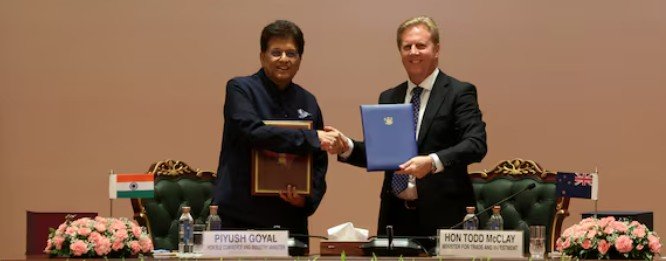
A major step forward in international trade and maritime cooperation has been achieved as India and New Zealand formally signed a comprehensive Free Trade Agreement (FTA) in New Delhi. The agreement is expected to reshape bilateral commerce by lowering trade barriers, enhancing shipping connectivity, and opening new economic opportunities across multiple sectors.
The newly signed FTA reflects a shared commitment to strengthening economic integration between the two nations. By reducing or eliminating tariffs on a wide range of goods, the agreement is set to boost exports and imports, making trade more efficient and cost-effective. Industries such as agriculture, textiles, pharmaceuticals, and machinery are expected to benefit significantly, as both countries gain improved market access.
From a maritime perspective, the agreement is particularly noteworthy. Increased trade volumes will naturally lead to a rise in shipping activity between South Asia and the Pacific region. Ports in both countries are likely to experience higher cargo throughput, creating new opportunities for shipping companies, freight forwarders, and logistics providers. This surge in maritime traffic is also expected to strengthen supply chain resilience and improve regional connectivity.
India’s strategic location along major international shipping routes, combined with New Zealand’s position in the Pacific, makes this partnership highly valuable for global maritime trade. The agreement is likely to encourage the development of new shipping routes and services, reducing transit times and logistics costs. As a result, businesses will be able to move goods more efficiently, enhancing competitiveness in global markets.
Another key aspect of the FTA is its focus on facilitating smoother customs procedures and improving trade logistics. Simplified documentation, digital trade processes, and streamlined port operations are expected to reduce delays and enhance efficiency. These measures will not only benefit large-scale exporters but also support small and medium-sized enterprises looking to expand into international markets.
The agreement also emphasizes cooperation in areas such as sustainable trade and environmental standards. With growing global attention on green shipping and carbon reduction, both countries are expected to explore eco-friendly maritime practices. This could include the adoption of cleaner fuels, energy-efficient vessels, and environmentally responsible port operations, aligning with international sustainability goals.
For New Zealand, the deal provides access to one of the world’s fastest-growing large economies, offering new avenues for exporting agricultural products, dairy, and high-value goods. Meanwhile, India stands to gain from increased investment opportunities, technology exchange, and access to advanced agricultural and industrial practices.
The FTA is also expected to strengthen diplomatic and strategic relations between the two nations. Beyond trade, it opens the door for collaboration in areas such as maritime security, blue economy initiatives, and regional stability. Enhanced cooperation in these fields can contribute to safer sea lanes and more secure international shipping operations.
Experts believe that this agreement could serve as a model for future trade partnerships in the Indo-Pacific region. As global trade dynamics continue to evolve, such bilateral agreements play a crucial role in maintaining economic growth and stability. By fostering closer ties between India and New Zealand, the FTA contributes to a more interconnected and resilient global trade network.
In the long term, the success of this agreement will depend on effective implementation and continuous cooperation between the two countries. If executed efficiently, it has the potential to significantly boost trade volumes, create jobs, and drive economic growth on both sides.
Overall, the India–New Zealand Free Trade Agreement marks a transformative moment in international commerce. With its strong focus on trade facilitation, maritime expansion, and economic collaboration, the deal is set to deliver lasting benefits and reinforce the importance of strategic partnerships in today’s globalized economy.
Related: