IMO Approves Landmark Guidelines to Combat Maritime Fraud and Flag Misuse in Global Shipping
International Maritime Organization takes decisive action to close critical regulatory gaps threatening maritime security and seafarer safety worldwide
The International Maritime Organization’s Legal Committee has officially approved a groundbreaking set of international guidelines designed to combat maritime fraud, prevent fraudulent ship registrations, and eliminate the misuse of national flags by criminal networks , marking one of the most significant regulatory developments in global shipping law in recent years.
The newly approved guidelines address a long-standing and dangerous gap in international maritime law, as no binding global framework currently exists to regulate ship registration procedures across flag States.
Why These Guidelines Matter for Global Shipping
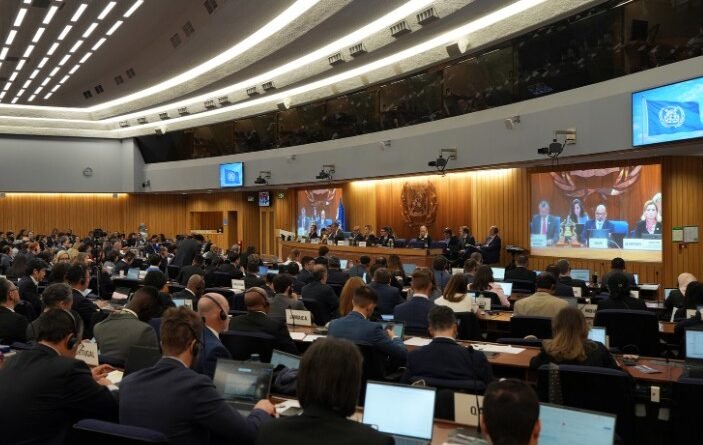
The IMO Legal Committee’s decision, reached during its 113th session in London from April 13–17, delivers a practical framework that flag State ship registries , both new and established , can immediately adopt to strengthen verification processes, ensure accurate vessel ownership records, and improve oversight of ship registration procedures.
IMO Secretary-General Arsenio Dominguez called it a watershed moment for the industry.
“This is a welcome step towards ensuring due diligence in ship registration systems for the benefit of safety, protection of the marine environment and the well-being of seafarers, essential for the safety and security of international shipping. The Guidelines will also aid in eliminating cases of fraudulent registration,” he said.
529 Ships Caught Flying False Flags ,The Scale of Maritime Fraud Revealed
The scale of the problem is alarming. The Legal Committee confirmed that the number of vessels flying false flags has risen sharply since its previous session in 2025, with 529 ships fraudulently flying the flag of a country over the past year alone. Nearly 40 IMO Member States discovered their national flags had been illegally used by criminal organizations , entirely without their knowledge or consent.
The new guidelines directly target this crisis by focusing on five core areas:
- Legislative governance over who is authorized to perform ship registrations
- Quality assurance procedures for the registration process
- Ownership due diligence and ship identification verification
- Ship identity and eligibility checks
- Information sharing between flag States and international bodies
Strait of Hormuz: IMO Condemns Iran’s Threats to International Shipping
In a strongly worded declaration, the Legal Committee condemned threats and attacks against commercial vessels operating in the Arabian Sea, Sea of Oman, and Gulf Region , particularly in and around the strategically critical Strait of Hormuz, one of the world’s most important shipping lanes through which nearly 20% of global oil trade passes.
The Committee specifically condemned the Islamic Republic of Iran’s threats related to mine-laying in and around the Strait of Hormuz, its reported toll system imposed on passing vessels, and discriminatory measures against international shipping ,all of which were declared contrary to IMO’s founding purposes and international maritime law.
The Committee reaffirmed that Iran’s actions violate the universally recognized right of transit passage through the Strait of Hormuz, which must remain open and unimpeded under international law.
Seafarer Abandonment Hits Record Levels , Over 6,000 Crew Members Affected
In what delegates described as deeply alarming, the Committee revealed that seafarer abandonment cases reached a record-breaking high in 2025, with 410 new cases reported between January and December , affecting more than 6,000 seafarers globally. These figures surpass all previously recorded annual totals.
Compounding the crisis, a further 103 abandonment cases have already been logged in just the first months of 2026, signaling the situation continues to deteriorate.
In 185 of the reported cases, no obligatory financial guarantee was in place ,leaving abandoned crew members with no legal safety net.
The Committee urged all Member States to ratify the Maritime Labour Convention 2006 and apply the 2022 joint ILO/IMO Guidelines on seafarer abandonment. It also called for the creation of a clear step-by-step Standard Operating Procedure with defined timelines, so port, coastal, and flag State authorities can act swiftly when abandonment cases emerge.
New Liability Framework Needed for Alternative Fuel Ships
As the global maritime industry accelerates its shift toward alternative fuels ,including LNG, ammonia, methanol, and hydrogen , the Legal Committee acknowledged a critical legal gap: existing international liability and compensation regimes do not adequately cover incidents involving these emerging fuel types.
The Committee agreed that a dedicated liability regime must be developed ,or existing ones amended , to ensure vessels powered by alternative fuels are fully covered under international maritime law. A correspondence group has been established to advance this work ahead of the next session.
What This Means for the Future of International Shipping
These decisions collectively signal a new era of maritime governance, with the IMO stepping up to address fraud, seafarer rights, geopolitical threats to shipping lanes, and the legal challenges of decarbonization , all at once.
For shipowners, operators, insurers, and maritime lawyers worldwide, staying ahead of these regulatory shifts is no longer optional. It is essential.
Follow us for the latest IMO regulatory updates, maritime law developments, and global shipping news.