UK Secures £3.7 Billion Gulf Trade Deal with GCC States, Boosting Exports, Maritime Trade and Investment
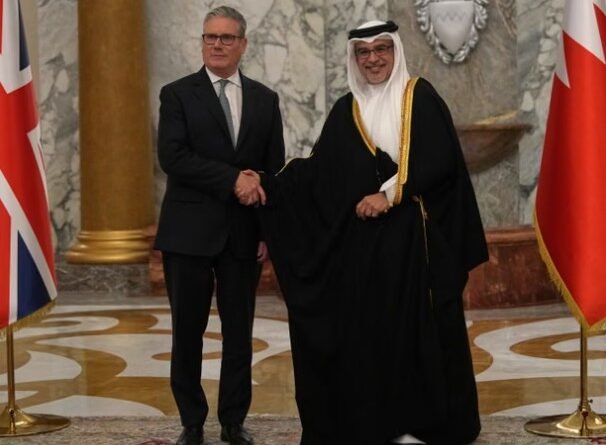
The UK government has finalized a landmark £3.7 billion trade agreement with six Gulf nations, marking one of Britain’s most significant post-Brexit trade deals and opening major opportunities for exporters, maritime trade, logistics, defence, aerospace, food, and luxury automotive industries.
British Prime Minister Keir Starmer described the agreement as a major victory for British businesses and workers after four years of negotiations led by successive UK governments.
The agreement was signed with members of the Gulf Cooperation Council, including Saudi Arabia, Kuwait, Oman, Qatar, United Arab Emirates and Bahrain.
Under the new UK-GCC trade framework, tariffs will be eliminated on 93% of British goods exported to the Gulf region. The agreement is expected to significantly strengthen bilateral trade flows, supply chain connectivity, port-linked commerce, and foreign investment between the UK and Gulf economies.
Key export sectors expected to benefit include food products, medical equipment, defence systems, aerospace technology, advanced manufacturing, hospitality, financial services, construction, energy, education, and digital technology.
Previously, UK exporters entering GCC markets faced a standard 5% tariff, while some goods were taxed even higher. Cheddar cheese carried a 6% tariff, chocolate products faced duties of 15%, biscuits 10%, and automobiles 5%. The new agreement removes tariffs across many of these categories, improving the competitiveness of British exports in Gulf markets.
The deal also includes a major digital trade provision allowing UK firms to store data outside GCC countries for the first time, a move expected to benefit multinational logistics, maritime, fintech, and technology companies operating across the Gulf trade corridor.
According to the UK government, the agreement guarantees improved market access for British services industries, which account for around 80% of the UK economy. Business groups said the deal could generate substantial growth opportunities for companies operating in trade finance, shipping services, infrastructure development, renewable energy, hospitality, and professional services.
The National Farmers’ Union welcomed the agreement, calling it one of the strongest agricultural trade negotiations since Britain left the European Union. The organization said UK negotiators successfully resisted pressure to lower poultry import standards.
The British Chambers of Commerce also praised the agreement, stating that it would create new commercial opportunities for thousands of UK businesses across multiple sectors.
William Bain, Head of Trade Policy at the British Chambers of Commerce, said the agreement has strong potential to expand UK trade presence across the Gulf region and support long-term business growth.
The agreement becomes the third major trade pact secured under Starmer’s government following earlier deals with India and South Korea.
UK Business Secretary Peter Kyle said the agreement positions Britain as the first G7 nation to secure a modern trade partnership with the GCC bloc.
The deal also highlights the growing importance of Gulf investment in the UK economy. Gulf investors already hold stakes in major British assets including Heathrow Airport, partly owned by Qatar-linked investors, and Newcastle United F.C., backed by Saudi investment interests.
However, the agreement has also attracted criticism from human rights organizations and labour groups for not including a dedicated human rights chapter.
The Trade Justice Movement expressed concern over the omission, citing alleged issues including forced labour, discrimination, and restrictions on dissent across parts of the Gulf region.
The Trades Union Congress also described the move as disappointing, while the Bahrain Institute for Rights and Democracy criticized the agreement, saying it could legitimize repression.
Despite criticism, the UK government said political and diplomatic channels remain the preferred route for addressing human rights concerns rather than embedding such provisions directly into the trade framework.
Prime Minister Starmer stated that the agreement would deliver long-term economic benefits through increased wages, stronger exports, and broader commercial opportunities for British businesses and workers.