IMO, UNHCR and ICS Launch Revised Rescue Guide to Strengthen Maritime Safety and Protect Lives at Sea
The International Maritime Organization, UNHCR, and International Chamber of Shipping have unveiled a revised Rescue at Sea guide aimed at strengthening maritime rescue operations and improving protection for refugees and migrants in distress at sea.
The updated publication, Rescue at Sea: A Guide to Principles and Practice in the Context of Refugee and Migrant Movements, reinforces the humanitarian and legal obligation to rescue people facing danger at sea and ensure their safe disembarkation in accordance with international maritime law. The guide is available in six languages and is intended to support governments, shipowners, shipmasters, insurers, coast guards, navies, and maritime rescue agencies worldwide.
The revised guide was officially launched during an event held on 19 May at the headquarters of the International Maritime Organization in London. The launch comes as global concern continues to grow over fatal migrant and refugee sea crossings across major maritime routes.
Marking the 75th anniversary of the 1951 Refugee Convention, the updated guide highlights the continuing importance of practical protection measures for refugees and migrants rescued at sea. The organizations emphasized that the world’s oceans must remain a humanitarian space where the duty to rescue individuals in distress is upheld without discrimination.
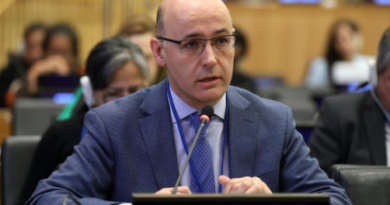
Arsenio Dominguez, Secretary-General of the International Maritime Organization, said there remains an ongoing humanitarian tragedy involving lives lost during unsafe maritime journeys. He acknowledged the efforts of coast guards, naval forces, search-and-rescue agencies, and merchant shipping crews whose operations continue to prevent even greater loss of life. He added that the revised guide provides governments and ship crews with clearer operational direction to ensure international legal obligations are translated into practical rescue actions at sea.
Elizabeth Tan, Director of UNHCR’s Division of International Protection and Solutions, stated that people do not risk dangerous sea crossings unless they are desperately seeking safety and stability. She noted that recurring shipwrecks are preventable and stressed that the revised rescue guide serves as a practical framework for protecting refugees and migrants while supporting states in fulfilling their responsibility to save lives at sea.
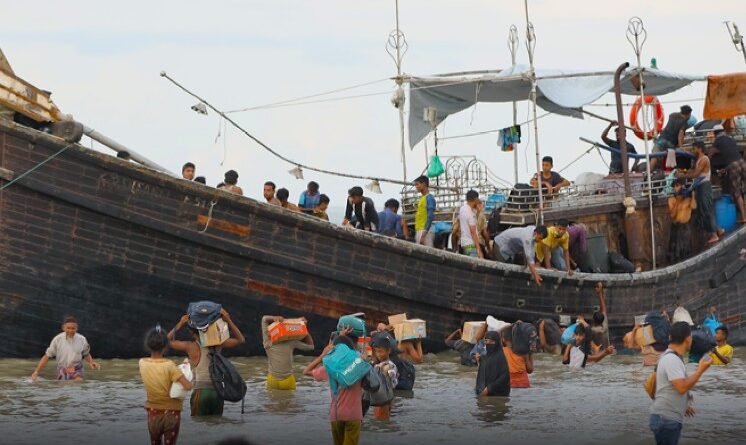
According to data cited by UNHCR, maritime migration routes continued to witness significant casualties in 2025. The Mediterranean Sea remained one of the world’s deadliest migration corridors, with 1,953 people reported dead or missing. In South and South-East Asia, 892 people were reported dead or missing among more than 6,500 Rohingya refugees attempting dangerous sea crossings, making it the world’s highest mortality route for refugee and migrant maritime journeys. The Western Africa Atlantic route also recorded 424 deaths last year.
Building on the 2015 edition, the revised maritime rescue guide offers expanded guidance on legal standards and operational procedures for the prompt rescue and safe disembarkation of people rescued at sea, including protection against refoulement risks. The guide is available in Arabic, Chinese, English, French, Russian, and Spanish.
Thomas A. Kazakos, Secretary General of the International Chamber of Shipping, said the global shipping industry often acts as the first responder during maritime emergencies involving migrants and refugees. He noted that shipmasters and crews regularly go beyond their commercial responsibilities to save lives, and the updated guide provides practical clarity to support safe, predictable, and legally compliant rescue operations while reinforcing shared international responsibility for timely disembarkation.
Source: International Maritime Organization (IMO)