Three Oil and LNG Carriers Leave Strait of Hormuz with Tracking Signals Disabled
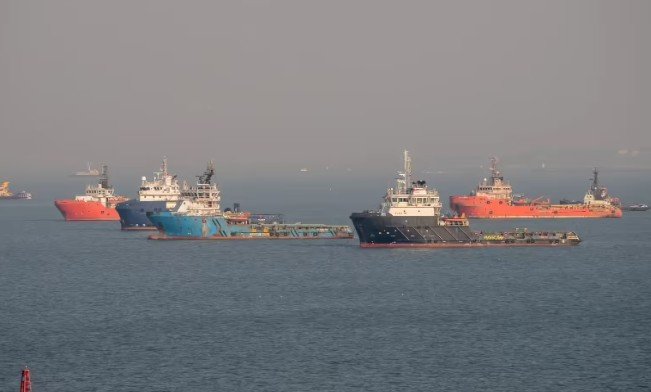
Three major oil and LNG tankers have exited the Strait of Hormuz with their transponders switched off, highlighting mounting security concerns and growing disruption to global maritime trade routes amid the ongoing conflict involving Iran, Israel, and the United States.
According to shipping intelligence data from LSEG and Kpler, two Very Large Crude Carriers (VLCCs) and one liquefied natural gas (LNG) tanker departed the strategic waterway earlier this week while operating without active AIS tracking signals. The vessels are currently sailing toward key Asian energy markets, including China and India.
The VLCC Eagle Veracruz, carrying approximately 2 million barrels of crude oil loaded from Saudi Arabia in late February, is en route to Quanzhou Port in China’s Fujian province. The tanker is expected to arrive on June 16 at the port where Sinochem’s refinery operations are based.
AET Tankers, which owns and manages the Eagle Veracruz, and Chinese energy firm Sinochem did not immediately respond to requests for comment. Industry sources previously indicated that the vessel was among seven ships for which Malaysia had reportedly sought clearance permission from Iranian authorities.
Another VLCC, Nissos Keros, carrying nearly 1.8 million barrels of Das crude loaded from the United Arab Emirates, is expected to arrive at India’s Visakhapatnam Port on June 3. The cargo is destined for the refinery operated by Hindustan Petroleum (HPCL).
Energy trading company Vitol, which chartered the Nissos Keros, and tanker manager Kylades Maritime also did not respond to requests for comment outside business hours.
Kpler shipping data showed that both supertankers exited the Strait of Hormuz on Tuesday. On Wednesday, the Chinese-flagged tanker Hua Lin Wan, operated by Chinese shipping giant COSCO, also departed the strait. The vessel is transporting naphtha cargo loaded from Kuwait in early March and is expected to reach Huizhou Port in Guangdong province on June 12.
Separately, LNG tanker Umm Al Ashtan disappeared from ship-tracking systems after being last observed in ballast condition off the UAE coast on May 1. According to Kpler and LSEG data, the vessel reappeared on May 27 carrying LNG cargo loaded from Das Island and is currently sailing eastward off the coast of Oman, signaling a destination in India.
ADNOC, listed as the vessel manager for Umm Al Ashtan, declined to comment on the tanker’s routing, position, or operational movements, citing company policy.
The ongoing U.S.-Israeli conflict involving Iran, which began on February 28, has significantly disrupted maritime shipping through the Strait of Hormuz , one of the world’s most strategically important energy chokepoints. The narrow passage handles nearly 20 percent of global oil and LNG trade, making it critical for international energy security and tanker shipping operations.
Before the conflict escalated, daily vessel traffic through the Strait of Hormuz averaged between 125 and 140 ship passages. Maritime industry sources estimate that approximately 20,000 seafarers remain stranded aboard hundreds of vessels operating in the Gulf region as security risks continue to intensify.
Read: Gulf Maritime Crisis Deepens as Thousands of Seafarers Remain Stranded near Strait of Hormuz
The growing use of disabled transponders by oil and gas carriers has raised concerns across the global shipping industry regarding vessel safety, maritime transparency, marine insurance exposure, and the stability of international energy supply chains.