
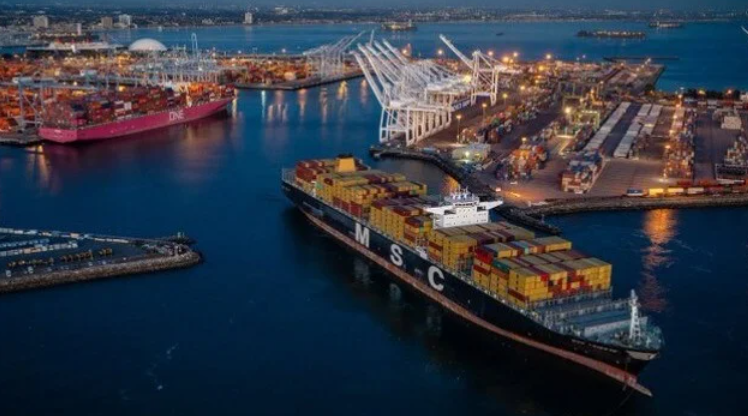
Southern California Ports Surge in May as Cargo Volumes Rebound, Signaling Strength in U.S. Trade and Shipping Sector
The twin ports of Southern California delivered an impressive performance in May, reporting strong cargo growth and reinforcing confidence in the near-term outlook for global shipping, container trade, and supply chain activity.
Both the Port of Los Angeles and the Port of Long Beach recorded significant year-over-year increases in container volumes, recovering from weaker activity seen a year earlier when tariffs and trade-policy uncertainty disrupted cargo flows. Port officials pointed to the resilience of the U.S. economy, strong consumer demand, and optimism surrounding potential reductions in inflation and energy costs linked to ongoing efforts toward a peace agreement with Iran.
Speaking during a media briefing, Port of Los Angeles Executive Director Gene Seroka said the port’s strong May performance demonstrates the adaptability of businesses and the continued strength of American consumers despite an evolving economic environment.
According to Seroka, cargo movement is being driven by a combination of inventory replenishment, concerns over fuel costs, uncertainty surrounding trade policies, and preparations for upcoming retail sales seasons. He noted that many companies are operating with shorter planning cycles while taking advantage of opportunities as they arise.
The Port of Los Angeles handled 840,165 TEUs in May, representing a 17 percent increase compared with the same month last year. Port officials noted that the increase came after trade-policy uncertainty and global supply chain disruptions followed the introduction of reciprocal tariffs by President Donald Trump under the Liberation Day tariff program. Seroka highlighted that the May cargo performance was exceeded only during the extraordinary shipping surge experienced during the pandemic years.
The neighboring Port of Long Beach also reported exceptional growth, recording its third-busiest May on record. The port moved 842,030 TEUs, marking a 31.7 percent increase year over year and narrowly surpassing the Port of Los Angeles to become the busiest U.S. container port during the month.
Read:Port of Long Beach Imports Fall 13% as Trade War and Tariff Uncertainty Impact Cargo Volumes
Import activity remained the primary driver behind the growth. The Port of Los Angeles reported a 26 percent increase in imports compared with May 2025, while volumes also exceeded the port’s five-year average by three percent. However, export activity continued to face challenges, with exports falling 10 percent, marking the sixth decline in the last nine months. Port officials emphasized the ongoing difficulties confronting U.S. exporters and stressed the need for measures to improve export competitiveness.
At the Port of Long Beach, import volumes climbed an impressive 40 percent, while exports also delivered strong results with a nearly 33 percent increase, highlighting broad-based growth across cargo categories.
Through the first five months of 2026, both Southern California ports remain slightly ahead of last year’s pace. Looking ahead, port leaders expect the momentum to continue in the short term. The Port of Los Angeles projects June volumes to exceed 900,000 TEUs, while the Port of Long Beach reports that it remains on track to match the busiest year in its history.
Despite the strong performance, industry observers remain cautious about the second half of the year. The National Retail Federation (NRF) has suggested that retailers may have accelerated import activity and brought forward their peak shipping season by stocking inventory earlier than usual. As a result, NRF forecasts that container volumes may have already reached their peak and could gradually decline during the remainder of 2026.
The latest cargo figures underline the critical role played by Southern California’s gateway ports in global maritime trade. As businesses navigate shifting trade policies, supply chain challenges, and changing economic conditions, the Ports of Los Angeles and Long Beach continue to serve as key indicators of the health of the U.S. shipping, logistics, and international trade sectors.