15 Nations Unite Under Mombasa Declaration to Strengthen Global Fight against Illegal Fishing
A coalition of 15 countries from Africa, Asia, Europe, the Caribbean, and the Pacific has adopted the Mombasa Declaration, a major international initiative aimed at combating illegal, unreported and unregulated (IUU) fishing, a global challenge estimated to cost the world economy up to $50 billion every year.
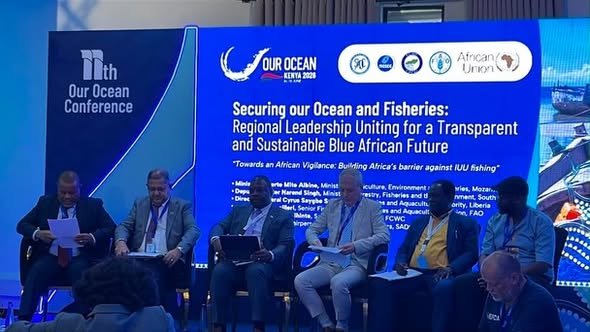
The declaration was adopted during the 11th Our Ocean Conference in Mombasa, Kenya, bringing together governments and maritime stakeholders committed to improving transparency and accountability across the global fisheries sector.
Named after the Kenyan coastal city hosting the conference, the Mombasa Declaration calls for greater access to information related to fishing vessel ownership, licensing, and operations. It also encourages stronger international data-sharing mechanisms to improve vessel monitoring, enhance fisheries enforcement, and support sustainable ocean governance.
Among more than 30 countries represented at the summit, 15 nations formally signed the agreement. The signatories include Belgium, Cameroon, Chile, the Dominican Republic, France, Gambia, Ghana, Guinea, Liberia, Panama, Papua New Guinea, Peru, the Republic of the Congo, Somalia, and South Korea.
The participating governments said the declaration is intended to curb illegal, unreported and unregulated fishing, commonly known as IUU fishing, which continues to threaten marine biodiversity, weaken fisheries management systems, and jeopardize the livelihoods of millions of people dependent on seafood resources.
Ghana’s Fisheries Minister, Emelia Arthur, emphasized the importance of fisheries to her country, noting that more than 60 percent of Ghana’s animal protein intake comes from fish and that approximately 10 percent of the population relies on the fisheries value chain for employment and income.
Arthur described fisheries as a matter of national importance, culture, and security, adding that the declaration provides governments with an opportunity to work collectively toward greater transparency within the global fisheries sector.
Experts warn that illegal fishing disproportionately impacts coastal communities and small-scale fishers, particularly in developing nations. The practice contributes to declining fish stocks, threatens food security, distorts seafood markets, and is often linked to labor abuses, including forced labor and unsafe working conditions aboard fishing vessels.
Read: Global Treaty on Fishing Vessel Safety to Take Effect in 2027
The Mombasa Declaration also reinforces support for the Global Charter for Fisheries Transparency, a framework built around 10 policy principles designed to improve fisheries governance. The charter promotes practical reforms such as modernizing vessel registries, improving fisheries monitoring systems, and publishing fishing authorizations to increase public accountability.
France’s Minister Delegate for the Sea and Fisheries, Catherine Chabaud, highlighted the importance of international cooperation in tackling illegal fishing activities. She stated that greater transparency in vessel ownership, tracking systems, fishing activities, and seafood supply chains is essential to preventing illegal operations from flourishing.
According to Chabaud, stronger access to reliable fisheries data and improved accountability mechanisms will play a crucial role in protecting marine ecosystems and safeguarding communities that depend on ocean resources.
Environmental and conservation organizations welcomed the agreement, describing it as a significant step toward greater transparency across the maritime industry.
Tony Long, Chief Executive Officer of Global Fishing Watch, said illegal fishing has historically thrived due to limited transparency. He noted that when governments commit to sharing information and improving oversight, they create a global network where illegal operators find it increasingly difficult to evade detection.
Beth Lowell, Vice President of Oceana, said the declaration demonstrates growing international willingness to address illegal fishing through cooperation and transparency while promoting a more equitable and sustainable future for the world’s oceans.
The countries that endorsed the Mombasa Declaration are expected to begin implementing their commitments immediately. Additional governments are anticipated to join the initiative ahead of the next Our Ocean Conference in 2027, further strengthening global efforts to combat illegal fishing and protect marine resources for future generations.
As concerns over seafood sustainability, maritime security, and ocean conservation continue to grow, the Mombasa Declaration marks an important milestone in the global campaign to improve fisheries transparency and strengthen the fight against illegal fishing worldwide.