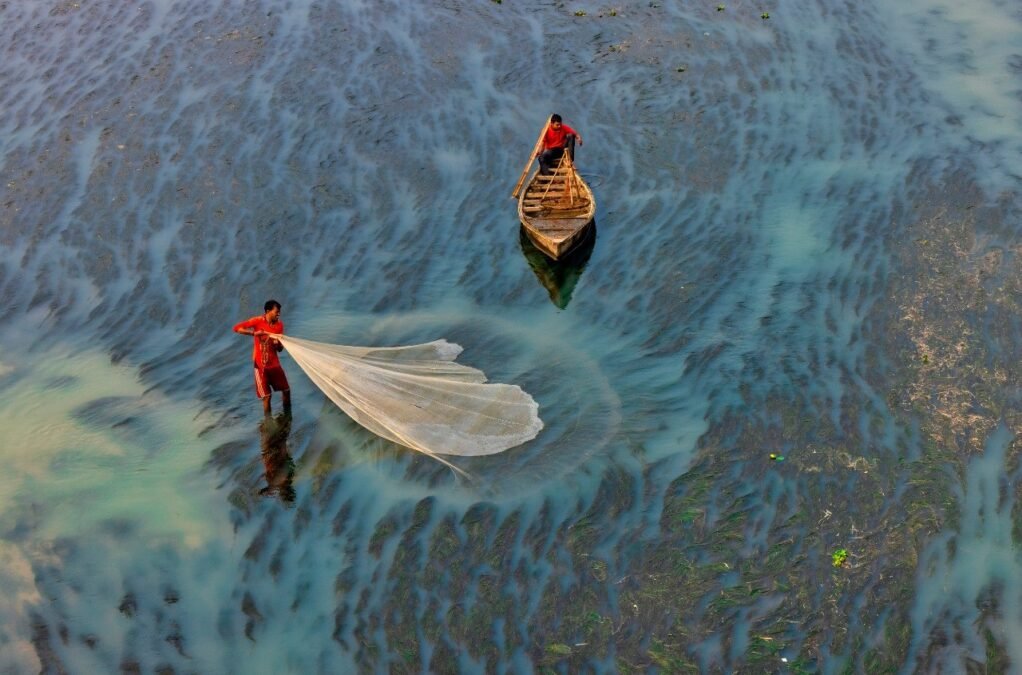
Asia Dominates Global Aquatic Food Production as Aquaculture and Fisheries Sector Expands: FAO
The global aquatic food industry is set for continued growth, with Asia firmly maintaining its position as the world’s leading producer of fish, seafood, and aquaculture products, according to the latest report released by the Food and Agriculture Organization (FAO) of the United Nations.
The 2026 edition of The State of World Fisheries and Aquaculture (SOFIA) Report highlights Asia’s overwhelming dominance in global aquatic food production, accounting for an impressive 76% of worldwide output. The region produced approximately 179 million tonnes of aquatic animals and algae, including nearly 130 million tonnes generated through aquaculture operations.
The report underscores the growing importance of Asia’s fisheries and aquaculture sector in supporting global food security, seafood supply chains, and the rapidly expanding blue economy.
Among the leading aquatic food-producing nations are China, India, Indonesia, Vietnam, and Bangladesh, with China remaining the largest producer globally. China alone contributed 57.6 million tonnes, reinforcing its central role in international seafood production and aquaculture development.
Asia also continues to dominate both inland and marine fisheries. The region accounts for 51% of global inland capture fisheries production and 63% of worldwide marine capture fisheries output, making it the backbone of global seafood harvesting activities.
In marine fisheries, China, Indonesia, India, Vietnam, and Japan remain the top five producers in Asia, collectively contributing 37% of total global marine capture fisheries production. Meanwhile, India, Bangladesh, China, Myanmar, and Indonesia lead inland fisheries production, representing 50% of global inland aquatic animal output.
The report notes that Asia produced 7.8 million tonnes of aquatic animals through inland fisheries in 2024, highlighting the sector’s critical role in supporting nutrition, food security, and millions of livelihoods across rural and coastal communities.
Beyond production, Asia also leads the world in fisheries employment, seafood exports, and fishing fleet capacity. Fisheries and aquaculture activities support approximately 600 million livelihoods worldwide, with 65.3 million people directly employed in the primary sector in 2024. Remarkably, 85% of these workers are based in Asia, demonstrating the region’s significance in the global maritime and seafood economy.
The region is also a major force in international seafood trade, accounting for 34% of the global export value of aquatic animal products, supplying key markets across North America, Europe, the Middle East, and other regions.
Asia further maintains the world’s largest fishing fleet, operating 3.4 million fishing vessels, which represents 72% of the estimated global fleet of 4.7 million vessels.
“Asia’s leadership in aquatic food production reflects decades of investment in aquaculture, innovation and value chains,” said Alue Dohong, Assistant Director-General and Regional Representative of FAO for Asia and the Pacific.
He emphasized that sustaining this leadership will require continued investment in sustainable aquaculture, responsible fisheries management, resilient seafood supply chains, and marine resource conservation to meet rising global demand for aquatic food products.
The findings are based on FAO’s flagship fisheries and aquaculture assessment, which tracks the status of global fish stocks, seafood production trends, employment, trade performance, and food availability across the world’s aquatic food systems.