English Channel Maritime Disasters That Changed Global Shipping Safety and Led to Modern Vessel Traffic Services
A series of devastating ship collisions in the English Channel during 1971 became a defining moment in modern maritime history, ultimately reshaping international shipping safety, vessel traffic management, and collision prevention measures that continue to protect one of the world’s busiest shipping routes today.
According to HM Coastguard, the disasters exposed major weaknesses in navigation, traffic management and communication systems, prompting international reforms that laid the foundation for today’s advanced Vessel Traffic Services (VTS) and mandatory Traffic Separation Schemes (TSS).
Rapid Growth in Shipping Brought New Risks
The early 1970s marked a period of major transformation in global maritime transport. As containerization expanded and larger diesel-powered cargo vessels replaced traditional steam-powered ships, commercial shipping traffic increased significantly across the English Channel.
Despite this rapid growth, navigational technology had not kept pace. Ships relied mainly on paper charts, magnetic compasses and early radio-navigation systems such as the Decca Navigator, decades before the introduction of modern GPS, Automatic Identification System (AIS) technology and integrated vessel traffic monitoring.
The combination of heavier vessel movements and limited navigational capabilities created dangerous conditions in one of the world’s most congested maritime corridors.
The 1971 Collision That Triggered a Maritime Safety Crisis
HM Coastguard recounts that on 11 January 1971, thick fog reduced visibility when the Panamanian tanker Texaco Caribbean, sailing in ballast between the Netherlands and Trinidad, collided with the 12,000-ton Peruvian cargo vessel Paracas after the latter reportedly departed from recommended shipping routes.
The impact caused a massive explosion, spilling more than 600 tonnes of bunker fuel into the sea. Eight crew members lost their lives while 22 others were rescued. Although the damaged Paracas was later towed to Hamburg, the wreck of the Texaco Caribbean remained approximately 13 kilometres off Dover, creating a major navigational hazard.
Successive Shipwrecks Claimed Dozens More Lives
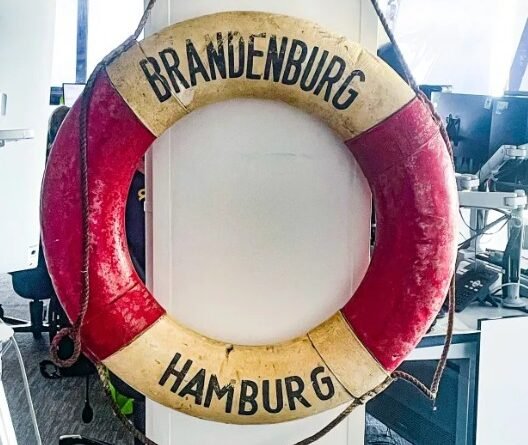
The tragedy deepened just one day later when the German cargo ship Brandenburg struck the partially submerged wreck despite navigational warnings and emergency lighting.
Rescue efforts by the Royal National Lifeboat Institution (RNLI) faced extremely difficult conditions. Fishing vessels managed to save 11 of the ship’s 32 crew members, while seven bodies were recovered and 14 sailors remained missing.
Authorities strengthened wreck marking by deploying additional buoys and a lightship. However, on 27 February 1971, the Greek motor vessel Niki, travelling from Dunkirk to Alexandria, also collided with the wreck site after reportedly ignoring navigational warnings.
Despite extensive rescue operations involving HM Coastguard, the RNLI and the Royal Air Force, all 21 crew members aboard the vessel lost their lives.
The three disasters resulted in 64 maritime fatalities within just four months, while one of the Strait’s largest-ever wreck removal operations continued over the following 18 months using multiple lightships and 14 illuminated navigation buoys.
International Maritime Organization Responded with Major Safety Reforms
The repeated collisions quickly became a matter of urgent public and parliamentary concern in the United Kingdom. Investigations identified deficiencies in wreck marking, radio communications, analogue navigation systems and the absence of coordinated vessel traffic control.
As highlighted by HM Coastguard, these findings prompted the International Maritime Organization (IMO) to accelerate implementation of a mandatory Traffic Separation Scheme (TSS) under the International Convention for the Safety of Life at Sea (SOLAS).
The IMO also strengthened international standards for wreck marking, radar reporting procedures and cross-border cooperation between British and French maritime authorities.
The mandatory Dover Strait Traffic Separation Scheme officially came into force in 1977, jointly managed by HM Coastguard and CROSS Gris-Nez in France.
Modern Vessel Traffic Services Continue to Protect the Dover Strait
Reflecting on the transformation, Keith Bennett, Vessel Traffic Services Manager for HM Coastguard, said Vessel Traffic Services remain a cornerstone of maritime safety for ships navigating the Dover Strait.
He noted that UK and French authorities continuously exchange real-time information on vessel positions, speed, course and compliance with the International Regulations for Preventing Collisions at Sea (COLREGs 1972), ensuring rapid coordination between HM Coastguard and France’s CROSS Gris-Nez.
Today, the Dover Strait is recognized as one of the world’s safest and most closely monitored shipping corridors. Continuous radar surveillance, AIS tracking, coordinated reporting systems and advanced Vessel Traffic Services provide a level of maritime oversight that was unimaginable during the tragic events of 1971.
The story, as documented by HM Coastguard, serves as a lasting reminder that many of today’s international maritime safety standards were forged through lessons learned from one of the darkest chapters in English Channel shipping history.
Related:Op-Ed: Inside the Life of Seafarers Navigating War Zones :Risk at Sea in 2026