Oil Tanker Explosion in Strait of Hormuz Sparks Fresh Maritime Security Concerns
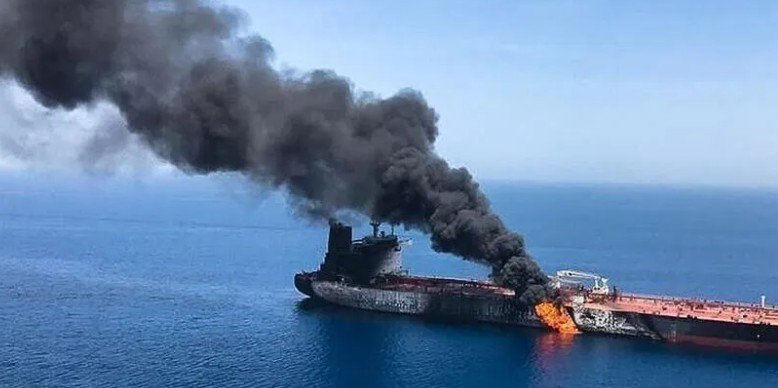
An oil tanker exploded in the Strait of Hormuz on Sunday after reportedly striking a naval mine, marking another security challenge for one of the world’s most critical maritime trade routes. According to Iran’s semi-official Tasnim News Agency, the vessel collided with a naval mine after allegedly leaving a shipping route approved by Iranian authorities.
The incident has raised renewed concerns over maritime security in the Persian Gulf, where the Strait of Hormuz serves as a vital energy corridor for global oil transportation. The narrow waterway handles a significant share of international crude oil and liquefied natural gas shipments, making any disruption a potential risk for global energy markets.
Tasnim reported that the tanker had allegedly deviated from the designated maritime corridor before the explosion. Iranian media described the vessel as a “violating” ship, although authorities have not released details regarding the tanker’s identity, ownership, cargo, destination, damage assessment, or possible casualties.
Naval Mine Incident Adds Pressure on Gulf Shipping Security
The reported oil tanker accident in the Strait of Hormuz comes amid heightened geopolitical tensions in West Asia involving Iran, the United States, and Israel. The region has witnessed increasing concerns over the safety of commercial vessels, shipping lanes, and offshore energy infrastructure.
The Strait of Hormuz remains a strategically important maritime passage connecting the Persian Gulf with the Gulf of Oman and the Arabian Sea. Any disruption to vessel movement through this route could affect international shipping operations, crude oil prices, marine insurance costs, and global supply chains.
Maritime security experts have repeatedly highlighted the risks posed by naval mines, regional conflicts, and military tensions to commercial shipping activities in strategically important waterways.
Iran Reports Temporary Halt in Retaliatory Operations
The tanker explosion occurred as Iran announced a temporary suspension of retaliatory operations against US allies following a pause in American military strikes on Iranian territory.
Iranian Army spokesperson Mohammad Akraminia said Tehran’s military actions had been based on retaliation and that operations were halted after recent US attacks stopped.
“These attacks continued until two nights ago, but over the past two nights the Americans have stopped their attacks,” Akraminia said.
“Since our strategy has essentially been retaliatory, we have also halted our retaliatory operations,” he added.
The development has increased speculation that diplomatic efforts between Tehran and Washington could resume, although military tensions remain elevated across the region.
Global Shipping Industry Monitors Strait of Hormuz Risks
The latest incident follows months of rising military activity affecting commercial shipping routes, regional ports, and maritime infrastructure across West Asia. The Strait of Hormuz has remained at the centre of concerns due to its importance for global energy transportation and international trade.
According to reports cited by CNN, US military operations against Iran are currently on hold, despite warnings from President Donald Trump that further action could be considered if required.
A report by The New York Times stated that US officials were evaluating potential risks linked to expanding military operations, including concerns about defence system supplies and broader economic consequences.
The report also indicated that US Vice President JD Vance and Chairman of the Joint Chiefs of Staff General Dan Caine advised caution during discussions at the White House, highlighting the potential risks of escalating the conflict.
Maritime Security Challenges Threaten Global Energy Supply Chains
The Strait of Hormuz tanker explosion highlights the growing importance of maritime risk management, vessel navigation safety, and international shipping security. With millions of barrels of oil transported through the region daily, any incident involving commercial vessels can have significant implications for global energy markets.
Shipping companies, insurers, and maritime authorities continue to closely monitor developments in the Gulf region as geopolitical tensions create additional challenges for safe navigation and uninterrupted maritime trade.