China Launches First Methanol-Fueled Luxury River Cruise Ship, Advancing Green Maritime Transportation
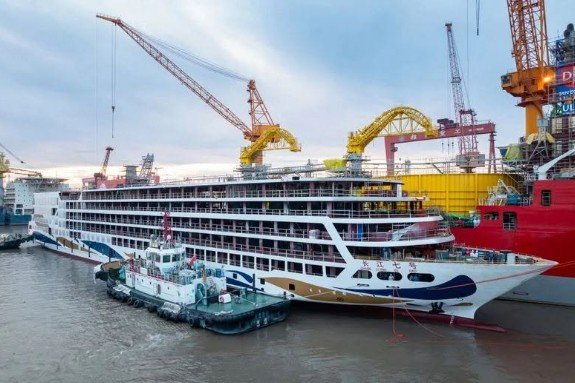
China has launched the Changjiang Qi Hao, the country’s first luxury river cruise ship powered entirely by methanol as a single fuel source, marking a significant step in the development of green shipping technology, sustainable maritime transportation, and low-carbon cruise operations. The vessel was launched on July 6, 2026, at the China Merchants Industry Haimen shipyard, as China accelerates efforts to promote alternative marine fuels and environmentally friendly shipping solutions.
The Changjiang Qi Hao is owned by Chongqing Changjiang Shipping Co., Ltd., a major operator on the Yangtze River and a subsidiary of the China State Shipbuilding Corporation (CSSC)’s Yangtze river shipping operations. The project reflects China’s growing investment in clean energy vessels, maritime innovation, and the future of sustainable inland waterway transport.
Designed by the Wuhan Changjiang Ship Design Institute and constructed by China Merchants Industry Holdings’ Haimen shipbuilding facility, the luxury river cruise ship represents a new generation of methanol-powered vessels aimed at reducing emissions from the cruise and passenger shipping sector. According to project sources, the vessel has a capacity of approximately 17,000 gross tons and can accommodate up to 638 passengers, positioning it among the advanced passenger ships operating on China’s inland waterways.
The methanol-powered cruise ship has been developed for the premium river tourism market along the Chongqing–Yichang–downstream Yangtze River corridor, where demand for luxury river cruises continues to expand. The vessel will compete with established cruise operators, including Century Cruises and Victoria Cruises, as China strengthens its position in the global river cruise industry.
The launch of the Changjiang Qi Hao comes at a time when China’s cruise tourism industry, maritime infrastructure sector, and green shipping initiatives are experiencing renewed growth. The adoption of methanol fuel highlights the country’s commitment to exploring alternative marine fuels that can support carbon reduction targets, energy transition strategies, and sustainable shipping development.
Following the launch, the vessel will undergo further outfitting, sea trials, and final preparations before delivery to Chongqing Changjiang Shipping. After completion, the ship is expected to enter service in the premium Yangtze River cruise market, strengthening China’s luxury inland tourism and maritime transportation network.
Meanwhile, China is also expanding connections between river and ocean cruise operations. The Shanghai Wusongkou International Cruise Terminal is preparing for a planned “river-sea co-berthing” operation in November, where a domestic large cruise ship and the Changjiang San Hao are expected to berth simultaneously. In another development supporting cruise infrastructure growth, the Nantong Langshan International Cruise Port began construction on June 25, aiming to connect inland river tourism with ocean-going cruise routes.
The launch of the Changjiang Qi Hao methanol-fueled luxury cruise ship highlights the increasing role of alternative marine fuels, green maritime technology, sustainable cruise shipping, and China’s shipbuilding industry in shaping the future of global maritime transportation.