Argos Georgia Foundering: 13 Dead as Maritime Safety and Vessel Risk Failures Revealed
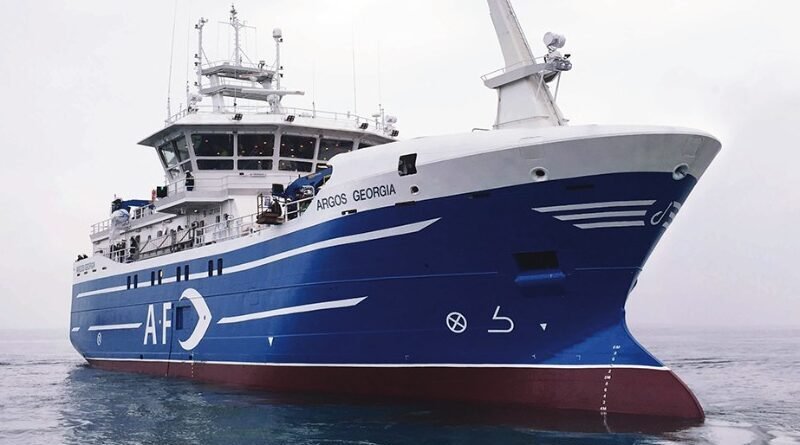
A maritime safety investigation has identified critical vessel flooding, stability and emergency-response failures following the foundering of the longline fishing vessel Argos Georgia, approximately 190 nautical miles east of Port Stanley in the Falkland Islands. The casualty resulted in the deaths of 13 people out of the 27 people on board.
The Argos Georgia, a fishing vessel registered in St Helena, was travelling from Port Stanley to fishing grounds near South Georgia when it foundered. The investigation found that the vessel’s starboard line-hauling hatch opened unexpectedly, allowing significant quantities of water to enter and causing the vessel to list to starboard before eventually foundering.
Hatch Failure Led to Progressive Flooding
The investigation found that the hatch’s manual securing mechanism had likely not been applied. Once the hatch opened, the crew was unable to close it, allowing flooding to continue.
The hatch’s drive mechanism also had an unidentified design weakness. Other factors that contributed to the spread of flooding included open weathertight doors, vulnerable electrical systems and inaccessible manual controls.
Together, these failures undermined the vessel’s ability to contain the incoming water and maintain stability.
Delayed Emergency Response Increased Risk
The investigation identified an unstructured emergency response on board. Delays in declaring distress and abandoning the vessel reduced the time available for rescue.
The evacuation was further complicated by poor control of the abandonment process, extreme conditions and damage to liferafts. These circumstances increased exposure to cold water and contributed to the loss of life.
Safety Management Gaps Identified Ashore
The investigation also identified deficiencies in the company’s safety management arrangements.
The company lacked effective systems for controlling safety-critical risks and for assessing, escalating and responding to emergencies involving flooding, abandonment and distress, particularly during severe weather and operations in remote waters.
The findings underline the importance of effective risk management and documented safety management systems in fishing vessel operations.
Maritime Safety Perspective: Multiple Safety Barriers Failed
The Argos Georgia casualty demonstrates how a failure involving a single critical component can develop into a major maritime emergency when other safety barriers are unable to prevent or control the consequences.
In this case, hatch security, flooding control, watertight integrity, emergency response and abandonment procedures were all relevant to the outcome. For vessels operating in remote waters, reliable safety-critical equipment and clear emergency procedures are particularly important because rescue opportunities may be limited once a serious casualty develops.
The investigation therefore points to the need for stronger integration between vessel design, operational procedures, crew emergency preparedness and shoreside safety management.
Maritime Safety Recommendations
The investigation has made three key recommendations addressing fishing vessel design, safety management and maritime search-and-rescue communications.
Automatic Locking for Shell Doors
The Maritime and Coastguard Agency is recommended to amend Merchant Shipping Notice 1873 (F) — the Code of Practice for the Construction and Safe Operation of Fishing Vessels of 24m Registered Length and Over.
The amendment should include design requirements for shell-door arrangements that, as a minimum, require automatic locking arrangements capable of securing doors in the closed position.
Documented Safety Management System
Argos Froyanes Limited is recommended to implement a documented safety management system across its fishing vessels.
Improved Search-and-Rescue Communications
The Falkland Islands Government, Directorate of Emergency Services and Islands Security is recommended to enhance the Falkland Islands maritime search-and-rescue communications capability.
The aim is to ensure that direct and reliable contact can be established with vessels in distress within the Falkland Islands maritime search-and-rescue area of responsibility.
Maritime Industry Implications
The Argos Georgia investigation highlights the importance of fishing vessel safety, flooding prevention, vessel stability, emergency preparedness and maritime risk management.
Its recommendations focus on strengthening the safety measures that can prevent a technical failure from escalating into a major casualty, while improving the ability of crews and shore-based organisations to respond when an emergency occurs.