Arctic Sea Ice Hits 2026 Minimum, Shipping in Focus
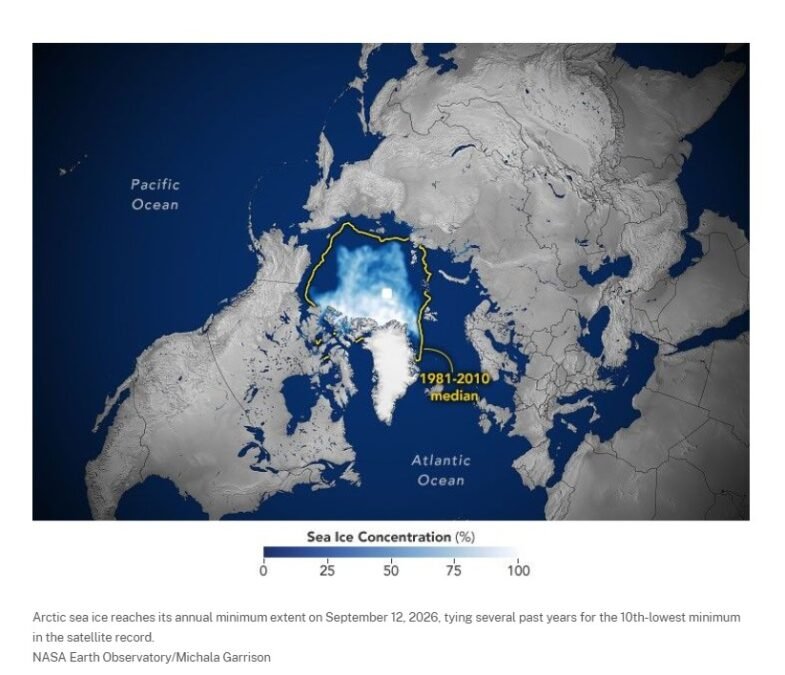
Arctic sea ice reached its annual minimum for 2026 on September 12, highlighting continued changes in the polar region and their growing importance for shipping, navigation and the wider maritime industry.
According to NASA and the National Snow and Ice Data Center (NSIDC), Arctic sea ice covered an estimated 4.6 million square kilometres (1.78 million square miles) at its 2026 minimum. The figure ties 2008, 2010 and 2025 for the 10th-lowest minimum in the satellite record.
Arctic Shipping Routes under Growing Attention
The changing Arctic sea ice conditions are attracting increasing attention from the maritime sector because seasonal ice conditions can influence navigation and vessel operations along northern shipping routes.
One of the most closely watched routes is the Northern Sea Route, which runs along Russia’s Arctic coast and provides a potential maritime connection between the Atlantic and Pacific regions.
Lower seasonal ice coverage can create longer navigation opportunities in some areas. However, Arctic shipping remains challenging because sea-ice conditions can change rapidly, while extreme cold, severe weather, limited infrastructure and the remoteness of the region can create significant operational risks.
For shipping operators, reliable satellite monitoring of sea-ice conditions is therefore important for voyage planning, route assessment and maritime safety.
Ice Thickness also Matters
The extent of sea ice is not the only indicator scientists monitor. The thickness and age of Arctic sea ice are also important.
NASA observations show that the remaining ice has become younger and thinner over time, with a decline in multiyear ice that survives at least one summer melt season. This has left a greater proportion of thinner first-year ice across the Arctic.
These changes can influence how the ice responds to seasonal weather and temperature variations, creating different conditions for Arctic navigation from one year to another.
Implications for the Maritime Industry
Changes in the Arctic environment could create both opportunities and challenges for the maritime industry. Greater seasonal accessibility could support shipping, scientific activity and resource development, while increased vessel traffic could also raise concerns about marine pollution, black carbon emissions, underwater noise and the protection of sensitive Arctic ecosystems.
As interest in polar shipping grows, governments, shipping companies and maritime authorities will need to balance commercial opportunities with environmental protection and navigational safety.

Satellite Monitoring becomes Increasingly Important
Scientists have continuously monitored Arctic sea ice from satellites since late 1978. NASA explains that passive microwave sensors allow researchers to observe sea ice even through clouds, providing a consistent long-term record of changes in Arctic ice cover.
The long-term record shows an overall decline in Arctic sea-ice extent, although weather and natural variability can cause significant differences from one summer to another. NASA notes that the past 20 summers, from 2007 through 2026, are all among the 20 lowest minimum extents in the satellite record.
What It Means for Arctic Shipping
The 2026 Arctic sea-ice minimum highlights how changing polar conditions could influence the future of northern shipping routes. As Arctic navigation develops, accurate satellite data, careful route planning and responsible maritime governance will be essential for safer and more sustainable operations.
Recommended Stories
- New Installations Emerge Near Antelope Reef as China Expands South China Sea Infrastructure
- Inmarsat Maritime Launches Safety Data Hub to Strengthen Maritime Security and Shipping Industry Risk Management
- British Firm Begins Oil Spill Containment Operation for Stricken Tanker off Oman
- Diesel Containers Lost on Antarctic Iceberg Raise Environmental and Marine Insurance Concerns