Marcos Sees China Support for South China Sea Code
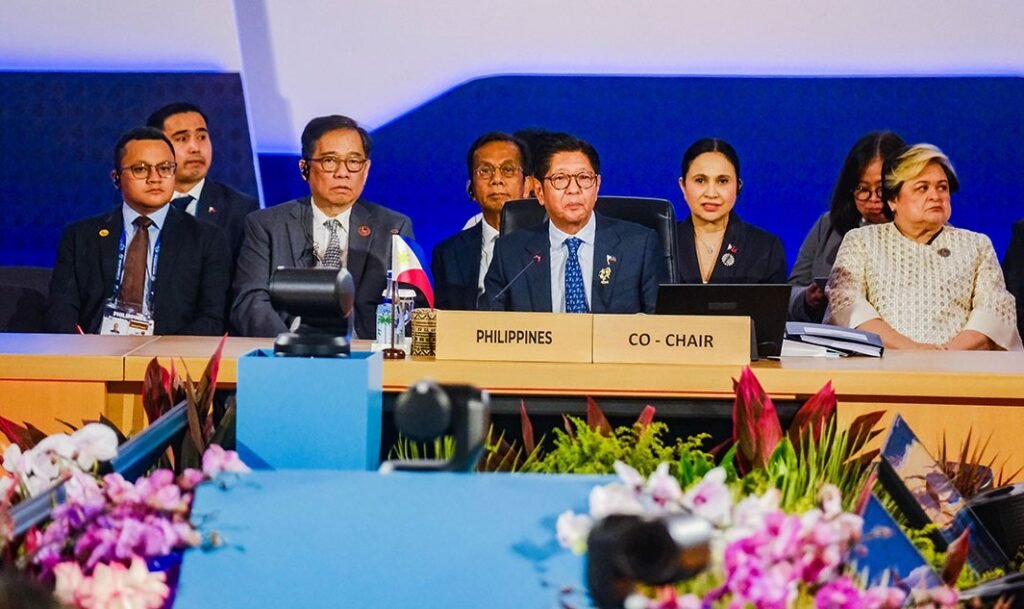
Philippine President Ferdinand Marcos Jr. has expressed confidence that China supports efforts to finalize the long-awaited South China Sea Code of Conduct, raising expectations for progress on a regional maritime security agreement between Beijing and the Association of Southeast Asian Nations (ASEAN). His remarks followed a conversation with Chinese Foreign Minister Wang Yi during the Asia-Pacific Economic Cooperation (APEC) summit in Shenzhen.
ASEAN and China are now expected to continue negotiations in 2027 under Singapore’s chairmanship, after failing to conclude the agreement during the Philippines’ 2026 chairmanship. The proposed code aims to establish common rules for maritime activities, reduce the risk of confrontations and strengthen regional maritime security in the strategically important South China Sea.

Marcos shared his assessment after an informal conversation with Wang during an APEC gala dinner. Speaking to Philippine journalists on November 20, before returning to Manila, he said they had discussed several issues affecting bilateral relations, including ways to ease tensions in the West Philippine Sea and improve cooperation between the two countries.
The Philippine president said the exchange strengthened his belief that Beijing also wanted the proposed agreement finalized. He described China’s approach to the negotiations as encouraging, while acknowledging that further work would be necessary before the agreement could be completed. However, no new agreement or signing deadline emerged from the conversation. Marcos also said he had been unable to hold an extended discussion with Chinese President Xi Jinping because of the host leader’s schedule.
Negotiations made substantial progress during the Philippines’ ASEAN chairmanship, although the agreement remained unfinished. Philippine Foreign Affairs Secretary Maria Theresa Lazaro reported provisional agreement on more than 80 per cent of the draft’s paragraphs. Marcos subsequently estimated on November 17 that approximately 85 to 90 per cent of the negotiations had been completed.
Despite this progress, important provisions remain unresolved. The outstanding discussions include questions surrounding the legal status of the proposed code, particularly whether its provisions will create legally binding obligations for participating countries. Marcos said much of the remaining work involved clarifying definitions and ensuring that all parties shared a common understanding of the proposed rules and standards.
ASEAN and China had targeted 2026 for completing negotiations after agreeing in 2023 to accelerate discussions. However, the agreement was not finalized during the 49th ASEAN Summit in Manila. ASEAN Secretary-General Kao Kim Hourn subsequently identified 2027 as the expected year for concluding negotiations, when Singapore assumes the bloc’s rotating chairmanship.
The proposed maritime security framework is intended to regulate the conduct of countries operating in the South China Sea, where overlapping maritime and territorial claims have complicated regional relations. Its objectives include preventing misunderstandings, reducing the likelihood of incidents escalating into confrontations and encouraging peaceful dispute settlement.
Read:China Urges AI Innovation to Strengthen Maritime Security and Global Shipping
For international shipping and maritime trade, stability in the South China Sea carries considerable strategic importance. Clearer rules governing encounters between vessels and maritime authorities could help reduce operational uncertainty and support safer maritime activities in the region. However, the practical effectiveness of the agreement will depend on its final provisions, consistency with international law and implementation by the participating countries.
Until the new code is finalized and signed, ASEAN and China will continue to follow the 2002 Declaration on the Conduct of Parties in the South China Sea (DOC). The declaration provides a framework for peaceful dispute management and restraint while negotiations continue.
The diplomatic negotiations are taking place against the backdrop of continuing tensions between the Philippines and China in the West Philippine Sea. Manila maintains that its maritime entitlements are protected under the United Nations Convention on the Law of the Sea (UNCLOS).
A landmark arbitral ruling issued on July 12, 2016, found that China’s claims to historic rights within its nine-dash line had no legal basis under UNCLOS. The tribunal also ruled that China had violated Philippine sovereign rights in certain maritime areas, including through interference with fishing and petroleum exploration activities.
The ruling did not determine sovereignty over disputed islands or establish that the entire South China Sea belongs to the Philippines. China rejected the decision and continues to assert its territorial and maritime claims. Manila, meanwhile, maintains that any regional Code of Conduct must comply with international law, particularly UNCLOS, and must not undermine its lawful maritime rights.
With Singapore taking over the ASEAN chairmanship in 2027, the next phase will focus on resolving the outstanding provisions rather than restarting negotiations. Both ASEAN and China have reaffirmed their commitment to pursuing an effective and substantive agreement consistent with international law.
A joint statement issued during the November ASEAN meetings welcomed the progress achieved and reiterated the commitment to completing the code. The remaining negotiations will therefore be critical in determining whether the proposed framework can move beyond political commitments to establish more effective rules for managing maritime encounters.
The central challenge for 2027 will be reaching consensus on the unresolved provisions, particularly the question of legal enforceability. The outcome will have important implications for maritime security, international maritime law and regional stability in the South China Sea.