Bahrain-CENTCOM Maritime Security Talks Signal New Strategy to Protect Shipping through the Strait of Hormuz
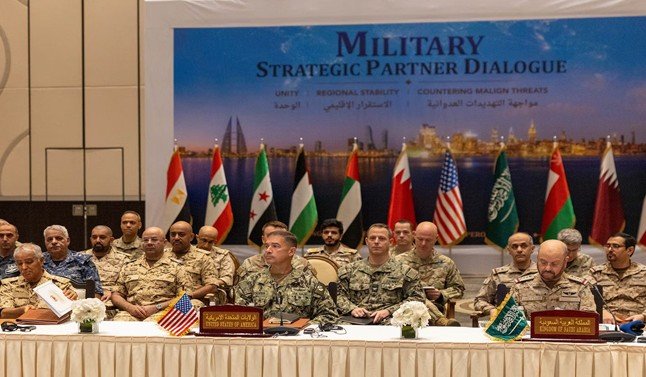
A high-level regional security meeting hosted by the Bahrain Defence Force and led by U.S. Central Command (CENTCOM) on July 1 has reinforced a growing regional commitment to protecting commercial shipping in the Persian Gulf and the Strait of Hormuz, one of the world’s most strategically important maritime chokepoints.
The gathering brought together CENTCOM Commander Admiral Brad Cooper along with military representatives from Egypt, Syria, Lebanon, Yemen and most Gulf Cooperation Council (GCC) member states. While the official discussions focused on regional defence cooperation, the central message was unmistakable: ensuring safe navigation and strengthening collective maritime security has become a shared strategic priority.
For the global maritime industry, the meeting represents more than another military dialogue. It signals a shift toward establishing a permanent regional security framework designed to safeguard international shipping and maintain uninterrupted trade through the Gulf.
Hormuz Crisis Reshaped Global Shipping Risk
Recent tensions surrounding the Strait of Hormuz have demonstrated that even significant naval capabilities alone cannot fully guarantee secure commercial navigation.
The crisis highlighted how the use of drones, naval mines, fast attack craft, electronic warfare and missile threats can rapidly disrupt maritime operations, forcing shipowners, charterers, insurers and energy traders to reassess operational risks.
The impact has extended well beyond security concerns. Vessel movements declined, war-risk insurance premiums increased, freight markets became more volatile, and many operators delayed voyages while monitoring the evolving threat environment.
These developments reinforced the importance of building a more resilient maritime security system rather than relying solely on temporary military deployments.
Permanent Maritime Security Framework Takes Shape
One of the strongest messages emerging from the Bahrain discussions was the transition from crisis management to long-term maritime security planning.
Regional governments increasingly recognize that the Strait of Hormuz will remain the primary gateway connecting Gulf energy producers with global markets. Despite discussions surrounding alternative export routes and pipeline projects, approximately one-fifth of globally traded crude oil, substantial LNG exports and growing petrochemical shipments continue to depend on uninterrupted navigation through the narrow waterway.
Any disruption immediately affects Gulf exporters, Asian refineries, European energy markets, shipping companies and global freight costs, making maritime stability an economic necessity.
Integrated Maritime Domain Awareness Becomes Priority
The Bahrain dialogue placed strong emphasis on expanding Maritime Domain Awareness (MDA) through greater regional coordination.
Rather than relying exclusively on naval patrols, participating countries are expected to strengthen intelligence sharing, satellite monitoring, coastal radar networks, unmanned maritime systems, artificial intelligence-assisted surveillance and real-time information exchange between military authorities and commercial shipping operators.
Lessons learned during the Hormuz crisis have demonstrated that identifying suspicious activities before incidents occur is considerably more effective than responding after attacks take place.
Greater Naval Cooperation Across the Gulf
Although Gulf states have invested heavily in modern naval capabilities, including offshore patrol vessels, corvettes, maritime patrol aircraft, drones and coastal defence systems, participants acknowledged that no single navy can continuously secure the entire Gulf.
The discussions therefore pointed toward deeper operational integration under CENTCOM coordination.
Future cooperation is expected to include joint maritime patrols, shared surveillance responsibilities, standardized escort procedures, coordinated emergency communications and faster multinational responses to emerging maritime threats.
For commercial shipping operators, this increased coordination could improve operational certainty by delivering clearer transit procedures, harmonized reporting systems and more reliable intelligence throughout Gulf waters.
Protecting Critical Maritime Infrastructure
Another major theme during the Bahrain meeting was the protection of critical maritime infrastructure.
Recent regional tensions have demonstrated that modern maritime security extends beyond safeguarding merchant vessels and oil tankers.
Strategic assets including offshore loading terminals, export pipelines, ports, floating storage facilities, subsea communication cables, vessel traffic management systems and energy infrastructure are increasingly viewed as potential targets.
As a result, maritime security planning is expanding to include cybersecurity, infrastructure resilience and protection of the entire maritime logistics network.
Regional planners now recognize that attacks on port control systems or offshore export terminals could disrupt global trade just as severely as attacks on commercial vessels at sea.
Regional Responsibility Continues to Grow
The discussions also reflected a gradual evolution toward greater regional responsibility for Gulf security.
For decades, maritime security in the Gulf has relied heavily on the presence of the U.S. Fifth Fleet based in Bahrain. While American forces will continue to play a central role, Gulf nations are increasingly investing in indigenous capabilities to protect their own economic interests.
Enhanced burden-sharing is expected to strengthen regional resilience while allowing local navies to operate more closely alongside U.S. forces.
For Bahrain, Kuwait, Oman, Saudi Arabia, Qatar, the United Arab Emirates and Iraq, uninterrupted maritime exports remain essential to national economies. Egypt likewise benefits from stable regional shipping and reliable maritime trade routes.
The Bahrain meeting underscored that maritime security is no longer viewed solely as a military issue but as a cornerstone of economic security, global energy stability and international supply chains.
Challenges Remain Despite Stronger Cooperation
Despite growing regional coordination, significant challenges remain.
Iran continues to advocate alternative regional security arrangements and has consistently opposed what it views as excessive external military involvement in Gulf waters.
Meanwhile, the continued availability of asymmetric capabilities,including drones, naval mines and missile systems,means the maritime threat environment is likely to require ongoing vigilance.
The Bahrain discussions therefore emphasized prevention, intelligence sharing and coordinated preparedness rather than reactive military responses.
Commercial Shipping at the Center of Regional Planning
One of the most encouraging outcomes for the maritime sector is the increased recognition that commercial shipping now occupies a central position in regional strategic planning.
Read: Pakistan Navy Takes Command of Combined Maritime Forces’ Task Force 150
Participants acknowledged that stable maritime trade supports not only Gulf economies but also global energy markets and international supply chains.
For shipowners, insurers and energy traders, the effectiveness of these commitments will ultimately be measured through practical results, including higher vessel traffic, lower war-risk insurance premiums, greater operational predictability and the continued absence of major attacks on commercial shipping.
A Potential Turning Point for Gulf Maritime Security
The Bahrain-CENTCOM dialogue suggests that Gulf maritime security is gradually evolving from short-term coalition responses into a more institutionalized framework built on regional ownership, multinational naval cooperation and integrated maritime domain awareness.
While the Strait of Hormuz is expected to remain one of the world’s most sensitive maritime chokepoints, the conference indicates growing regional recognition that protecting commercial shipping is fundamental to economic stability, global energy security and international maritime trade.
If the commitments announced during the Bahrain talks are successfully implemented, the meeting could mark the beginning of a new chapter in maritime security across the Persian Gulf.