
BIMCO Flags Dry Bulk Shipping Safety Risks from Fires and Fumigation
The BIMCO Dry Bulk Cargo Network has highlighted three critical challenges affecting commercial shipping safety: fires involving contaminated scrap metal cargoes, the transfer of fumigation responsibilities to ship crews, and continuing fatalities in enclosed spaces. The discussions focused on improving cargo documentation, strengthening charter party agreements and implementing practical measures to protect seafarers.
At its eighth meeting, held on 8 October 2026, network members examined how clearer cargo classification, effective risk management and stronger operational procedures could improve maritime safety and shipping risk management. The discussions also identified gaps in incident reporting, crew training and the implementation of established safety guidance.

Scrap Metal Cargoes Raise Fire Safety Concerns
The carriage of scrap metal was revisited following discussions at the network’s sixth meeting in early 2025. Members had previously questioned whether the relevant schedule in the International Maritime Solid Bulk Cargoes (IMSBC) Code adequately addresses different types of scrap and contamination from plastics, tyres, oils and other combustible materials.
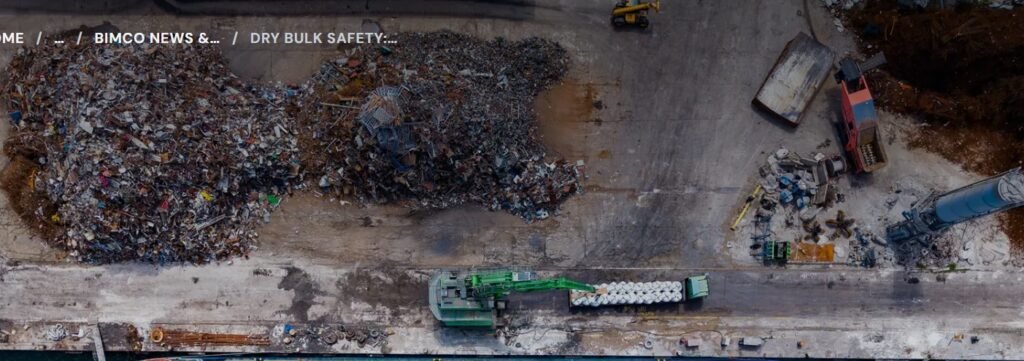
Scrap metal can undergo self-heating and oxidation, increasing the risk of fire. Moving material from outdoor storage, where drainage and ventilation are possible, into a cargo hold can increase the hazard because compaction restricts airflow and drainage.
Members identified several measures to reduce these risks:
• Improving identification and understanding of the scrap metal being loaded.
• Strengthening communication and trust between shipowners, charterers and shippers.
• Identifying ports where cargo-related problems are more likely to occur.
• Improving charter party provisions governing cargo quality and handling.
• Reviewing relevant protection and indemnity (P&I) club guidance.
• Engaging independent cargo surveyors to assess cargo condition.
• Avoiding Letters of Indemnity (LOIs), including rain letters.
Despite these precautions, BIMCO continues to receive enquiries about scrap metal cargoes. Reported concerns include the interpretation of the requirement that scrap be loaded “as dry as possible” and discrepancies between declared impurity percentages and the quantities of plastics, tyres, oils and other flammable materials identified during surveys.
Members also raised questions about the presence of lithium batteries in scrap cargoes and whether their presence could introduce dangerous goods considerations under Class 9 of the International Maritime Dangerous Goods (IMDG) Code.
Industry Calls for Stronger Cargo Regulations
When asked whether changes were needed to address scrap cargo risks, network members expressed the following views:
• 65% supported changes to both charter parties and the IMSBC Code’s Group C schedule.
• 13% favoured changes to charter parties only.
• 13% supported changes to the Group C schedule only.
• 9% considered the existing arrangements adequate.
Some participants said the schedule itself was sufficiently clear, but difficulties arose at scrap yards and among shippers. These included confusion over the identification, description and classification of different scrap metal cargoes, as well as insufficient understanding of their associated hazards.
Members also called for authorities to publish investigation reports on fires involving scrap metal cargoes. Although participants reported concerns about an apparent increase in such incidents, the lack of formal investigation findings makes it difficult to establish causes and develop targeted preventive measures.
Potential revisions to the Group C schedule would need to address the materials permitted in scrap cargoes, the effectiveness of sorting and removing unwanted substances, loading practices that may introduce additional hazards, and the information that masters must receive before loading and carriage.
Fumigation Responsibilities Shift Towards Ship Crews
The network also examined concerns about cargo fumigation safety and the responsibilities assigned to seafarers. During the COVID-19 pandemic, travel restrictions and limits on boarding sometimes prevented specialist fumigation contractors from joining vessels or accessing ships in port.
Consequently, some crews were asked to undertake tasks normally performed by specialists, including topping up fumigants and removing spent fumigant materials. These arrangements raised significant safety concerns because International Maritime Organization (IMO) guidance generally envisages fumigants being handled by qualified operators. Several serious accidents and fatalities have been associated with fumigation activities.
The Thorco Angela casualty provides a documented example. Investigators concluded that pandemic-related restrictions likely prevented specialist fumigators from boarding the vessel, while the crew lacked training in deploying or removing the fumigant.
Other incidents during the pandemic highlighted the danger of delayed diagnosis. In one recent casualty review, symptoms were initially attributed to COVID-19 rather than phosphine exposure, delaying recognition of the actual hazard.
Survey Highlights Gaps in Fumigation Risk Management
Network members were asked whether operational responsibility for fumigated cargoes had shifted from specialist providers to ship crews since the pandemic. Among those able to answer:
• 25% reported no change.
• 42% had observed some or a significant shift of responsibility to the crew.
• Only two members reported that less responsibility had been placed on crews.
Participants also identified the fumigation-related duties most commonly left to ship crews after departure:
• 44%: Gas monitoring.
• 21%: Inspection of accommodation integrity.
• 19%: Response to exposure incidents.
• 13%: Training and awareness.
Other concerns included obtaining gas-free certificates, which can be difficult or impossible in some ports, and the safe disposal of fumigant sleeves by crew members.
One positive finding was that none of the network members present had encountered a flag State still approving ship crews to perform fumigation activities in place of specialist contractors.
Read:BIMCO Comments on US Proposal to Introduce Protective Measures for Shipping in the Strait of Hormuz
Enclosed-Space Safety Remains a Priority
Although time constraints limited the discussion, members identified enclosed-space entry as an important subject for a future meeting.
Proposed topics include the correct use of gas-detection meters, interpretation of atmospheric test results, and improved training and emergency drills.
Participants noted that awareness of enclosed-space hazards and the ability to assess atmospheric conditions have improved, yet accident and fatality statistics do not appear to show corresponding progress.
Enclosed-space entry therefore remains a significant operational safety concern, requiring continued attention to procedures, crew competency and emergency preparedness.
Why These Findings Matter for the Dry Bulk Shipping Industry
The discussions highlight the importance of connecting cargo documentation, contractual responsibilities and crew training within a comprehensive maritime safety framework.
For scrap metal shipments, accurate cargo declarations and effective inspection can help identify contamination before loading. Clearer charter party provisions can also establish expectations between shipowners, charterers and shippers, while formal casualty investigations can provide evidence to support future regulatory improvements.
Fumigation presents a different challenge: responsibilities must be clearly defined, and hazardous operations should be undertaken by appropriately qualified personnel. Crew members need suitable training, reliable gas-monitoring arrangements and established procedures for responding to suspected exposure.
The enclosed-space discussion reinforces the need to translate safety awareness into consistent onboard practices. Effective training, atmospheric testing and emergency drills remain important components of preventing avoidable casualties.
For shipowners and operators, these issues are relevant to crew welfare, operational continuity, cargo management and liability exposure. Addressing them through coordinated industry action can support safer dry bulk transport and more consistent risk management across international shipping operations.
Join the BIMCO Dry Bulk Cargo Network
BIMCO encourages owner members involved in dry bulk cargo shipments to participate in the network. The online meetings provide a forum for members to exchange practical knowledge, raise operational challenges and discuss solutions with industry peers.
About the BIMCO Dry Bulk Cargo Network
The BIMCO Dry Bulk Cargo Network brings together professionals involved in the shipment of dry bulk cargoes to exchange experience and address practical industry challenges. Its agenda is shaped by members’ needs, with regular online discussions designed to encourage knowledge-sharing and support their business operations involving the sea transport of solid bulk cargoes.