Indonesia Advances Blue Economy through Marine Spatial Planning and Investment
Indonesia is strengthening its blue economy strategy by integrating marine spatial planning, sustainable fisheries, aquaculture development and maritime investment into its national development agenda. The initiative aims to protect marine ecosystems, address climate change and strengthen long-term food security while creating new opportunities across the maritime economy.
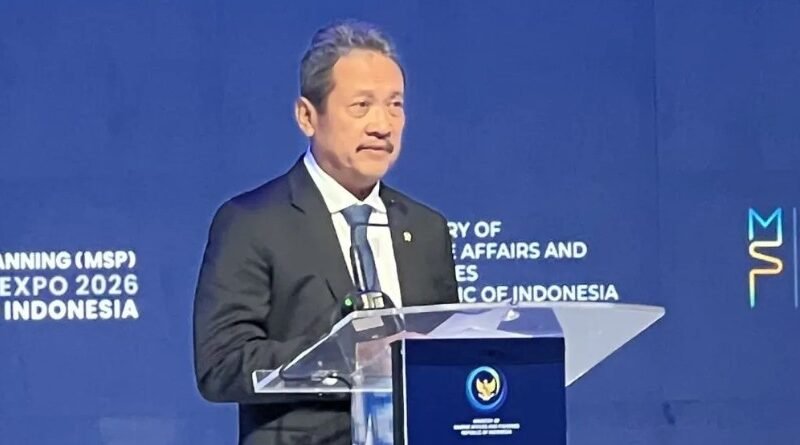
Marine Affairs and Fisheries Minister Sakti Wahyu Trenggono highlighted the importance of translating marine planning into practical action at the opening of the Global Marine Spatial Planning (MSP) Conference & Expo 2026 in Nusa Dua, Badung, Bali, on Wednesday, November 25.

“The future of the ocean will not be determined by planning alone,” Trenggono said, emphasizing the need to build trust, mobilize investment, strengthen partnerships and turn development ambitions into concrete results.
Speaking at the international conference, the minister said Indonesia had been developing marine spatial planning at national and regional levels since 2004. The country has also integrated land and marine spatial planning through regulatory frameworks designed to balance economic development with environmental protection and the social sustainability of coastal communities.
Trenggono highlighted investment opportunities in fisheries, aquaculture, marine tourism, blue carbon ecosystems and maritime industries. These sectors are being showcased through business forums, youth forums and a marine technology innovation exhibition, which will continue until November 27, 2026.
The initiatives support six national priority programmes in the marine and fisheries sector, scheduled for implementation through 2029. Among the major targets is the establishment of 5,000 fishing villages, alongside the rehabilitation of tens of thousands of hectares of underproductive aquaculture ponds and the development of 2,000 hectares of integrated shrimp farming facilities.
Indonesia also plans to expand thematic inland aquaculture across 40,000 villages, modernize thousands of fishing vessels and establish a national salt industrial zone to achieve self-sufficiency in salt production.
Read:Op-Ed: ESG Reporting in Shipping: Why Environmental Compliance Matters for Maritime Companies
These programmes reflect Indonesia’s broader strategy to strengthen its maritime economy by connecting marine resource management with investment, infrastructure development and sustainable production.
Wenxi Zhu, head of the UNESCO Intergovernmental Oceanographic Commission Sub-Commission for the Western Pacific (IOC/WESTPAC), said Indonesia had the potential to become a pioneer in the next generation of marine spatial planning.
He emphasized the importance of connecting land and sea, balancing economic development with conservation, and converting planning frameworks into responsible investments that deliver tangible benefits to local communities.
The Global Marine Spatial Planning Conference & Expo 2026 provides an international platform to discuss sustainable ocean governance, marine investment, technological innovation and cooperation in marine spatial management.