
Japan and U.S. Launch AI Shipbuilding R&D Partnership to Accelerate Smart Shipyards and Maritime Innovation
The Japan Ministry of Land, Infrastructure, Transport and Tourism (MLIT) has officially launched a Japan-U.S. joint research and development (R&D) project on artificial intelligence (AI) shipbuilding technologies, marking a significant step toward the future of smart shipyards, automated ship construction, and advanced maritime manufacturing.
The initiative is designed to accelerate the deployment of AI-powered shipbuilding robotics, digital simulation technologies, and intelligent production systems that can significantly improve productivity across the global shipbuilding industry. As highlighted by MLIT, the collaboration represents a major milestone in advancing next-generation shipyard technologies through international cooperation.
The project builds on the Memorandum of Cooperation (MOC) on Shipbuilding signed in October last year by Japan’s Minister Kaneko and U.S. Secretary of Commerce Howard Lutnick. The agreement established a framework for strengthening bilateral cooperation in developing advanced shipbuilding technologies and expanding innovation in the maritime sector.
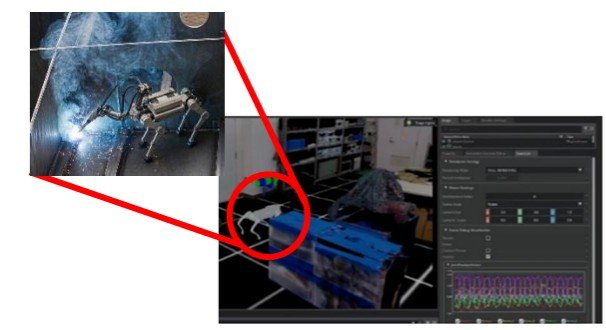
According to MLIT, Japan has been investing in AI-driven technologies capable of automating complex shipyard operations, including plate bending, welding, and robotic production processes. Alongside these robotics, researchers are developing an AI simulation platform that will optimize robot performance by digitally replicating real shipyard environments before deployment.
The Japan-U.S. collaboration aims to jointly develop these technologies and accelerate their practical implementation in commercial shipyards, supporting the modernization of shipbuilding operations while improving efficiency, safety, and production quality.
The project forms part of MLIT’s “Technology Development Project Contributing to the Realization of Next-Generation Shipyards through AI Utilization,” which is supported under Japan’s Cabinet Office BRIDGE Program (Program for Bridging Research and Development and Society 5.0).
A major milestone in the collaboration took place between July 6 and July 10, when the U.S. research delegation visited Japan to officially launch joint development activities with Japanese partners. During the visit, engineers and researchers inspected Japanese shipyards to assess operational requirements and identify practical challenges associated with introducing AI-powered robotics into existing production lines.
The development teams also finalized project responsibilities and confirmed a roadmap to establish, by the end of March, an advanced AI production-process simulation platform capable of modeling actual ship hull blocks, shipyard layouts, and robotic workflows. The platform is expected to enable detailed evaluation of automated operations before implementation and will support demonstration projects in both Japanese and American shipyards.
The U.S. research team participating in the initiative includes experts from the University of Michigan, Massachusetts Institute of Technology (MIT), and the American Bureau of Shipping (ABS). Japanese partners include Osaka University, Yokohama National University, MTI, ClassNK, Namura Shipbuilding, Fukuoka Shipbuilding, MLIT, the National Maritime Research Institute (NMRI), and several other organizations.
As part of the launch activities, researchers visited Fukuoka Shipbuilding and Japan Marine United to examine production facilities and evaluate how AI-driven robotics can be integrated into modern shipbuilding processes.
The growing partnership between Japan and the United States reflects a broader global push toward digital shipbuilding, AI automation, smart manufacturing, and Industry 4.0 technologies. With increasing demand for more efficient and competitive shipyards, the collaboration is expected to contribute to faster vessel construction, enhanced production planning, and greater technological innovation across the international maritime industry.