
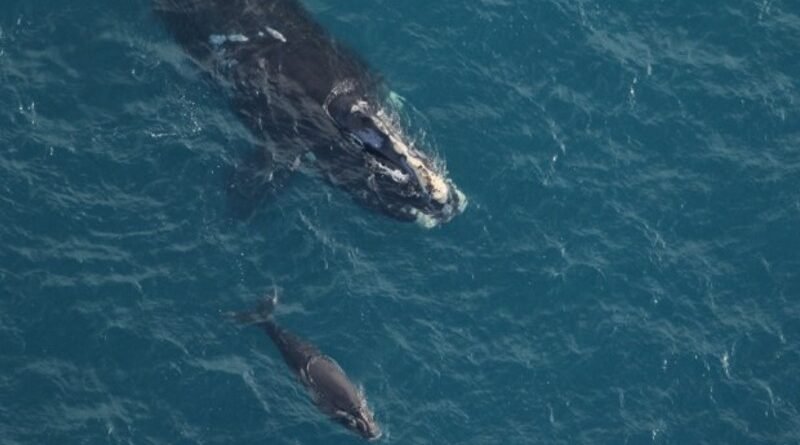
First North Atlantic Right Whale Calf of 2026 Spotted Off Florida Coast
The first North Atlantic right whale calf of the 2026–27 seasons has been spotted off Florida, marking the return of these critically endangered marine mammals to their southeastern US calving grounds. The sighting highlights the importance of marine conservation, endangered species protection and maritime safety, as seasonal whale migration overlaps with commercial shipping routes, fishing activities and coastal vessel traffic.
Wildlife officials reported that North Atlantic right whale Curlew and her newborn calf were sighted approximately 11 nautical miles off St. Augustine Inlet, Florida, on November 10. The sighting marks the first mother-calf pair recorded for the 2026–27 calving season in southeastern waters.
Female North Atlantic right whales migrate south from New England and Canadian waters between November and mid-April to give birth and care for their calves. Most births occur between December and March. Mothers generally remain in the southeastern region with their young for one or two months before beginning their northward migration.
Florida and Georgia waters serve as core calving grounds for the species, providing essential habitat for reproduction and early calf development. In Georgia, the North Atlantic right whale is designated as the state’s marine animal and listed as a species of greatest conservation need under the Georgia Wildlife Action Plan.
Despite decades of conservation efforts, the species has not recovered to its pre-whaling population levels. Commercial whaling brought North Atlantic right whales close to extinction during the 1890s, and their population continues to face significant pressures from human activities.
The National Oceanic and Atmospheric Administration (NOAA) has expressed cautious optimism about population growth, although human-caused deaths and injuries remain major obstacles to the species’ long-term recovery.
Fishing gear entanglement and vessel strikes are among the leading threats to North Atlantic right whales. NOAA Fisheries reports that more than 85% of the population has become entangled in fishing equipment at least once. Ropes and nets can cause severe injuries, infections and prolonged physical stress. Scientists also believe entanglement may affect female reproductive health, contributing to fewer calves and longer intervals between births.
Vessel collisions present another major challenge. Right whale migration routes overlap with busy shipping corridors and major port approaches, while the animals frequently travel close to shore. This increases the possibility of encounters with commercial vessels and other watercraft.

NOAA data covering the 2017–2026 period show that 43 right whale deaths had been confirmed, alongside 42 seriously injured whales and 92 additional cases involving animals reported injured or in poor health. Of the confirmed deaths, 11 were attributed to fishing gear entanglement and 15 to vessel strikes. Officials have also warned that only approximately one-third of right whale deaths are detected.
Among the seriously injured, injured or unhealthy whales, 101 cases were associated with entanglement, while 14 involved vessel strikes.
Read:World Shipping Council Launches Digital Whale Chart for Safer Shipping and Marine Protection
The wider conservation challenge extends beyond protecting individual whales. The overlap between migration routes, fishing grounds and commercial shipping activity demonstrates the importance of integrating marine biodiversity protection into maritime planning. Reducing fishing gear entanglement and vessel collisions requires improvements in operational practices across the maritime sector, alongside effective monitoring and conservation measures.
For port authorities, shipping operators and coastal resource managers, seasonal whale migration also represents an important maritime risk-management consideration. Greater awareness of whale movements can support informed operational planning and help reduce avoidable interactions between vessels and endangered marine species. Timely sighting information, monitoring systems and coordination among maritime stakeholders are essential to this approach.
NOAA experts have additionally identified changing environmental conditions and ocean noise as concerns for the species. These pressures reinforce the need for a broader marine environmental protection strategy that addresses habitat conditions as well as direct human-related threats.
As North Atlantic right whales return to southeastern waters, wildlife officials are urging boaters, anglers and whale watchers to remain alert. The animals can be identified by their broad, flat black backs and the absence of a dorsal fin. They also have distinctive rough patches of skin on their heads that appear white. Their V-shaped spouts and smooth tails with deep central notches provide additional identification features.
Read:US Coast Guard Rescues Juvenile Humpback Whale Off Fire Island
The arrival of Curlew and her calf marks the beginning of another migration season and highlights the continuing challenge of balancing maritime operations with marine biodiversity conservation. Protecting the North Atlantic right whale will require sustained cooperation between conservation authorities, port operators, shipping companies and fishing communities to reduce human-related risks and support the recovery of this critically endangered species.