ReCAAP ISC, Shipping Industry Strengthen Maritime Security to Combat Piracy and Sea Robbery across Asia and West Indian Ocean
The ReCAAP Information Sharing Centre (ReCAAP ISC) has brought together key stakeholders from the global shipping industry to strengthen cooperation against piracy and armed robbery at sea, with discussions focused on improving maritime security, adopting advanced technologies, and enhancing risk management for commercial vessels operating in Asia and the West Indian Ocean.
The dialogue was attended by representatives from the Maritime and Port Authority of Singapore (MPA), the Information Fusion Centre (IFC), the Singapore Police Coast Guard, and members of the international shipping industry. The meeting reviewed the latest regional security trends and highlighted practical measures to safeguard ships, cargo, and seafarers navigating high-risk waters.
According to ReCAAP ISC, 35 incidents of armed robbery against ships were reported across Asia between January and June 2026, marking a 64% decline compared with the 96 incidents recorded during the same period in 2025. Of the total incidents, 21 occurred in the Straits of Malacca and Singapore (SOMS), one of the world’s busiest maritime trade corridors.
However, concerns remain over rising criminal activity in other areas. ReCAAP ISC noted that 10 incidents of sea robbery were reported in Philippine ports and anchorages during the first half of 2026, compared with no reported incidents during the corresponding period last year.
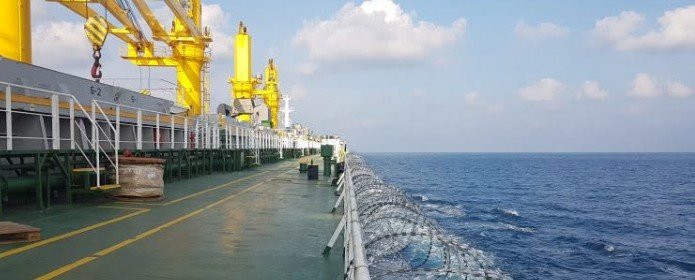
During the discussions, participants exchanged best practices for preventing unauthorised boardings, piracy, and armed attacks in the Straits of Malacca and Singapore, the West Indian Ocean, and the Strait of Hormuz. The recommended measures included conducting ship-specific security risk assessments, strengthening vessel protection through vessel hardening measures, carrying out regular onboard security drills, and maintaining continuous monitoring and timely reporting while transiting high-risk maritime zones.
The dialogue also highlighted the growing role of digital maritime technologies in strengthening vessel security. Participants discussed the use of artificial intelligence (AI)-powered cameras to detect safety threats and identify unauthorised persons on board, as well as digital platforms that improve maritime domain awareness, support real-time monitoring, and enable more effective risk assessments for commercial shipping operations.
ReCAAP ISC Executive Director Vijay Chafekar emphasized that technological innovation is becoming an essential component of modern maritime security.
“The use of technological tools can help shipping companies make more informed risk assessments, detect potential threats, and adopt region specific security measures to protect crew and ships. I would like to encourage the shipping industry to use the ReCAAP Data Visualisation Map & Panel (Re-VAMP), an online dashboard which can display the locations and timings of unauthorised boarding incidents in Asia. It is a useful tool to assist shipmasters in making risk assessments and instituting the appropriate preventive measures.”
The dialogue reinforced the importance of close collaboration between maritime authorities, shipping companies, and regional security agencies to enhance shipping safety, reduce piracy risks, and strengthen the resilience of global maritime trade routes across Asia and the West Indian Ocean.
Read: Somalia Piracy Surge: Oil Tanker Hijacked Near Strategic Shipping Route, 17 Crew Held Hostage