Scientists Explore Gene Editing to Build Climate-Resilient Kelp Forests and Protect Ocean Ecosystems
Australian Researchers Investigate Advanced Biotechnology Solutions for Marine Climate Adaptation
Scientists in New South Wales are exploring the potential of genetic editing technology to help kelp species survive the increasing impacts of climate change, in a research initiative supported by an international conservation grant.
The project, led by researchers from the New South Wales Department of Primary Industries and Regional Development (DPIRD), has received funding from US-based wildlife conservation organisation Revive & Restore to investigate how genetic traits could improve kelp resilience against rising ocean temperatures.
The research will initially focus on studying the genes of different microalgae species to identify biological characteristics that allow certain organisms to tolerate warmer marine environments. Scientists hope these findings could eventually support efforts to enhance the climate resistance of kelp forests, although genetically modified kelp remains a long-term possibility rather than an immediate solution.
DPIRD senior principal research scientist Melinda Coleman said understanding the genetic mechanisms behind heat tolerance could open new pathways for marine conservation.
“If we can understand which genes are responsible for organisms to withstand higher temperatures … we could try to introduce variations in those genetic regions to boost thermal tolerance,” Professor Coleman said.
She said climate change was creating unprecedented challenges for marine ecosystems and that scientists needed innovative approaches alongside traditional conservation strategies.
“Kelp is being increasingly challenged by climate change, and it is starting to outpace the ability of our kelp forests to be able to adapt,” Professor Coleman said.
Genetic Innovation Could Strengthen Future Ocean Conservation
DPIRD research scientist Hugh Goold, who applied for the international research grant, said investment in scientific innovation was essential to prepare for future environmental challenges.
“Research grants are everything,” Dr Goold said.
He explained that establishing scientific tools, regulatory frameworks and implementation pathways in advance would allow researchers to respond more effectively when climate pressures intensify.
The research may also provide benefits beyond marine ecosystems, with potential applications in agriculture, horticulture and climate-resilient farming systems.
Climate Change Threatens Global Kelp Forests
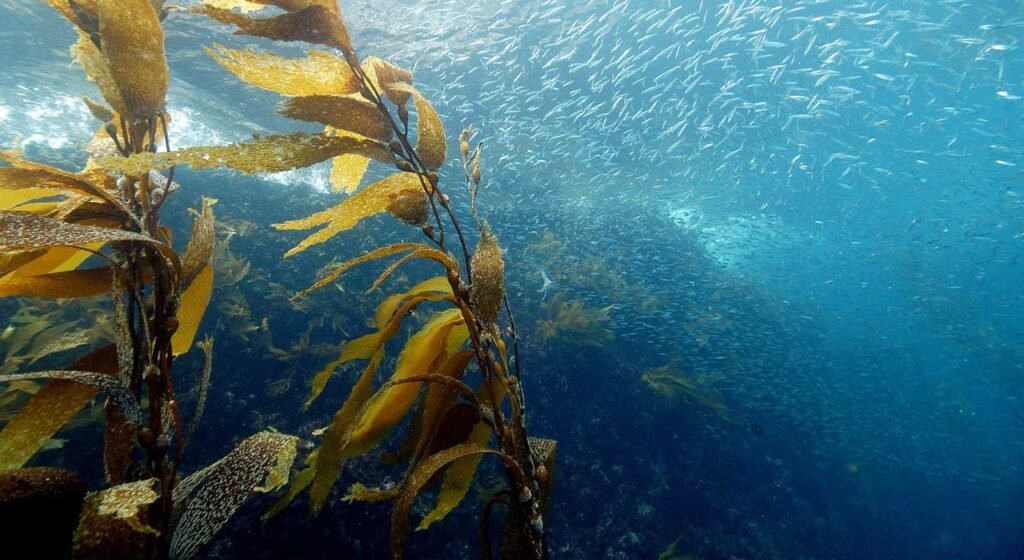
Kelp forests are among the world’s most valuable marine ecosystems, forming underwater habitats along almost one-third of global coastlines. These large brown seaweeds provide shelter, food and breeding grounds for thousands of marine species while supporting coastal biodiversity and blue economy activities.
The Great Southern Reef Foundation said golden kelp, scientifically known as Ecklonia radiata, is one of the most important species across Australia’s Great Southern Reef, which extends more than 8,000 kilometres along the country’s southern coastline.
Foundation co-founder Stefan Andrews said kelp forests support a complex network of marine life, including seaweeds, fish and invertebrates.
“Most people will instantly recognise our beautiful golden kelp, Ecklonia radiata,” Andrews said.
However, rising sea temperatures and increasing marine heatwaves are placing significant pressure on kelp ecosystems.
“Kelp species are cool-water organisms, so they perform best when ocean temperatures remain low,” Andrews said.
As oceans continue warming, kelp forests in several regions have experienced declines, making them one of the most visible indicators of climate change impacts on marine ecosystems.
Sea urchin population increases have created additional challenges by intensifying grazing pressure on kelp forests and preventing natural recovery.
Sustainable Kelp Farming Gains Momentum in Australia
Beyond conservation research, scientists and marine entrepreneurs are also developing sustainable kelp farming systems to support ocean restoration, renewable marine resources and the growing blue economy.
Marine scientist Jo Lane, who operates a sustainable kelp harvesting business on the New South Wales far south coast, collects naturally detached kelp washed ashore after storm events for use in food, cosmetics and other commercial applications.
“We leave more than we take,” Lane said, highlighting the importance of sustainable harvesting practices.
She is now expanding into kelp cultivation and has established a laboratory at Tilba Tilba. Through a research permit, she is trialling kelp farming activities offshore near Eden and plans to test laboratory-grown kelp under natural ocean conditions.
“I got interested in farming kelp because it would give us a more consistent and more reliable supply,” Lane said.
According to Lane, cultivated kelp could provide important opportunities not only for commercial production but also for marine ecosystem restoration.
“Now that we can breed it, we can use that for farming, but more importantly, we can also use it for restoration,” she said.
Kelp Emerges as a Key Resource for the Blue Economy
Researchers and industry experts say kelp has enormous potential as a sustainable marine resource, supporting climate solutions, carbon management, renewable biomaterials and environmentally friendly industries.
Kelp-based products are increasingly being explored for applications in health supplements, cosmetics, skincare, agricultural fertilisers and bio-stimulants.
Read: Op-Ed: Seaweeds– A Billion-Dollar Resource Lying along the Coast
As climate change accelerates ocean warming and threatens marine biodiversity, advances in marine biotechnology, genetic research and sustainable seaweed farming could become critical tools for protecting coastal ecosystems and strengthening the future of the global blue economy.