Sindh Government Unveils Major Fisheries Reforms, Ends Contract Fishing System to Empower Licensed Fishermen
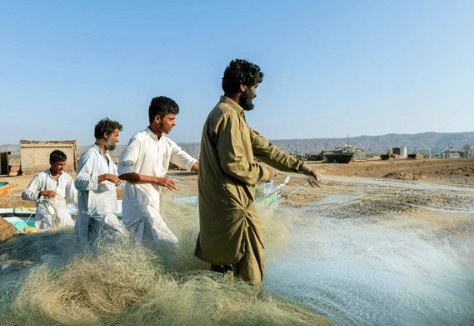
The Sindh government has announced a landmark package of reforms aimed at transforming Pakistan’s fisheries sector, strengthening sustainable fishing practices, and improving the livelihoods of thousands of fishermen across the province. The new measures include the complete abolition of the long-standing contract (thekedari) fishing system and the introduction of a licensing framework that reserves fishing rights exclusively for registered fishermen.
The announcement was made by Sindh Minister for Livestock and Fisheries Muhammad Ali Malkani during a high-level meeting with representatives of fishermen from Sujawal, Thatta, Badin, Jamshoro, Hyderabad, Kashmore, Kandhkot, and several other districts. The meeting was convened following requests from fishermen’s organizations seeking reforms to address long-standing challenges within the fishing industry.
The session was attended by representatives of the Pakistan Fisherfolk Forum, Provincial Secretary for Livestock and Fisheries Dr. Kazam Hussain Jatoi, newly elected Fishermen Cooperative Society Chairperson Fatima Majeed, Director of Marine Fisheries Sindh Dr. Asim Karim, Fisher Folk Chairman Ghulam Mustafa Mirani, General Secretary Saeed Baloch, and Majeed Malkani.
Speaking during the meeting, Minister Malkani said the Fisheries Department is committed to delivering essential services and direct support to fishermen in order to improve their economic conditions and strengthen Pakistan’s fisheries economy. He also announced that facilities currently available to marine fishermen through the Fishermen Cooperative Society will be expanded to benefit inland fishermen throughout Sindh.
In one of the most significant policy decisions, the minister confirmed that the Sindh government will abolish the contract fishing system across the province. Under the new policy, fishing rights will be reserved solely for licensed fishermen, eliminating fishing contracts previously issued under the thekedari system.
Malkani stated that the provincial government will formally approach the Chief Minister to ensure legislation is enacted to abolish the contract system permanently and prevent the issuance of new fishing contracts anywhere in Sindh.
To modernize fisheries management, the government will integrate fishermen’s identity cards with the National Database and Registration Authority (NADRA). Once implemented, fishermen will be verified through their Computerised National Identity Cards (CNICs), creating a transparent and digital identification system.
Under the revised framework, only fishermen possessing the integrated identity cards will qualify for fishing licences, boat registration, government financial assistance, and development initiatives supported by the World Bank.
The minister further announced that, in collaboration with the World Bank, the Sindh government is implementing a large-scale aquaculture development project that will introduce schemes worth millions of rupees to support fishermen engaged in fish harvesting, aquaculture, and seafood trade.
Reaffirming the government’s commitment to sustainable fisheries management, Malkani confirmed that the annual fishing ban during the breeding season will remain in force from June 15 to August 1 to help conserve fish stocks and ensure long-term marine resource sustainability.
Responding to concerns raised by fishermen’s representatives, the minister said the government is prepared to introduce legislative amendments where necessary to resolve industry issues. He added that the Fisheries Department will work closely with the Forest, Irrigation, and Environment departments to address challenges facing fishing communities and accelerate the sustainable development of Sindh’s fisheries sector.
Read: Pakistan Achieves Record $500 Million in Fish and Seafood Exports
The reforms are expected to improve transparency, strengthen fisheries governance, expand financial inclusion for licensed fishermen, support sustainable seafood production, and contribute to the long-term growth of Pakistan’s blue economy.