UAE Eastern Ports Emerge as Gulf Trade Lifeline amid Strait of Hormuz Crisis
The UAE’s eastern seaports have rapidly transformed into the backbone of Gulf trade as disruptions in the Strait of Hormuz continue to reshape regional shipping, oil exports, and maritime logistics.
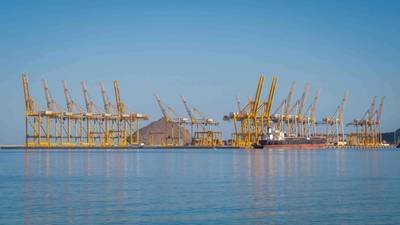
At the eastern UAE port of Port of Fujairah, conveyor belts unloaded grain from bulk carriers while crude oil flowed through pipelines into tankers berthed along the quay. Loaded trucks stretched across terminal roads as dozens more waited outside logistics zones, highlighting the intense pressure now facing one of the Middle East’s most strategic maritime gateways.
Offshore, vessels operated by global shipping lines including Cosco and Gardenia remained anchored as service boats navigated between tankers, container ships, and bulk carriers. The activity reflects how Fujairah, alongside Port of Khor Fakkan, has become essential for sustaining the UAE’s economy after the effective closure of the Strait of Hormuz disrupted shipping operations across the Gulf.
Both ports, located on the UAE’s eastern coastline with direct access to the Indian Ocean, are now handling the majority of the country’s seaborne trade. Their importance has surged as vessels remain stranded at major western Gulf terminals affected by regional tensions and security concerns.
Since the outbreak of the Iran conflict, crude oil exports through Fujairah have climbed by 38%, pushing the Abu Dhabi Crude Oil Pipeline close to maximum operating capacity. The pipeline allows the UAE to bypass the Strait of Hormuz and maintain energy exports to global markets. According to commodity intelligence firm Kpler, exports from Fujairah rose to an average of 1.62 million barrels per day by late March, compared with 1.17 million barrels per day in February.
The crisis has also transformed Fujairah into a growing container shipping hub. Data indicates the port has begun regularly receiving container vessels for the first time, reflecting a major shift in Gulf maritime trade routes as shipping companies search for safer alternatives outside the Strait of Hormuz.
Meanwhile, Khor Fakkan has experienced an even more dramatic surge in activity. Terminal operator Gulftainer reported that weekly import and export container volumes skyrocketed from around 2,000 containers to nearly 50,000. Vessel traffic at the port has nearly quadrupled since the conflict began, underlining its new role as a critical logistics and supply chain center for the wider Gulf region.
Farid Belbouab, Chief Executive of Gulftainer, described Khor Fakkan as a “critical national gateway,” explaining that the port has evolved from a traditional transshipment facility into a vital import hub for groceries, medical supplies, consumer goods, and industrial cargo.
Truck movements tell the same story of explosive growth. Before the conflict, the port handled roughly 100 trucks daily. That figure has now surged to nearly 7,000 trucks per day, forcing logistics operators to rapidly expand staffing and operational capacity. Gulftainer reportedly hired around 900 workers within two weeks of the crisis escalation.
Despite recent attacks, shipping analysts say operations at both ports remain active. Data tracking vessel movements showed six container ships berthed at Khor Fakkan with another ten waiting offshore, while Fujairah continued handling tanker and cargo operations despite limited berth capacity.
However, regional security risks remain a major concern for the global shipping industry and energy markets. Iran’s recent drone strike on the Fujairah Oil Industry Zone triggered fires at one of the UAE’s key energy facilities and injured three workers, highlighting the vulnerability of critical maritime infrastructure.
The attack followed the publication of a map by Iran’s Revolutionary Guards Navy appearing to extend its operational zone along the UAE’s eastern coastline, including Fujairah and Khor Fakkan. Although shipping operations have not yet been directly disrupted, the development intensified fears over Gulf shipping security and the future stability of regional trade corridors.
The UAE government has repeatedly stressed that freedom of navigation through the Strait of Hormuz remains a strategic priority. UAE Energy Minister Suhail Al Mazrouei warned that no country has the right to disrupt global trade flows or threaten international energy supply routes.
The wider Gulf region is also scrambling to adapt. Saudi Arabia continues exporting oil through its East-West Pipeline via the Red Sea port of Port of Yanbu, helping maintain crude exports despite disruptions near Hormuz. Yet even Saudi infrastructure has faced attacks, demonstrating that alternative trade corridors are not immune to regional conflict.
For Gulf states such as Qatar, Kuwait, and Bahrain, the situation is more challenging because their maritime trade routes remain heavily dependent on the Strait of Hormuz. As a result, Khor Fakkan has increasingly become a strategic gateway for imports entering the Gulf, while overland transport routes through Saudi Arabia and Oman face congestion and rising logistics costs.
Amid the shifting trade landscape, Gulftainer is already planning long-term expansion projects linked to Khor Fakkan. The company is preparing to develop a new inland logistics hub in Al Dhaid, approximately 50 kilometers from the port. The proposed dry port project, spanning more than 100 hectares and connected by road and rail infrastructure, will support container transshipment and cargo storage as regional supply chains continue evolving.
Yet uncertainty still clouds the future of Gulf shipping. Drone attacks on Fujairah’s energy infrastructure earlier this year forced temporary suspensions of some oil-loading operations, reinforcing concerns over the fragility of the region’s emerging maritime trade network.
Industry leaders acknowledge that much depends on when, and how , stability returns to the Strait of Hormuz. Until then, the UAE’s eastern ports are expected to remain among the most strategically important shipping and logistics hubs in the Middle East, carrying growing significance for global oil markets, container shipping, and international trade supply chains.