US Sanctions Hit Iranian Oil Tankers and Chinese Refinery in Major Crackdown on Illegal Maritime Oil Trade
The US Treasury has sanctioned roughly 40 Iranian oil tankers, multiple shipping companies, and a major Chinese oil refinery, marking one of the most aggressive moves yet in Washington’s global campaign to shut down illicit maritime crude oil transportation networks.
Washington has dramatically widened its net in the battle against sanctioned Iranian crude oil shipments, announcing sweeping new restrictions against nearly 40 oil tankers, dozens of maritime shipping companies, and , in an unprecedented step ,a major independent Chinese refinery. The move, announced Friday and first reported by the Associated Press, is being described by energy analysts as one of the most targeted assaults on the global shadow fleet carrying Iranian barrels since the reimposition of maximum-pressure sanctions.
In a dramatic twist that is already shaking global oil shipping routes, the US has simultaneously imposed a physical blockade on the Strait of Hormuz ,one of the world’s most critical maritime chokepoints through which nearly 20% of global crude oil passes daily. The dual-track pressure campaign is being watched closely by shipowners, tanker operators, port authorities, and energy traders worldwide.
Chinese refinery in the crosshairs
At the centre of the new US action is Hengli Petrochemical, a privately owned refinery based in Dalian, a major Chinese port city on the Yellow Sea. With a crude processing capacity of approximately 400,000 barrels per day, Hengli ranks among China’s largest independent refiners , the kind of facility often referred to in the industry as a “teapot” refinery. According to the US Treasury Department, Hengli has been receiving Iranian crude oil cargoes since 2023, with those transactions allegedly funnelling hundreds of millions of dollars into Iran’s military apparatus.
The advocacy group United Against Nuclear Iran had flagged Hengli as early as February 2025 as part of a broader pattern of Chinese buyers absorbing discounted Iranian crude. Friday’s action formally puts the refinery under direct US restrictions, which could complicate its access to international financial systems, dollar-denominated transactions, and Western equipment suppliers.
Secondary sanctions: the weapon rattling global shipping
Treasury Secretary Scott Bessent made Washington’s position unambiguous, stating that his department would continue to “constrict the network of vessels, intermediaries and buyers Iran relies on to move its oil to global markets.” For maritime shipping companies, tanker owners, and port operators in Asia and the Middle East, the phrase “secondary sanctions” has become the most consequential term in international trade compliance.
At a White House press briefing on April 15, Bessent warned that the US was now ready to penalise any entity ,bank, shipowner, or trading house , buying Iranian oil or holding Iranian funds. Warning letters have already been dispatched to financial institutions across China, Hong Kong, the UAE, and Oman. For the maritime sector, this represents a direct warning: vessels transporting Iranian crude, whether flagged or disguised through ship-to-ship transfers, now face a significantly elevated risk of being blacklisted.
Hormuz blockade raises global freight alarm
The sanctions do not exist in isolation. Earlier this month the US Navy imposed a physical blockade on the Strait of Hormuz, the narrow Persian Gulf waterway through which a significant share of the world’s seaborne oil and LNG passes. Freight rates, marine war-risk insurance premiums, and energy commodity prices have all spiked in response. Shipping insurers have already begun reviewing coverage terms for vessels operating in the Persian Gulf corridor.
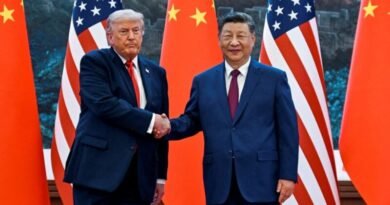
The timing is diplomatically loaded too. The sanctions land just weeks before a scheduled face-to-face meeting between President Donald Trump and Chinese President Xi Jinping , a meeting that now carries additional weight given that a named Chinese company sits at the centre of the latest enforcement action.
Limited waivers signal a calibrated approach
Mindful of the collateral impact on already strained global oil markets, the Treasury has issued narrow sanctions relief measures , including a temporary waiver on certain Russian oil cargoes and a one-time exemption for Iranian oil already in transit. Analysts read these as a balancing act: Washington wants maximum enforcement pressure without triggering an energy price shock that rebounds on American consumers and allies.
For the global tanker market, the message is stark. The noose around the Iranian oil supply chain ,from wellhead, through ship-to-ship transfer zones, to refinery gate , is tightening. Any operator, insurer, flag state, or financial institution with a thread connecting them to Iranian crude now faces real and immediate exposure to US secondary sanctions. The era of consequence-free dark fleet operations may be drawing to a close.