
10th Maritime Silk Road Port Cooperation Forum Opens in Ningbo, China, Advancing Global Port Cooperation, Green Shipping and Supply Chain Resilience
The 10th Maritime Silk Road Port Cooperation Forum officially opened on May 27 in Ningbo, located in east China’s Zhejiang, bringing together leading representatives from the global port and shipping industry across more than 70 countries and regions. The high-level international forum focuses on strengthening maritime cooperation, enhancing global logistics connectivity, and addressing emerging challenges in global shipping amid ongoing geopolitical shifts.
This year’s forum places strong emphasis on key strategic themes including supply chain resilience, green and low-carbon maritime development, smart port innovation, and upgrading global shipping services. More than 1,000 participants are engaged in discussions aimed at ensuring stable global supply chains and improving coordinated development across the international port and shipping ecosystem.
With rising risks of fragmentation in global industrial and supply chains and increasing volatility in shipping markets, the global maritime and port industry is facing significant pressure in maintaining efficient logistics flow, stabilizing trade routes, advancing transformation, and strengthening risk management systems.
Speaking at the forum, Jin Jingdong, an official from China’s Ministry of Transport, emphasized the importance of building an open, smart, green, and mutually beneficial maritime and port sector. He called for deeper cooperation to usher in a new phase of high-quality development in global shipping and port connectivity.
Liang Linchong, head of the Department of Regional Opening-up under China’s National Development and Reform Commission, highlighted that the port and shipping industry now plays a crucial role in safeguarding the smooth functioning of global trade. He stressed the need to strengthen infrastructure connectivity, promote high-quality upgrades in ports, shipping, and trade systems, and enhance coordinated international cooperation to improve integrated development capacity.
From the international regulatory perspective, David Osborn, Director of the Marine Environment Division at the International Maritime Organization, underscored that building resilient and sustainable maritime and port supply chains requires continuous investment in green shipping technologies, pollution control infrastructure, and stronger environmental compliance frameworks. He also encouraged expanded international cooperation to support the orderly decarbonization of the global shipping industry.
The forum concluded several key outcomes, including the adoption of the 2026 Multilateral Partner Ports Consensus and the release of a global smart ports development index report, both aimed at strengthening long-term maritime collaboration and digital transformation of ports.
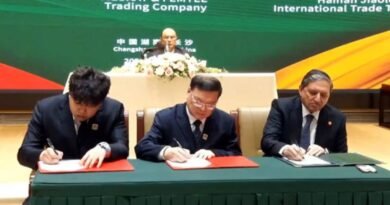
In addition, multiple practical cooperation agreements were signed during the event, further reinforcing international partnerships in the maritime sector.
Read: China Widens Zero-Tariff Access to African Nations, Unlocking New Maritime Trade and Shipping Growth
The forum also featured specialized seminars covering critical maritime industry topics such as green shipping development, logistics optimization, smart maritime technologies, tugboat operations, grain trade logistics, maritime legal affairs, and advanced maritime services, highlighting the sector’s transition toward innovation-driven and sustainable growth.