IMO Adopts First Global Guidelines to Combat Maritime Fraud and Flag Misuse
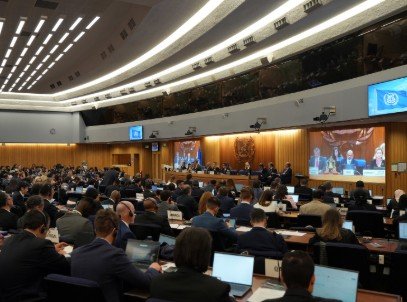
The global maritime sector has taken a significant regulatory step forward as IMO maritime fraud guidelines, ship registration compliance, and flag state regulations come into sharper focus following a key decision at the International Maritime Organization’s Legal Committee meeting held from 13 to 17 April 2026 in London. The move is expected to reinforce maritime security law and global shipping compliance by addressing long-standing gaps in ship registration transparency.
The newly approved IMO maritime fraud guidelines aim to strengthen ship registration compliance and flag state regulations by introducing stricter due diligence and verification processes. These measures are designed to combat maritime fraud prevention challenges, ensuring that international shipping regulations are upheld while improving accountability across global shipping compliance systems.
The International Maritime Organization’s Legal Committee endorsed a comprehensive framework that enhances transparency in ship registration processes. The guidelines provide practical tools for both new and existing flag State registries, focusing on accurate ownership records, improved oversight, and stronger verification mechanisms. This initiative directly targets fraudulent registrations and the misuse of flags, which have become a growing concern within the maritime legal framework.
Closing the 113th session, IMO Secretary-General Arsenio Dominguez described the development as a crucial advancement for the industry. He emphasized that strengthening due diligence in ship registration systems is essential for maritime safety, environmental protection, and the welfare of seafarers. The guidelines are also expected to significantly reduce cases of fraudulent ship registration.
Concerns over fraudulent flag usage have intensified, with reports indicating that 529 ships were falsely flying national flags in the past year alone. Nearly 40 Member States experienced unauthorized use of their flags by criminal entities, highlighting the urgent need for stricter ship registration transparency and enforcement under international shipping regulations.
The guidelines introduce key focus areas, including governance over ship registration authority, quality assurance procedures, ownership verification, vessel identity checks, and enhanced information sharing systems. These elements collectively aim to build a more secure and reliable maritime registration ecosystem.
In parallel, the Committee addressed broader maritime safety and compliance challenges. Work on substandard shipping will continue through a re-established correspondence group tasked with reviewing existing IMO conventions and identifying measures to prevent unlawful maritime operations.
Security concerns in critical waterways were also highlighted, particularly in the Strait of Hormuz. The Committee strongly condemned threats and reported actions that could disrupt safe navigation, reaffirming the importance of maintaining the right of transit passage under international law.
The issue of seafarer welfare received urgent attention, with a sharp rise in abandonment cases reported. In 2025 alone, 410 new cases affected over 6,000 seafarers, with additional cases already recorded in 2026. The Committee urged Member States to strengthen enforcement of the Maritime Labour Convention and improve coordination to resolve such cases efficiently.
Another major regulatory gap identified relates to liability and compensation frameworks for alternative fuels used in shipping. The Committee acknowledged that current international regimes do not adequately address risks associated with these fuels, signaling the need for new or amended legal structures to ensure proper accountability and compensation mechanisms.
This latest development underscores a broader shift toward stronger maritime governance, as regulators push for tighter controls, enhanced transparency, and more robust compliance systems across the global shipping industry.