Strait of Hormuz Shipping Crisis: Global Shipping Leaders Demand a Safe Passage Guarantee as Oil & LNG Trade Faces Paralysis
Global shipping giants are urgently calling for reliable, safe, and uninterrupted passage through the Strait of Hormuz, warning that international oil and cargo flows will remain severely restricted until real security guarantees are established in the region.
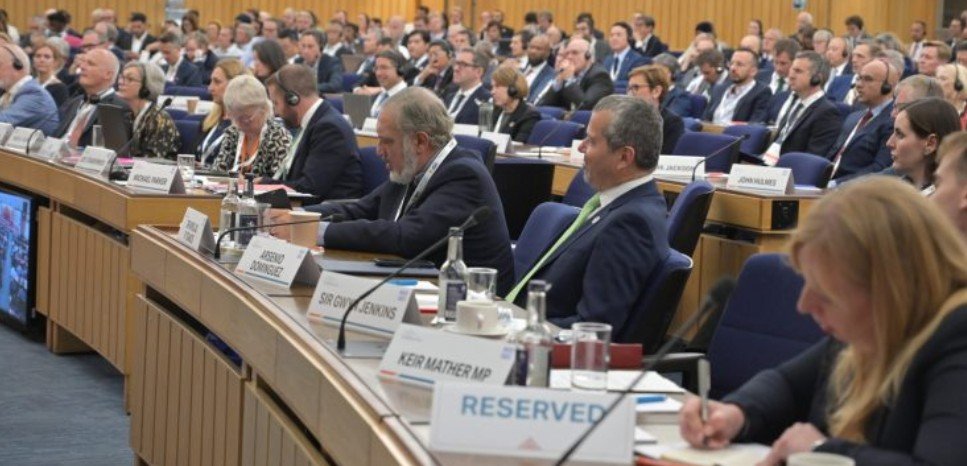
Two senior industry executives, speaking on the sidelines of the Singapore Maritime Week conference, emphasized that despite temporary ceasefire expectations, shipping safety in the Gulf has not improved in practice, keeping the global maritime sector on edge.
Jotaro Tamura, Chief Executive of Japan’s Mitsui O.S.K. Lines (MOL), one of the world’s largest operators of oil and LNG carriers—said that initial optimism following a reported temporary ceasefire quickly faded as conditions on the ground failed to reflect any meaningful change in maritime security.
“There was hope, but the agreement was not translated into safe passage for vessels,” Tamura noted.
He further highlighted growing uncertainty over what “open navigation” in the Strait of Hormuz actually means, raising concerns that even if access resumes, risks to commercial shipping could remain significant.
Iran’s Islamic Revolutionary Guard Corps has previously warned of potential mine threats in the waterway, further intensifying fears among global operators.
Tamura stressed that MOL continues to adhere strictly to international maritime law and freedom of navigation principles, particularly regarding transit through strategic chokepoints like Hormuz.
Similarly, Belgium-based maritime company CMB. Tech, which operates a fleet of more than 250 vessels, echoed concerns over the lack of clarity and security assurances.
CEO Alexander Saverys described the current situation as deeply uncertain, stating that shipping companies have no option but to wait for geopolitical stability before resuming normal operations.
“We need confidence that vessels can transit safely. Right now, there is no reassurance,” Saverys said.
He added that the Strait of Hormuz has historically been a toll-free and open maritime passage, and any future changes to this status would require careful evaluation by shipping operators.
Since the escalation of conflict between the U.S. and Iran on February 28, maritime traffic through the Strait of Hormuz has dropped dramatically, bringing one of the world’s most critical energy corridors to near standstill conditions.
Under normal circumstances, the strait handles approximately 130 vessels daily, serving as a vital gateway for nearly 20% of global oil and liquefied natural gas (LNG) shipments.
Read:Strait of Hormuz Seizures Trigger Global Maritime Alarm as Iran Escalates Naval Operations
Industry analysts warn that prolonged disruption could have serious implications for global oil prices, LNG supply chains, maritime insurance costs, and international trade stability.