
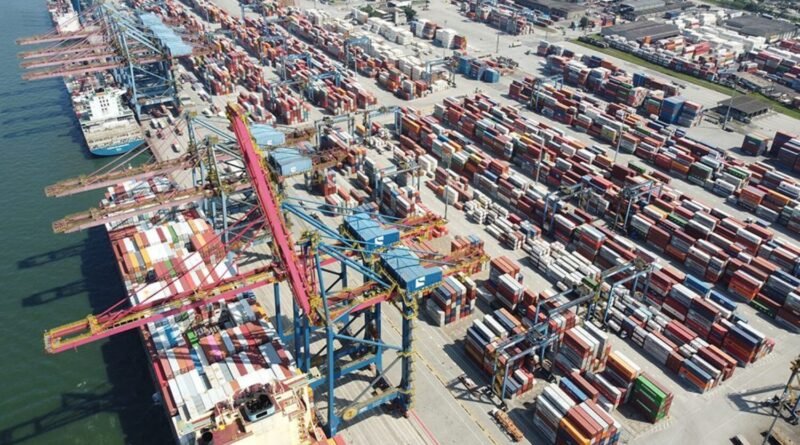
Brazil Opens Santos Mega Port Terminal Auction to Global Shipping Giants in $1.2 Billion Expansion Push
Brazil is moving forward with one of the largest port infrastructure projects in Latin America after the country’s Presidential Chief of Staff Office instructed the Ports Ministry to remove restrictions on shipping lines participating in the auction for the massive new container terminal at the Port of Santos.
The decision, outlined in a 13-page technical note issued by Brazil’s Investment Partnerships Programme on 6 May, clears the path for major global maritime players including MSC, Maersk, Cosco Shipping, and China Merchants Ports to compete for the highly anticipated Tecon Santos 10 (STS 10) concession.
The project is considered a major milestone for Brazil’s shipping, logistics, and container trade sectors as the Port of Santos, the largest port in Latin America , approaches operational saturation amid growing cargo volumes and rising demand for global supply chain capacity.
Under the updated rules, existing terminal operators at Santos will now be allowed to participate in the auction, provided they agree to divest their current terminal holdings if they secure the new concession contract. The move reverses earlier restrictions that had followed recommendations from Brazil’s federal audit court during its review process.
The technical note stated that Brazil’s waterway transport regulator, ANTAQ, found no competition-related or regulatory basis for blocking shipping lines from entering the auction. According to the document, restricting participation could instead create “productive, allocative and social inefficiencies.”
In another major development, the federal government also doubled the minimum concession fee for the terminal auction. The initial fee, previously set at BRL500 million, has now been increased to BRL1.044 billion, reflecting the strategic and commercial value of the project.
The STS 10 terminal is expected to attract investments exceeding $1.2 billion and increase container handling capacity at the Port of Santos by nearly 50%. Industry analysts view the expansion as critical for reducing congestion, strengthening Brazil’s export logistics, and improving supply chain efficiency across South America.
The revised policy has been welcomed by several international shipping and port operators that had lobbied for broader access to the bidding process. Alongside MSC and Maersk, companies including China’s Cosco Shipping and China Merchants Ports had previously expressed concerns over restrictions that could limit competition.
At the same time, companies without an existing footprint at Santos , including ICTSI from the Philippines and Brazilian meat giant JBS , have reportedly favored a more restricted two-phase auction model designed to encourage new market entrants.
Brazil’s Investment Partnerships Programme emphasized in the technical note that the government is not pursuing a policy aimed at favoring new operators over established players. Officials argued that broader participation would increase competition and improve the chances of selecting the most efficient operator capable of lowering logistics costs and supporting Brazil’s productive industries.
The guidelines further state that existing operators must provide proof of an “irrevocable and irreversible sale” of stakes in other Santos terminals before signing any new concession agreement. Authorities said the mechanism is designed to prevent anti-competitive behavior or delays in divestment.
Read: Brazil Rejects U.S. Mineral Security Pact to Boost Domestic High-Tech Industry
Officials added that if a winning bidder fails to complete the required asset sale, the government would retain the option to award the contract to the second-place bidder from the completed auction process.
Originally targeted for late 2025, the STS 10 auction has already faced multiple delays. The latest projections suggest the bidding could now take place in the second half of 2026, although further delays into 2027 remain possible.


