Greece: Port of Thessaloniki Strengthens Southeastern Europe Trade Links with New Rail Freight Agreement
The Port of Thessaloniki has taken a major step toward becoming a key Balkan logistics hub after signing a Memorandum of Understanding (MoU) with Hellenic Train and Bulgarian State Railways (BDZ). The agreement aims to significantly enhance rail freight connectivity, support intermodal transport solutions, and strengthen trade corridors across Southeastern Europe.
The MoU establishes a strategic framework for developing a dedicated rail cargo corridor centered on the Port of Thessaloniki, improving links between Greece, Bulgaria, the wider Balkans, and Central European markets. The initiative is expected to boost regional supply chains by making freight movement faster, more efficient, and cost-effective.
Under the agreement, the partners will focus on upgrading rail links to the port, expanding freight transport services, reducing transit times, and lowering logistics costs. A key priority is encouraging a shift toward rail-based cargo transport through infrastructure modernization and improved operational coordination.
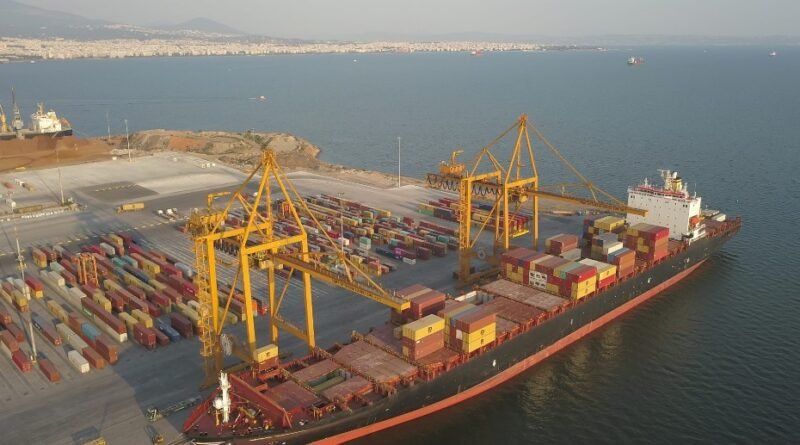
This development comes as ThPA S.A., the operator of the Port of Thessaloniki, continues its broader investment strategy, including the major Pier 6 expansion project. The expansion is set to significantly increase cargo handling capacity at the container terminal, strengthening the port’s role in international maritime trade and regional logistics networks.
Dr. Ioannis Tsaras, CEO of ThPA S.A., emphasized the strategic importance of the agreement, stating that the port’s location at the heart of Southeast Europe positions it as a future leader in intermodal freight transport.
He said the MoU with Hellenic Train and BDZ is a critical milestone that improves coordination among stakeholders and supports more efficient cargo movement across the region. According to him, the port is increasingly becoming a driver of economic growth for Northern Greece while also contributing to national competitiveness and infrastructure development.
He further highlighted that the ongoing Pier 6 expansion and the more than doubling of container terminal capacity will enhance Thessaloniki’s position on the global supply chain map. However, he stressed that fully realizing this potential requires stronger rail connectivity to reduce transport times and promote environmentally friendly logistics solutions.
Through long-term planning and strategic partnerships, the Port of Thessaloniki aims to establish itself as a reliable gateway for Southeastern Europe trade routes, reinforcing its role as a critical node in the region’s evolving maritime and rail freight ecosystem.