UK Pledges Full Support to Reopen Strait of Hormuz as Global Shipping and Energy Markets Face Pressure
The United Kingdom has pledged to play its “full part” in restoring freedom of navigation through the Strait of Hormuz, one of the world’s most strategically important maritime chokepoints, as international efforts intensify to reopen the vital shipping corridor following months of conflict in the Middle East.
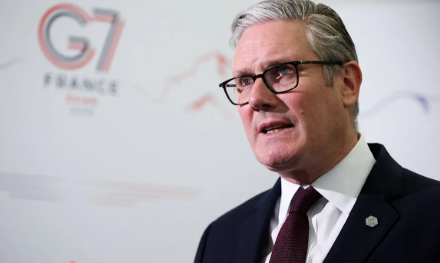
Speaking at the G7 Summit in France, UK Prime Minister Sir Keir Starmer said Britain is working alongside France and other international partners to protect commercial shipping and ensure the safe passage of vessels through the Strait of Hormuz, a critical route for global oil exports and maritime trade.
The strategic waterway has been effectively closed by Iran since the conflict began in February, disrupting tanker traffic and raising concerns across global energy markets. The closure has had a direct impact on oil prices and shipping costs worldwide, affecting economies and households alike.
Starmer emphasized the importance of restoring navigation through the Strait as quickly as possible, describing the move as essential for economic stability, global trade, and international security.
“It is going to make a material difference to our economies and to stability in the world,” Starmer told reporters, while reiterating the position shared by G7 leaders that Iran must not acquire a nuclear weapon.
The UK prime minister also welcomed the breakthrough diplomatic agreement reached between the United States and Iran, congratulating US President Donald Trump on securing a deal aimed at ending the conflict and reopening one of the world’s busiest maritime corridors.
Although the full details of the agreement have not yet been released, President Trump stated that the Strait of Hormuz is expected to reopen fully once the initial agreement is formally signed later this week.
As part of preparations to support maritime security operations, the UK has indicated its readiness to contribute to a multinational mission designed to restore freedom of navigation in the Gulf region. Starmer previously stated that Britain could assist with defensive operations, including mine-clearing activities if required.
Earlier this year, the UK government announced plans to deploy Typhoon fighter jets, surveillance drones, and the Royal Navy destroyer HMS Dragon to support any future maritime security mission in the Strait of Hormuz.
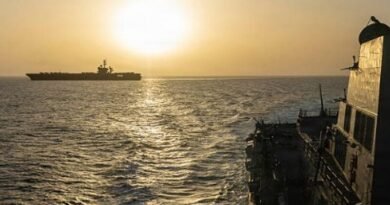
France has also signaled its willingness to contribute military assets. French President Emmanuel Macron said fighter jets could begin patrol operations in the region if necessary, noting that a French aircraft carrier is already operating nearby.
Macron revealed that approximately 20 countries have offered concrete contributions to the multinational effort, with four nations already maintaining a presence in the region.
Despite welcoming international support, President Trump stated that the United States may not require extensive assistance to ensure safe shipping transit through the Strait because of the agreement reached with Iran. However, he added that contributions from allied nations would still be beneficial for maintaining maritime security in the strategic waterway.
The conflict began after the United States and Israel launched large-scale strikes against Iran on February 28, resulting in the death of Iran’s supreme leader. Iran subsequently launched attacks against Israel and US-allied Gulf states while effectively closing the Strait of Hormuz, triggering significant concerns across global shipping, energy, and logistics sectors.
The reopening of the Strait is being closely watched by shipping companies, oil traders, tanker operators, insurers, and energy markets due to its critical role in transporting a significant portion of the world’s seaborne crude oil and petroleum products.
Ukraine Remains High on G7 Agenda
Alongside discussions on Middle East security, G7 leaders are also focusing on the ongoing conflict in Ukraine.
Starmer is expected to hold bilateral discussions with Ukrainian President Volodymyr Zelensky during the summit. The UK government has simultaneously announced a new package of 70 sanctions targeting Russia’s financial networks, military supply chains, and so-called shadow fleet operations in an effort to further restrict Moscow’s ability to sustain its war effort.
According to the UK government, the sanctions are designed to disrupt Russia’s economic resources and limit support for military operations in Ukraine.
Starmer stated that there is strong unity among G7 nations regarding support for Ukraine, adding that Ukrainian forces continue to regain territory while inflicting substantial losses on Russian forces.
Meanwhile, the UK’s Ministry of Defence is investigating reports that the Russian frigate Admiral Grigorovich fired warning shots near a UK-registered yacht in the English Channel between the Isle of Wight and Normandy on Tuesday morning.
The reported incident occurred only days after Royal Marine Commandos boarded a Russian-linked “shadow fleet” oil tanker off the southern coast of England. However, British officials currently do not believe the two events are connected.
Read: Strait of Hormuz Reopening Faces Major Hurdles as Hundreds of Ships Remain Stuck in Gulf
As tensions continue across multiple maritime theaters, developments in the Strait of Hormuz, the Black Sea region, and European shipping lanes remain key concerns for the global maritime industry, energy markets, and international security stakeholders.