Strait of Hormuz Reopening Faces Major Hurdles as Hundreds of Ships Remain Stuck in Gulf
Strait of Hormuz shipping traffic remains severely disrupted despite recent diplomatic developments, with hundreds of vessels still waiting inside the Gulf and only a handful of ships successfully transiting the world’s most important energy corridor.
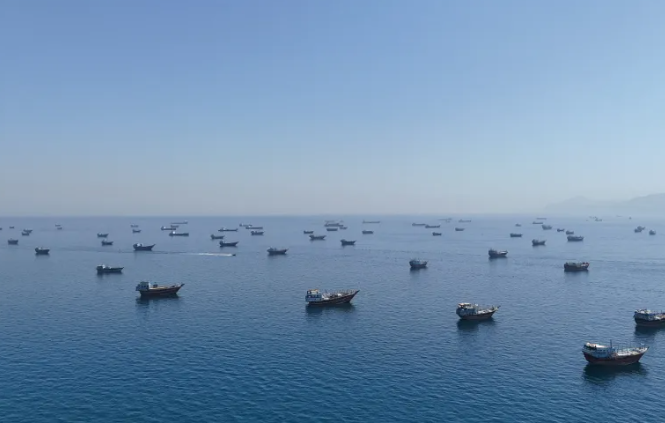
Although U.S. President Donald Trump announced a deal with Iran and declared the reopening of the Strait of Hormuz, maritime traffic has yet to return to normal. Ship-tracking data indicates that only seven vessels have passed through the strategic waterway since the announcement, while approximately 580 ships remain inside the Gulf awaiting safer conditions.
The Strait of Hormuz is one of the world’s most critical maritime chokepoints, carrying roughly 20% of global oil and natural gas supplies under normal circumstances. Iran effectively closed the passage following U.S. and Israeli military strikes on 28 February, triggering a major disruption in global energy shipping and tanker operations.
According to vessel-tracking data, more than 250 oil tankers and over 330 cargo vessels are currently located within the Gulf region. Nearly three-quarters of the tankers appear to be stationary, with many concentrated near major oil export terminals in Saudi Arabia, Iraq, and the United Arab Emirates. Industry analysts note that the actual number of vessels could be even higher, as some ships are not broadcasting their positions.
Maritime experts point to three major reasons why commercial shipping has not yet resumed at normal levels: ongoing security concerns, the threat posed by sea mines, and uncertainty surrounding potential transit fees.
Security Concerns Continue to Deter Shipowners
Despite the diplomatic breakthrough, many vessel operators remain reluctant to send ships through the strait. Since late February, Iranian forces have reportedly fired on vessels attempting to transit the waterway without authorization.
At the same time, the United States imposed a naval blockade on Iranian ports in April and has taken action against several vessels considered non-compliant. Although President Trump announced the immediate removal of the blockade, he later stated that restrictions would remain in place until a formal agreement with Iran is signed.
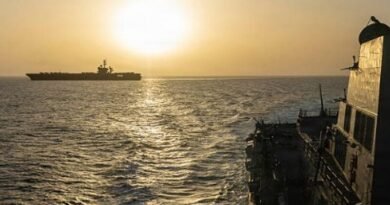
Recent satellite imagery has shown U.S. warships positioned near the Gulf of Oman, reinforcing concerns that the region remains highly sensitive from a security standpoint.
Shipping analysts say vessel owners, insurers, and captains are adopting a cautious “wait-and-see” approach. Many operators are unwilling to become the first to test the route until there is greater confidence that safe passage can be maintained.
Industry observers also recall earlier incidents in April when Iran initially declared the strait open, only for authorities to later reverse course, forcing dozens of vessels to turn back while several ships reportedly came under fire.
Mine Threat Remains a Serious Challenge
Another major obstacle to reopening the Strait of Hormuz is the possibility of sea mines in key shipping lanes.
During the conflict, Iran warned that attacks on its territory could result in the deployment of various types of naval mines, including floating mines. Since then, maritime security organizations have issued warnings regarding suspicious floating objects in Gulf waters, while senior U.S. officials have stated that significant areas of the strait may have been mined.
Shipping experts emphasize that mine-clearing operations are essential before traffic can return to pre-conflict levels. However, the process is expected to be lengthy and technically challenging.
Specialized minesweeping vessels must conduct detailed underwater surveys at extremely slow speeds before creating safe navigation channels wide enough for two-way maritime traffic. Depending on conditions, experts estimate that clearing operations could take anywhere from one month to six months.
In preparation for potential mine-removal missions, both the United Kingdom and France have deployed naval assets to the region. British Prime Minister Sir Keir Starmer has also pledged support for efforts aimed at reopening the strategic waterway as quickly as possible.
Uncertainty Over Future Transit Fees
A third issue affecting shipping confidence is uncertainty over possible tolls or service fees.
Historically, vessels have been able to transit the Strait of Hormuz without paying passage fees. However, during the recent conflict Iran moved to strengthen its claim over management of the waterway through the establishment of the “Persian Gulf Strait Authority,” which it said would oversee safe-passage permits.
While President Trump stated that the strait would reopen “toll free,” Iranian media reports have suggested that future management arrangements could involve coordination between Iran and Oman, including the possibility of service fees for transiting vessels.
The details remain unclear, leaving shipowners uncertain about how any new payment system would operate, who would enforce it, and what impact it could have on vessel movements and logistics.
Maritime analysts warn that any additional administrative requirements could create further bottlenecks in one of the world’s busiest energy shipping routes.
Global Shipping Recovery Likely to Be Gradual
While political agreements may help ease tensions, maritime experts believe the commercial shipping sector will take considerably longer to recover.
Security assurances, mine-clearing operations, insurance assessments, and clarity regarding navigation rules will all be required before shipping companies fully restore operations through the Strait of Hormuz.
For now, hundreds of tankers and cargo vessels remain anchored inside the Gulf, waiting for clearer signals that one of the world’s most strategically important maritime corridors is genuinely safe for international trade once again.