Kongsberg Maritime and BCIT Launch CAD 76.5 Million Marine Innovation Simulation Centre to Strengthen Canada’s Maritime Defence and Blue Economy
Kongsberg Maritime and the British Columbia Institute of Technology (BCIT) have announced a landmark investment of CAD 76.5 million to establish the Marine Innovation Simulation Centre of Excellence (MISE) in British Columbia, creating one of Canada’s most advanced maritime simulation and applied research hubs. The initiative supports Canada’s Defence Industrial Strategy while accelerating maritime innovation, workforce development, digital transformation, and sustainable shipping technologies.
The project is being delivered under Canada’s Industrial and Technological Benefits (ITB) Policy as part of KONGSBERG’s long-term commitment to the Canadian maritime sector. The investment will enhance research infrastructure, strengthen applied research capabilities, expand faculty expertise, and support long-term innovation across the country’s marine industry.
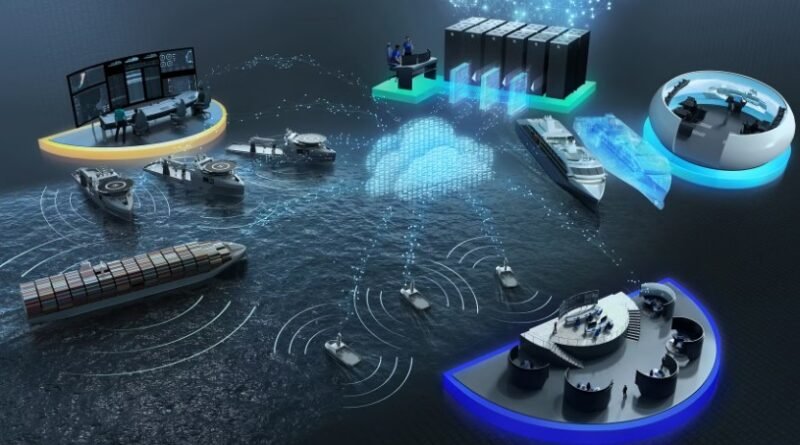
The new simulation centre will be powered by Kongsberg Maritime’s advanced simulation technology, providing a highly realistic digital environment for collaborative research involving Canadian industry, academic institutions, defence organizations, and public-sector partners. The facility will enable the testing and validation of next-generation maritime technologies before real-world deployment, supporting areas such as maritime safety, autonomous shipping, cyber resilience, critical infrastructure protection, port development, accident analysis, and low- and zero-emission vessel operations.
The centre is also expected to accelerate commercialization opportunities for Canadian marine technology companies while helping build sovereign digital capabilities that align with Canada’s defence modernization goals. By combining advanced simulation platforms, development tools, and application programming interfaces (APIs), the initiative will allow researchers and industry partners to prototype innovative maritime solutions, conduct human-factor studies, and reduce operational risks through virtual testing.
Jordan Freed, President and Managing Director of Kongsberg Geospatial, the company’s Ottawa-based subsidiary, said the investment reflects KONGSBERG’s continued commitment to Canada and supports the country’s strategic objective of strengthening sovereign digital defence capabilities through advanced maritime research and technology.
Are Føllesdal Tjønn, Managing Director of Maritime Simulation at Kongsberg Maritime, said the collaboration with BCIT will create a long-term innovation hub capable of improving maritime safety, accelerating workforce competency, and enabling new technologies to be tested in realistic virtual environments before entering operational service. He added that the initiative will support Canada’s future maritime growth through collaborative research and sustainable innovation.
A key feature of the project is the expansion of cloud-based simulation capabilities, allowing BCIT to deliver flexible remote maritime training beyond its campus. The cloud platform will increase student access to practical simulator training, support distributed learning models, and improve opportunities for Indigenous communities seeking careers in the maritime industry.
BCIT President Dr. Jeff Zabudsky described the Marine Innovation Simulation Centre of Excellence as a transformative partnership that combines advanced education, workforce development, applied research, and industry collaboration under one integrated platform. He said the project will also help Canadian small and medium-sized enterprises commercialize innovative marine technologies while creating Canada’s most advanced marine education and research environment.
Read: Four New Transpetro Tankers to Feature Kongsberg Maritime Integrated Systems
Jennifer Figner, BCIT’s Provost and Vice President, Academic, noted that the new centre will prepare the next generation of maritime professionals by expanding access to immersive simulation training, strengthening industry partnerships, and equipping graduates with the skills required for Canada’s rapidly evolving marine sector.
Canada’s Minister of Industry, the Honourable Mélanie Joly, welcomed the investment, describing MISE as the country’s first national hub dedicated to maritime simulation and applied research. She said the initiative will help address Canada’s shortage of certified mariners, support innovation among Canadian marine technology companies, strengthen the nation’s defence industrial base, and prepare the workforce needed for the next generation of commercial and defence fleets.
Beyond training and research, the partners expect the Marine Innovation Simulation Centre of Excellence to generate long-term economic benefits by strengthening collaboration between academia and industry, supporting innovation for Canadian businesses, expanding knowledge transfer, and reinforcing Canada’s sovereign maritime capabilities. The project is also expected to boost regional economic growth while advancing research, commercialization, and sustainable development across Canada’s maritime sector.