Egypt and Tanzania Unveil Maritime Shipping Route Plan to Boost Port Connectivity, Trade, and Regional Logistics
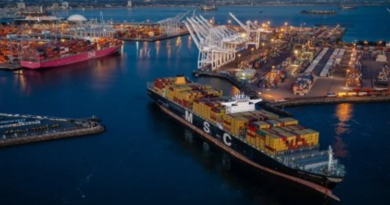
Egypt and Tanzania have taken a major step toward strengthening maritime trade, port connectivity, and regional logistics after their leaders discussed plans to launch a direct maritime shipping route linking Safaga Port in Egypt with Dar es Salaam Port in Tanzania.
The initiative was one of the key outcomes of talks held in Dar es Salaam between Egyptian President Abdel Fattah El-Sisi and Tanzanian President Samia Suluhu Hassan, highlighting both countries’ commitment to expanding strategic cooperation across maritime transport, trade, infrastructure, and agriculture.
Speaking during a joint press conference following the meeting, President El-Sisi said the proposed shipping route would improve cargo transportation, supply chain connectivity, and maritime commerce between North and East Africa. The leaders also discussed establishing a multimodal transport corridor linking Cairo and Dar es Salaam through a series of joint development projects designed to strengthen regional trade networks.
The Egyptian president reaffirmed Egypt’s readiness to contribute to the expansion and modernization of Dar es Salaam Port, emphasizing that future port development should be integrated into a wider regional logistics system connecting Tanzania with neighboring countries. Such integration is expected to enhance cargo movement, improve port efficiency, and support growing trade across East Africa.
El-Sisi also highlighted Egypt’s intention to build on the success of Egyptian companies involved in the Julius Nyerere Hydropower Project, expressing interest in securing additional infrastructure and development projects in Tanzania. He called for greater use of the expertise and capabilities developed by Egyptian firms operating in the country to further strengthen bilateral cooperation.
To support these efforts, the Egyptian president announced plans to expand technical assistance, transfer expertise, and increase training programs aimed at developing Tanzanian professionals across multiple sectors.
Beyond maritime cooperation, the two leaders discussed launching a large-scale agricultural land reclamation project in Tanzania to strengthen food security for both nations. The project is intended to increase production of strategic crops to meet domestic demand before expanding output for export markets.
Economic cooperation also featured prominently during the discussions, with both governments seeking to increase bilateral trade, attract new investment, and encourage stronger private-sector partnerships.
According to Egypt’s official statistics agency CAPMAS, trade between Egypt and Tanzania reached US$12.3 million during the first quarter of 2026. Egyptian exports totaled US$11.1 million, while imports from Tanzania stood at US$1.2 million.
The discussions further covered cooperation in construction, road infrastructure, maritime transport, ports, logistics zones, electricity, renewable energy, agriculture, irrigation, pharmaceuticals, and medical supplies.
President El-Sisi said the strong political commitment demonstrated by both governments has elevated bilateral relations to unprecedented levels in recent years and reaffirmed their shared vision of building a long-term strategic partnership.
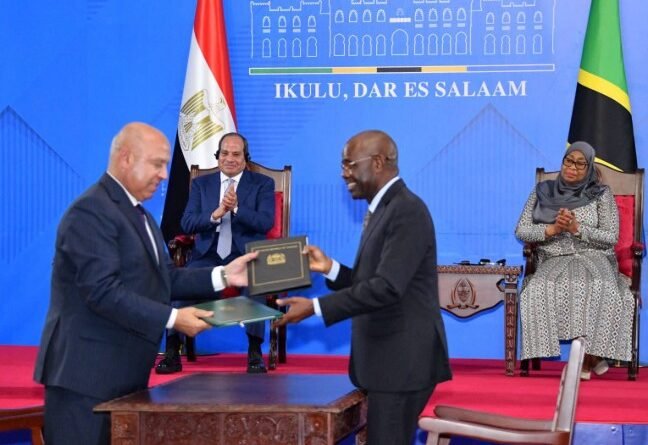
As part of the visit, the two presidents also witnessed the signing of two Memoranda of Understanding (MoUs) covering cooperation in transport, electricity, and renewable energy, reinforcing their commitment to expanding collaboration across key economic sectors.