
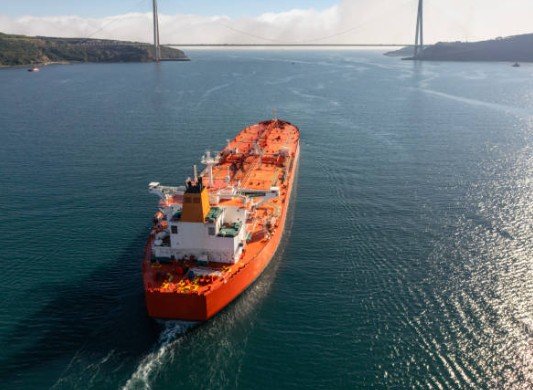
Gulf Crude Oil Exports Surge in July as Strait of Hormuz Shipping Slows Amid Renewed Regional Tensions
Gulf crude oil exports climbed sharply during the first half of July, reaching their highest levels since before the Iran conflict began in late February. However, fresh military escalation in the region is now slowing tanker movements through the Strait of Hormuz, raising new concerns over global maritime trade, oil shipping, and energy supply chains.
According to shipping intelligence firm Kpler, combined crude oil and condensate exports from Saudi Arabia, the United Arab Emirates (UAE), Iraq, Kuwait, and Iran increased by approximately 16% compared with June’s daily average, reaching around 12 million barrels per day (bpd) during the first half of July.
Meanwhile, maritime analytics provider Vortexa estimated the region’s exports at an even higher 13.06 million bpd over the same period.
Saudi Arabia, Iran, and Iraq accounted for the largest increases in export volumes, according to Kpler. Vortexa reported that Iraq recorded the biggest month-on-month rise, while exports from the UAE eased slightly after reaching record levels in June.
Higher Oil Exports Ease Supply Concerns
The increase in Gulf oil shipments helped ease market concerns over crude supply, contributing to lower oil prices after the United States and Iran reached an interim agreement in mid-June to reopen the Strait of Hormuz,the world’s most strategically important maritime route for oil and liquefied natural gas (LNG) exports,and begin negotiations toward a broader settlement.
However, the temporary agreement collapsed in early July following disagreements over the administration of the vital waterway, reigniting uncertainty across global energy markets.
Strait of Hormuz Tanker Traffic Begins to Slow
Despite the rebound in exports earlier this month, shipping activity through the Strait of Hormuz has started to decline as hostilities intensified once again.
Shipping data showed that only three commodity tankers transited the strait on Thursday, marking the lowest daily traffic since May.
“We’re seeing a slowdown in activity, which means that countries will have to reduce output, which decreases the amount of crude that will be shipped,” said Johannes Rauball, an analyst at Kpler.
Even with July’s recovery, Gulf crude and condensate exports remain approximately 32% below February’s pre-conflict peak of 17.6 million bpd, highlighting the continuing impact of regional instability on global oil logistics.
Red Sea Shipping Risks Add Fresh Pressure
Concerns are also growing in the Red Sea, another critical maritime corridor for global energy transportation.
According to sources, Iran has instructed Yemen’s Houthi movement to be prepared to disrupt Red Sea shipping if the United States targets Iranian energy infrastructure, adding another layer of risk to international maritime trade and global oil supply.
Saudi Arabia has continued shifting the majority of its crude exports away from the Gulf by utilizing its Yanbu terminal on the Red Sea coast. Kpler data shows that 75% of the Kingdom’s 5.29 million bpd of crude oil and condensate exports in July were shipped through Yanbu, reducing reliance on the Strait of Hormuz while maintaining export capacity.
The latest developments underscore how geopolitical tensions across the Middle East continue to influence global shipping routes, oil tanker operations, energy security, and international maritime logistics, with the Strait of Hormuz and the Red Sea remaining at the center of global energy trade.