Port of Los Angeles Plans Vincent Thomas Bridge Upgrade to Strengthen Global Trade
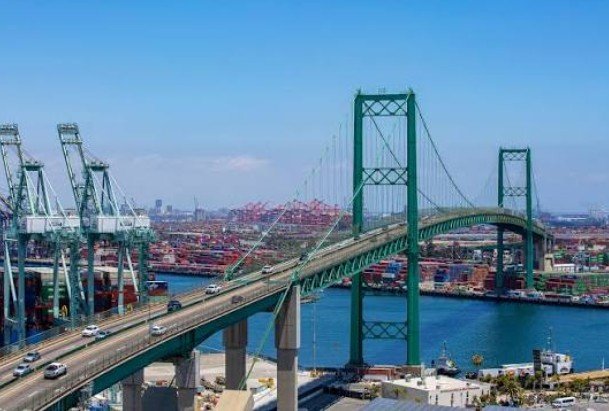
The Port of Los Angeles, the California State Transportation Agency (CalSTA), and the California Department of Transportation (Caltrans) have launched a strategic planning partnership to evaluate the future of the Vincent Thomas Bridge, a critical freight transportation link supporting global maritime trade through the San Pedro Bay Port Complex. The agreement, formalized through a Memorandum of Understanding (MOU) on July 30, 2026, establishes a roadmap to examine options for replacing or modifying the bridge to improve freight mobility, infrastructure resilience, safety, and sustainability.
According to the official announcement from the Port of Los Angeles, the partnership will focus on planning, technical assessments, and environmental reviews under the Caltrans project development process to determine the most effective long-term solution for the aging transportation asset. Subject to approval by the Los Angeles Board of Harbor Commissioners, the Port will allocate $5 million toward preliminary engineering, environmental studies, and technical evaluations required to assess future alternatives.
California Transportation Secretary Toks Omishakin highlighted the importance of resilient transportation infrastructure in maintaining economic strength, stating that continued investment in California’s transportation network will help move goods efficiently from the state’s ports to markets across the United States. Los Angeles Mayor Karen Bass emphasized that planning for the future of the Vincent Thomas Bridge will support economic growth, create jobs, and enhance the competitiveness of the Port of Los Angeles in an evolving global trade environment.
Completed in 1963, the Vincent Thomas Bridge connects San Pedro and Terminal Island while crossing the Port’s main navigation channel. The bridge is currently undergoing a major redecking project aimed at addressing maintenance and safety requirements; however, the ongoing work does not resolve the bridge’s existing 185-foot vertical clearance limitation, which restricts access for the newest generation of ultra-large container ships.
The global container shipping industry is increasingly deploying larger and more fuel-efficient vessels with capacities of 22,000 to 24,000 TEUs (twenty-foot equivalent units). These mega container ships are currently unable to pass beneath the bridge, limiting access to approximately 40% of the Port of Los Angeles’ container terminal capacity located north of the structure. Addressing this maritime infrastructure constraint could significantly improve port efficiency, cargo handling capacity, and the ability of terminals to accommodate future generations of vessels.
From a maritime logistics perspective, the Vincent Thomas Bridge modernization initiative represents more than a transportation project; it reflects the growing need for ports worldwide to adapt infrastructure to changing shipping trends. As global carriers introduce larger vessels and transition toward cleaner maritime fuels such as e-methanol and other alternative energy solutions, port infrastructure must evolve alongside vessel technology. Enhancing navigational access at one of the world’s busiest container gateways could reduce supply chain bottlenecks, lower emissions per container moved, and strengthen the long-term competitiveness of U.S. maritime trade.
The Port of Los Angeles stated that improving vessel access would support cleaner and more efficient cargo operations while contributing to regional sustainability objectives and reducing environmental impacts on nearby communities. The project also aligns with broader global priorities including smart port development, sustainable shipping, maritime infrastructure modernization, supply chain resilience, and green logistics transformation.
As international trade continues to expand and shipping companies invest in larger, more efficient vessels, the future planning of critical port infrastructure will play a decisive role in maintaining global trade competitiveness. The Vincent Thomas Bridge evaluation highlights how major maritime hubs are preparing for the next generation of shipping, where infrastructure capacity, environmental performance, and digitalized logistics systems will define the future of port operations.
Read: A Year of Highs and Lows: Port of Los Angeles Remains America’s Busiest Container Hub