Spain Deploys Sea Barrier at Ceuta Border after Mass Migrant Crossing
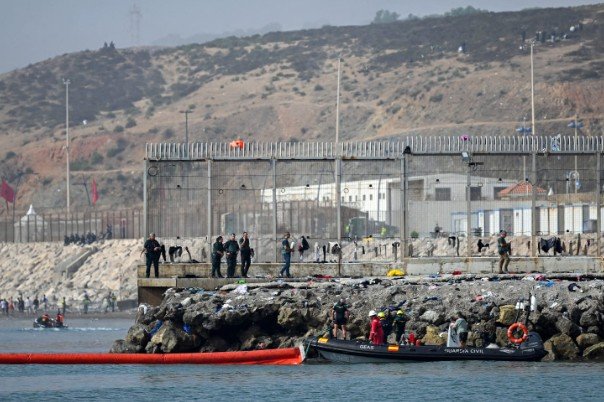
Spain has begun installing a 500-meter-long floating maritime containment barrier along the sea border between its North African enclave of Ceuta and neighboring Morocco following one of the largest recent illegal maritime migration incidents in the western Mediterranean. The emergency measure comes after an estimated 50,000 to 60,000 migrants breached the frontier earlier this week, prompting heightened maritime border security, coastal surveillance, and international concern over the protection of the European Union’s external maritime frontier. According to the Spanish government, the death toll has risen to 67, including migrants who drowned at sea and others who died during a stampede while attempting to cross the breakwater barrier. Spanish authorities have also reported that the majority of migrants who entered Ceuta have since returned to Morocco.
Spanish Prime Minister Pedro Sánchez criticized calls from some European political leaders to suspend Spain from the Schengen Area, describing such proposals as being driven by prejudice, misinformation, ignorance, or political interests. During a visit to Ceuta, Spanish Interior Minister Fernando Grande-Marlaska stated that Spain remains committed to enforcing immigration laws while emphasizing that cooperation with Morocco enabled authorities to regain control of the situation within 24 hours. He rejected suggestions that Morocco poses a security threat to Ceuta, describing Rabat as a reliable partner in managing migration and cross-border security. Spanish authorities also confirmed that soldiers continued intercepting migrants arriving by sea at Tarajal Beach and escorting them back across the border.
The incident has prompted a broader European response, with the leaders of 22 European Union member states urging an extraordinary meeting of EU interior ministers to coordinate a common strategy on irregular migration, border protection, and hybrid security threats. In a joint letter to EU institutions, the leaders warned that uncontrolled mass crossings could undermine confidence in the bloc’s common migration policy and create the perception that illegal entry into the European Union could ultimately result in legal residence. Spain has likewise called for an urgent ministerial videoconference to reinforce that safeguarding the EU’s external borders is a shared responsibility among all member states.
Meanwhile, hundreds of migrants voluntarily crossed back into Morocco, reporting difficult humanitarian conditions after reaching Ceuta. Many described shortages of food, shelter, and medical assistance while staying around the Spanish enclave. The return movement has reduced pressure on local reception facilities, although authorities continue monitoring the maritime frontier amid heightened security measures. Infrastructure around the border, including roads connecting the Moroccan town of Fnideq with Ceuta, showed signs of unrest, with damaged vehicles, police checkpoints, and continued deployment of security forces.
From a maritime security perspective, the Ceuta crisis highlights the increasing strategic importance of maritime border management, coastal surveillance systems, and sea-based migration control in the Mediterranean region. The rapid deployment of a floating containment barrier demonstrates how coastal infrastructure is becoming an integral component of national security alongside traditional naval patrols and international cooperation. The event also underscores the growing intersection between maritime security, humanitarian protection, and geopolitical stability, emphasizing the need for coordinated regional policies that balance border enforcement with international obligations toward the protection of human life at sea.