Alexandria Port Advances Dry Bulk Terminal with China’s C&D in Major Logistics Investment
Egypt’s Alexandria Port Authority has signed a memorandum of understanding (MoU) with China’s Xiamen C&D to develop a new industrial dry bulk terminal at El Mex Port, advancing port infrastructure, freight transport and logistics investment in one of the country’s key maritime hubs.
The project is part of the Greater Alexandria Port development and the Sokhna–Alexandria logistics corridor. According to Egypt’s Maritime Transport and Logistics Sector, the terminal is the first of four planned facilities at El Mex. Its development is intended to strengthen cargo-handling capacity, improve supply chain efficiency and support the movement of industrial raw materials and finished goods.
Port Development Agreement and Key Officials
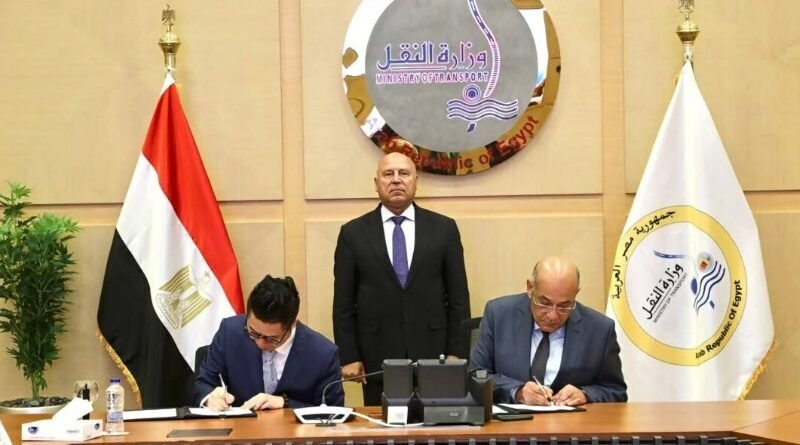
Egyptian Transport Minister Kamel El-Wazir witnessed the signing ceremony. The agreement was signed by Alexandria Port Authority Chairman Ehab Salah and Xiamen C&D Managing Director and Chief Executive Officer Liu Rongdian. Deputy Transport Minister for Maritime Transport Nehad Shaheen and Maritime Transport and Logistics Sector Head Hussein El-Geziry also attended.
The proposed terminal layout includes two main berths designed to accommodate large cargo vessels. El-Wazir said the completed facility would be capable of accommodating three large vessels simultaneously, supporting cargo operations and the handling of industrial commodities.
Read:Busan Port Launches Investment Bid for Ungdong Phase 2 Hinterland Development Project
Integrated Logistics Infrastructure to Improve Cargo Movement
The development plan includes a logistics centre designed to facilitate truck movements, alongside improved connections to Egypt’s national railway network. These links are intended to integrate maritime cargo handling with road and rail transport, improving connectivity between the port, industrial zones, production centres and consumer markets.
According to El-Wazir, the terminal is expected to reduce supply chain costs and improve the transportation of raw materials and finished products. Cement, steel and other heavy industries are among the sectors identified as potential beneficiaries, particularly through improved access to export markets and more efficient cargo transportation.
The project is also expected to generate thousands of direct and indirect jobs during construction and development. Once operational, employment opportunities are anticipated across freight transport, logistics, warehousing and related industrial services.
Environmental Standards and Egypt Vision 2030
The technical plan includes an environmental management system intended to comply with international standards. The project forms part of the Egyptian Ministry of Transport’s broader programme to develop seaports and integrated logistics areas in line with Egypt Vision 2030.
By incorporating environmental management into port development, the project is intended to align infrastructure expansion with operational requirements and the country’s wider development objectives.
Read:Gadani Ship Recycling Operations Resume as Pakistan Upgrades Maritime Industry to Global Standards
Strategic Implications for Maritime Trade and Supply Chains
The agreement reflects Egypt’s efforts to attract foreign direct investment, expand private-sector participation in port infrastructure and strengthen the country’s position in international trade and global supply chains. The government’s stated objectives include developing Egypt as a regional centre for transportation, logistics and transit trade.
For industrial exporters, the integration of port facilities with road and rail networks could improve access to shipping services and streamline the movement of bulk commodities. The terminal’s proposed capacity to accommodate three large vessels simultaneously may also support cargo-handling operations, although its eventual impact will depend on implementation, operating capacity and the efficiency of connecting transport infrastructure.
For Xiamen C&D, the agreement provides a platform for cooperation with Egyptian partners on the terminal’s development. Liu Rongdian said the company would work with its local partners to advance implementation and expressed interest in expanding cooperation beyond the initial project.
Potential areas for future collaboration include additional port terminals, commercial vessel manufacturing and broader supply chain activities.
As Egypt continues to develop its maritime infrastructure, the El Mex terminal is positioned within a wider strategy to connect seaports, industrial production and inland transport networks. Its contribution to trade and logistics will depend on the successful delivery of the project and the effective integration of its maritime, road and rail operations.