Sudan Proposes Red Sea Economic Zone for Russia
Sudan has proposed establishing a free economic zone along the Red Sea coast to accommodate Russian maritime logistics facilities, reopening discussions over Moscow’s potential naval and logistical presence near a strategically important international shipping corridor.
The proposal emerged during the Russia-Africa Summit in Moscow late last week, according to informed sources cited by Sudan Tribune. The proposed arrangement would allow Russia to establish facilities for storing wheat, fuel and other supplies, offering a civilian and logistical framework that could address regional and international concerns over a potential Russian military base on the Red Sea.
Read:UN Warns Red Sea Security Risks Could Threaten Global Energy Markets and Food Security
Russia’s Strategic Interest in the Red Sea
Closed-door discussions between Sudanese and Russian officials have revived negotiations over a Russian logistics support point and a possible naval base on Sudan’s Red Sea coast.
The proposed economic zone is intended to provide a civilian and logistical alternative that would enable Moscow to maintain a strategic presence in the region while addressing concerns surrounding a permanent military installation.
Both countries have periodically denied reports of new developments concerning a naval base in Port Sudan, maintaining that discussions remain linked to a 2020 agreement awaiting parliamentary ratification.
The potential establishment of the facility has raised concerns in the United States, European countries, Egypt and Saudi Arabia because of its possible implications for Red Sea maritime security and global trade.
Military Supplies and Mineral Investment
Separately, a high-level Sudanese delegation, including intelligence and defence industry chiefs, sought advanced Russian military supplies, particularly drones and air defence systems.
In exchange for military equipment, ammunition and spare parts, Sudan offered Moscow extensive concessions involving gold, copper and other mineral resources.
The delegation also urged Russia to adopt a stronger position in support of the Sudanese army’s international legitimacy and praised Moscow’s support at the United Nations Security Council.
Putin Calls for Political Settlement
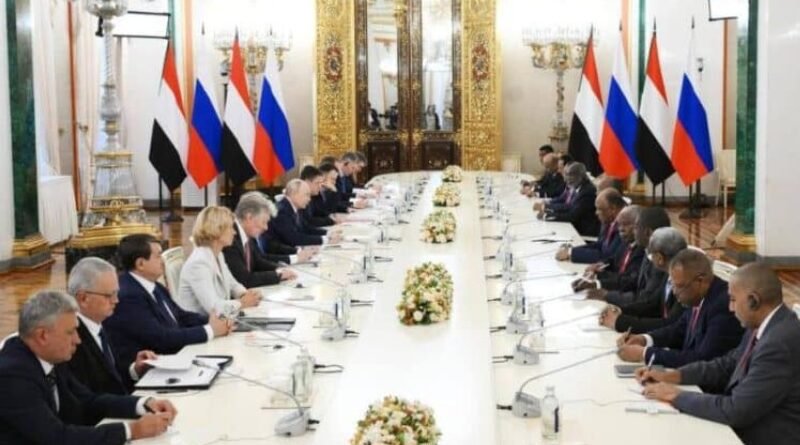
During discussions with Sudanese army chief Abdel Fattah al-Burhan, Russian President Vladimir Putin emphasized the need to end hostilities and pursue a political settlement.
Putin also expressed Moscow’s readiness to act as a mediator or guarantor to help stabilize conflicts surrounding Sudan.
Burhan subsequently announced Sudan’s willingness to allocate the proposed Red Sea free economic zone for Russian facilities to store wheat, fuel and other essential supplies.
The two countries also pledged to strengthen bilateral cooperation in education, healthcare, infrastructure and digital development. Both sides emphasized the importance of a Sudanese-led democratic transition once stability is achieved.

Implications for Red Sea Shipping and Regional Security
The proposal reflects the growing strategic significance of the Red Sea in international maritime trade and geopolitical competition. Its location along a major shipping corridor gives any potential foreign logistics facility considerable strategic importance.
For Russia, access to logistics infrastructure on Sudan’s coastline could strengthen its operational reach and support maritime activities in the wider region. For Sudan, the proposed economic zone could create opportunities for infrastructure investment, mineral development and broader economic cooperation.
Read:Yemen Houthis Seize Red Sea Island, Raising New Shipping and Maritime Security Risks
However, the proposal remains part of ongoing discussions rather than a finalized naval base agreement. Its implementation will depend on political developments, parliamentary ratification and the outcome of negotiations between Khartoum and Moscow.