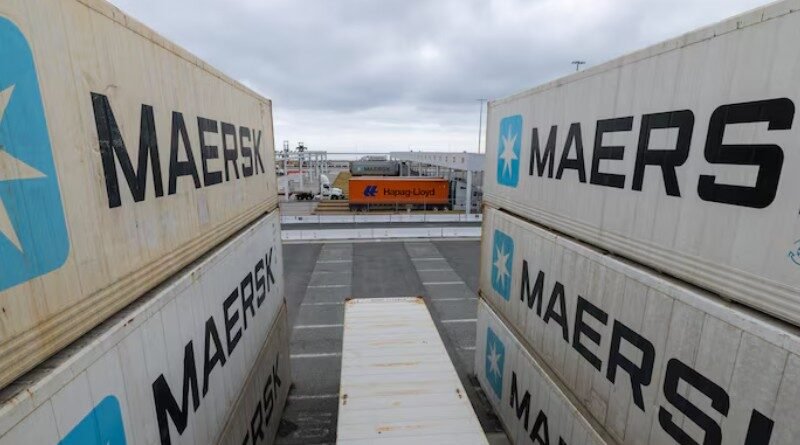
Maersk Imposes $400 Heavy Load Surcharge on Mediterranean Routes
Maersk will introduce a USD 400 Heavy Load Surcharge (HWS) on shipments of 20-foot containers with a Verified Gross Mass (VGM) exceeding 25 metric tons from Far East Asia to the Mediterranean, effective 23 November 2026. The revised ocean freight charges will apply across the designated trade route, covering multiple container types and destinations, with the applicable rate determined by the Price Calculation Date (PCD).
The new container shipping surcharge will affect all Maersk Ocean products, including contract services, SPOT bookings, Maersk Go and other offerings. For shippers, freight forwarders and international logistics operators transporting heavy cargo, the revised tariff introduces an additional USD 400 cost for qualifying 20-foot containers, making accurate cargo weight verification an important part of freight cost planning.

New $400 Tariff Covers All 20-Foot Container Types
Under the revised tariff structure, Maersk will charge USD 400 per applicable 20-foot container when its VGM exceeds 25 metric tons. The surcharge will cover 20’ Dry, 20’ Bulk, 20’ Collapsible Flat Rack, 20’ Flat Rack, 20’ Hive, 20’ Pallet Wide, 20’ Open Top, 20’ Tank, 20’ Twin Deck and 20’ Reefer equipment.
The measure will apply to shipments originating in Far East Asia, including Brunei, China, Hong Kong China, Indonesia, Japan, Cambodia, Mongolia, South Korea, Laos, Myanmar, Malaysia, the Philippines, Singapore, Taiwan China, Thailand and Vietnam.
On the destination side, the covered Mediterranean markets include Albania, Bulgaria, Cyprus, Algeria, Egypt, Spain, France, Georgia, Greece, Croatia, Israel, Italy, Lebanon, Libya, Morocco, Montenegro, Malta, Portugal, Romania, Slovenia, Syria, Tunisia, Turkey and Ukraine. The tariff will also extend to other European destinations that use Mediterranean ports as their final discharge ports.
Verified Gross Mass Determines Surcharge Applicability
The surcharge threshold is based on the container’s Verified Gross Mass, which Maersk defines as the combined weight of the cargo, including dunnage and bracing materials, together with the tare weight of the container. Accordingly, the USD 400 charge will be triggered when the total verified weight exceeds 25 metric tons.
For customers arranging international cargo transportation, this distinction is important because the threshold applies to the complete container weight rather than the cargo weight alone. Shippers and freight forwarders will therefore need to consider the verified gross mass when calculating shipping expenses and preparing freight quotations.
Booking Dates Determine the Applicable Tariff
Maersk has specified different Price Calculation Date (PCD) criteria depending on the booking category. For non-FMC, non-SPOT bookings, the PCD will be the scheduled departure date of the first water leg at the time of booking confirmation. For non-SPOT bookings subject to FMC regulations, the PCD will be determined by the last container gate-in date.
For SPOT bookings, the applicable surcharge will instead be retrieved based on the booking confirmation date. These distinctions determine which tariff level applies to a shipment under the revised ocean freight pricing structure.
Impact on Freight Costs and Maritime Logistics
The revised surcharge introduces an additional weight-based expense for heavy 20-foot container shipments moving from Far East Asia to Mediterranean markets. Its application across contract, SPOT and Maersk Go services makes the change relevant to a broad range of customers involved in international shipping, cargo handling and freight forwarding.
For businesses managing heavy cargo movements, the revised tariff makes accurate VGM reporting and advance freight cost calculations particularly important. Reviewing container specifications, booking dates and applicable trade conditions will help customers assess the additional transportation costs before confirming shipments.
Regulatory Conditions for Applicable Trade Routes
Maersk has also outlined specific regulatory provisions for shipments subject to the US Shipping Act or China’s Maritime Regulations. For these trades, quotations or surcharges that differ from the carrier’s published tariff will not be binding on Maersk unless they are incorporated into a service contract or an amendment to an existing service contract.
The relevant service contract or amendment must be filed with the Federal Maritime Commission (FMC) or the Shanghai Shipping Exchange, as applicable.