Azerbaijan and Japan Deepen Economic Cooperation, Energy Security and Trans-Caspian Transport Connectivity
Azerbaijan and Japan have reaffirmed their commitment to strengthening bilateral economic cooperation, energy security, trade, investment, and regional transport connectivity following a high-level meeting between the two countries’ foreign ministers in Tokyo.
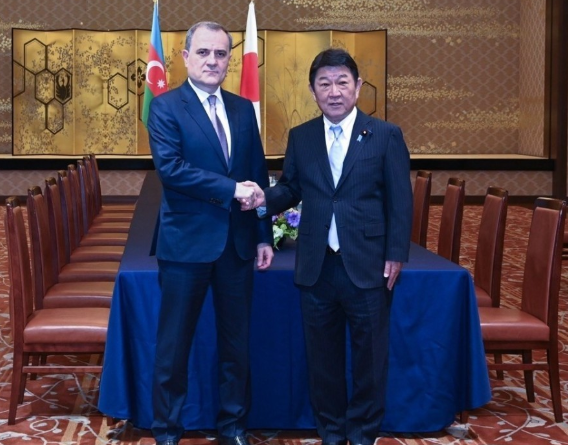
Azerbaijan’s Minister of Foreign Affairs, Jeyhun Bayramov, visited Japan on June 9–10, 2026, and met with Japan’s Minister for Foreign Affairs, Toshimitsu Motegi on June 10, according to Azerbaijan’s Ministry of Foreign Affairs.
During the meeting, both ministers welcomed the steady development of bilateral relations over more than three decades since the establishment of diplomatic ties in 1992. They underscored the importance of maintaining active political dialogue through high-level visits and consultations.
The two sides noted that the visit provided an important opportunity to further strengthen diplomatic and economic relations and reaffirmed their intention to expand cooperation across multiple sectors, including diplomacy, trade, investment, and economic development.
The Azerbaijani side expressed appreciation for Japan’s Official Development Assistance (ODA) and conveyed its expectation for continued collaboration in development initiatives.
Japan acknowledged the importance of Azerbaijan’s stability and prosperity in supporting peace and security across the Caucasus region. Both countries agreed to further strengthen cooperation in the economic sphere.
Tokyo also welcomed Azerbaijan’s decision to introduce a unilateral one-year visa-free regime for Japanese citizens, a move aimed at promoting tourism and expanding economic, cultural, and humanitarian exchanges. Both sides confirmed their commitment to facilitating travel between their citizens.
The ministers welcomed the outcomes of the 12th meeting of the Azerbaijan–Japan Joint Economic Committee, held in September 2025, which focused on enhancing trade and investment relations. They agreed on the importance of holding the next committee meeting in the near future.
Both governments also welcomed progress in negotiations on the Japan–Azerbaijan Investment Agreement, which began in February 2019, and agreed to accelerate discussions with the goal of concluding the agreement as soon as possible.
In the field of sustainability and climate cooperation, the two sides expressed agreement on utilizing the Joint Crediting Mechanism (JCM) to promote decarbonization initiatives and confirmed plans to hold the first meeting of the JCM Joint Committee in the near future.
A key area of discussion was cooperation within the Trans-Caspian International Transport Route, a strategic trade and logistics corridor designed to strengthen regional and international connectivity. The ministers emphasized the importance of continued collaboration to enhance transport links and supply chain resilience.
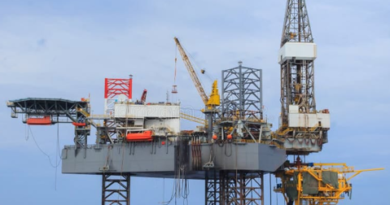
The two countries also highlighted their long-standing cooperation in the development of the Azeri-Chirag-Gunashli oil and gas fields and the Baku-Tbilisi-Ceyhan pipeline, projects that involve Japanese companies and demonstrate the benefits of successful international energy partnerships.
Both sides reaffirmed Azerbaijan’s significant role in ensuring stable energy supplies under current global conditions. They expressed their intention to further expand cooperation in energy security, including maintaining reliable crude oil supplies originating from Azerbaijan.
The ministers also emphasized the importance of maritime security, recognizing its role in safeguarding global energy flows, international trade routes, and regional economic stability.
The meeting included discussions on recent developments affecting economic resilience, economic security, and the broader international environment. Both sides reaffirmed the importance of continued dialogue and cooperation on issues of mutual interest.
Azerbaijan and Japan further confirmed their commitment to cooperation on international platforms, including elections within international organizations, and expressed support for advancing United Nations Security Council reform through the expansion of both permanent and non-permanent membership categories.
The two countries also stressed the importance of respecting the principles of the United Nations Charter, including independence, sovereignty, and territorial integrity.
According to Azerbaijan’s Ministry of Foreign Affairs, Foreign Minister Jeyhun Bayramov’s visit to Tokyo demonstrates the determination of both countries to further deepen bilateral relations and expand cooperation in areas of mutual interest.
“This visit demonstrates the commitment of both countries to further deepen bilateral relations and expand cooperation in areas of mutual interest,” the ministry stated.