
Iran Reimposes Full Strait of Hormuz Closure Amid Escalating US-Iran Conflict
Global Shipping, Oil Markets, and Maritime Trade Face Renewed Uncertainty as Iran Tightens Control Over Key Energy Chokepoint
Iran has announced a complete closure of the Strait of Hormuz to all oil tankers and commercial vessels following recent United States military strikes, warning that any ship attempting to transit the strategic waterway could face military action.
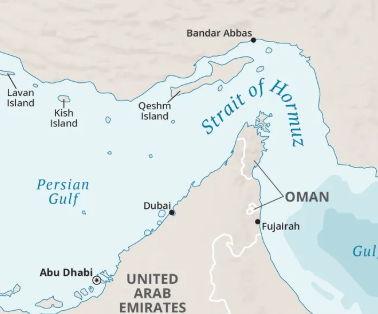
The Strait of Hormuz remains one of the world’s most critical maritime routes, handling approximately 20 percent of global oil and liquefied natural gas (LNG) shipments during normal trading conditions. The narrow passage serves as the primary gateway for Gulf energy exports to international markets.
Latest Closure Follows Renewed Military Escalation
Iran’s military ordered the latest closure early Thursday after several days of US strikes on Iranian territory. While Tehran declared the waterway fully shut, US officials stated that some vessels were still managing to transit the strait.
The announcement follows reports of explosions in Bandar Abbas and on Qeshm Island, as well as damage to water infrastructure in Iran’s southern Sirik region.
The US Central Command (CENTCOM) described its operations as a proportional self-defense response to attacks on US forces and international commercial shipping, including the downing of a US Apache helicopter over the Strait of Hormuz earlier this week. Iran denied deliberately targeting the aircraft.
In response, Iran’s Islamic Revolutionary Guard Corps (IRGC) launched drone attacks against the US Fifth Fleet in Bahrain and fired long-range missiles toward a military base in Jordan. Regional militaries in Jordan and Kuwait reported intercepting incoming threats, while air raid sirens sounded in Bahrain.
US Defense Secretary Pete Hegseth later confirmed additional strikes on what Washington described as key Iranian facilities, stating that the operations were intended to help secure a permanent ceasefire.
Meanwhile, US President Donald Trump warned that Iran would face consequences for failing to reach a negotiated agreement.
Fragile Ceasefire Under Growing Pressure
Diplomatic efforts between Washington and Tehran have struggled since direct talks in Islamabad broke down on April 12. Since then, both sides have exchanged proposals through intermediaries, but major disagreements remain, particularly concerning Lebanon’s role in any future settlement.
Security analysts warn that the ongoing exchange of military strikes increases the risk of miscalculation and a broader regional conflict.
Why the Strait of Hormuz Matters
The Strait of Hormuz is widely regarded as the world’s most important maritime energy corridor. Under normal conditions, approximately 20 million barrels of oil per day move through the route.
Iran initially declared the strait closed on March 2 following the outbreak of hostilities with the United States and Israel. Oil prices surged above $100 per barrel from pre-conflict levels of around $65.
Although Iran temporarily reopened the waterway after a ceasefire agreement on April 8, tensions quickly resurfaced. Following the collapse of negotiations and the US blockade of Iranian ports, Tehran announced another closure on April 18.
The IRGC has repeatedly stated that control of the Strait of Hormuz remains under the authority of Iran’s armed forces and linked any reopening to the restoration of unrestricted navigation to and from Iranian ports.
Some Vessels Still Allowed Through
Despite the closure declarations, Iran has periodically allowed selected vessels to transit the strait.
In a communication sent to members of the International Maritime Organization, Tehran stated that non-hostile vessels complying with Iranian security regulations could receive safe passage.
Ships associated with countries including China, Malaysia, Egypt, South Korea, and India have reportedly been granted permission to transit during parts of the blockade period.
According to shipping intelligence sources, some vessels may have paid transit fees to Iranian authorities. Ship-tracking data indicated that hundreds of vessels continued crossing the waterway during the early stages of the crisis, although volumes remain far below normal levels.
Commercial Ships Targeted During Crisis
The conflict has significantly increased maritime security risks in the Gulf.
According to vessel-tracking data, at least 22 ships have reportedly been attacked since the crisis began.
Two Indian merchant vessels were struck in the Strait of Hormuz on April 18, prompting diplomatic protests from New Delhi. Additional incidents included reported attacks on tankers near Oman and the detention of foreign commercial vessels by Iranian forces.
Read More: Suspected Naval Mine Detected in Strait of Hormuz, Oman Issues Maritime Navigation Warning
Most recently, the IRGC Navy reported targeting vessels attempting to transit the strait without authorization.
The United States has also taken action against vessels allegedly transporting Iranian oil. CENTCOM reported disabling several ships and redirecting dozens more since the implementation of the blockade against Iranian ports.
Energy Markets and Global Supply Chains Under Pressure
The prolonged disruption in the Strait of Hormuz has triggered one of the most severe energy market shocks in recent years.
Oil prices have climbed as high as $126 per barrel since the blockade began, compared with approximately $65 before the conflict. Markets reacted again to the latest closure announcement, reflecting concerns about further escalation between Washington and Tehran.
Beyond energy markets, restrictions on shipping traffic have also disrupted global supply chains, affecting the movement of fertilizers, pharmaceuticals, and other essential commodities.
Analysts warn that continued instability in the Strait of Hormuz could place additional pressure on global trade, maritime logistics, energy security, and international shipping operations while reducing prospects for a negotiated resolution between the United States and Iran.


