Bulk Carrier Attacked by Small Boats in Strait of Hormuz amid Rising Maritime Tensions
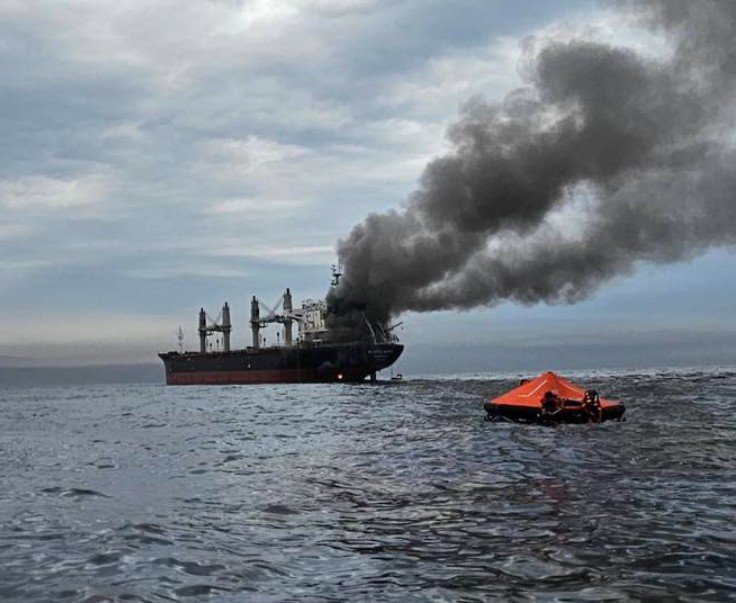
Tensions are escalating in one of the world’s most critical maritime chokepoints as a bulk carrier came under attack by small craft in the Strait of Hormuz, raising fresh concerns over shipping security, oil trade disruption, and global supply chain risks.
On Sunday, a foreign-flagged bulker reported a security incident while sailing northbound near Sirik, along Iran’s coastline. According to maritime intelligence firm Vanguard Tech, multiple fast-moving small craft approached the vessel around 1130 UTC, triggering alarm across regional shipping networks. Despite the confrontation, all crew members were reported safe, and no oil spill or environmental damage occurred, an important factor for maritime safety and environmental protection in the Gulf.
The vessel involved has been identified as the Minoan Falcon, a Greek-owned bulk carrier with a capacity of approximately 90,000 deadweight tons (DWT). AIS tracking data indicates that at the time of the incident, the ship had moved within Iran’s 12-nautical-mile territorial waters, suggesting either a navigational diversion or a strategic routing decision through a tightly controlled shipping lane. Shortly after the encounter, the vessel altered course and later switched off its AIS transponder, a move that often heightens concerns over vessel tracking, maritime surveillance, and potential geopolitical risk exposure. Its last declared destination was Bandar Imam Khomeini, a key Iranian port in the northern Arabian Gulf.
Meanwhile, regional maritime activity is being further complicated by increased radio communications and directives from the Islamic Revolutionary Guard Corps (IRGC). Ships anchored off Ras Al Khaimah and Mina Saqr in the UAE have reported receiving urgent Channel 16 advisories instructing them to relocate to Dubai immediately or face unspecified consequences. While radio interference and warnings in the Strait of Hormuz are not uncommon, this latest directive signals a potential tightening of maritime control measures in the region.
At the same time, the United States Navy, under U.S. Central Command (CENTCOM), continues its efforts to restrict Iranian tanker movements as part of broader enforcement actions in the Gulf. Officials report that 49 vessels linked to Iranian trade routes have been redirected in recent operations, emphasizing Washington’s stance on “total enforcement” amid ongoing geopolitical tensions.
Data from tanker monitoring services reveals that during April, at least 25 laden tankers departed Iran. Of these, seven were forced to return, two were seized in the Indian Ocean, and the majority managed to reach their commercial destinations, highlighting the complexity and partial effectiveness of current maritime enforcement strategies.
This latest incident underscores growing risks for global shipping companies, marine insurers, and energy markets, as the Strait of Hormuz remains a vital artery for international oil transport and maritime trade. With rising naval activity, increased vessel monitoring, and heightened geopolitical friction, industry stakeholders are closely watching developments that could impact freight rates, tanker routes, and overall maritime security in the Middle East.
Related: