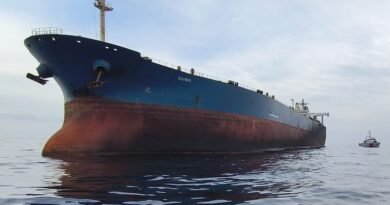

Finland Jails Fitburg Captain Over Baltic Sea Cable Damage
A Finnish court has sentenced the Russian captain of the cargo ship Fitburg and an Azerbaijani crew member to prison for aggravated sabotage after finding them guilty of damaging two underwater telecommunications cables in the Gulf of Finland. The ruling brings renewed attention to Baltic Sea maritime security, submarine cable protection and the safety of critical maritime infrastructure.
The Helsinki District Court delivered its verdict on Thursday, November 5, 2026, following an investigation into damage to cables connecting Finland and Estonia. The court found that the vessel had dragged its anchor chain and shank along approximately 130 kilometres (81 miles) of seabed, damaging the underwater infrastructure.
The Russian captain received a prison sentence of three years and six months, while the Azerbaijani crew member was sentenced to two years and ten months. According to the court, both men acted intentionally during the incident.

The court also ordered the two defendants to jointly pay approximately €1.9 million ($2.1 million) in damages. In addition, the captain was directed to pay a further €85,000. Lawyers for the captain confirmed that he would appeal the verdict, while the crew member had not yet decided whether to challenge the ruling.
Finnish authorities seized the Fitburg in the Gulf of Finland on December 31 while it was travelling from St. Petersburg, Russia, to Israel. Investigators suspected that the vessel had deliberately damaged the two telecommunications cables linking Finland with neighbouring Estonia.
Read:Japan Strengthens Undersea Cable Security and Critical Infrastructure
Both defendants, who have remained in Finland since the vessel’s seizure and are subject to travel bans, denied wrongdoing and challenged Finland’s jurisdiction in the case. Investigators said the vessel had 14 crew members from Russia, Georgia, Kazakhstan and Azerbaijan.
The verdict highlights the growing strategic importance of undersea telecommunications networks and maritime infrastructure protection. Submarine cables support international data connectivity, digital communications and financial transactions, making their security an essential consideration for countries dependent on reliable global networks.
Read:Finland Probes Suspected Subsea Cable Damage in Baltic Sea; Four Individuals Under Investigation
For maritime authorities, safeguarding these assets involves effective vessel monitoring, seabed surveillance and cooperation among coastal states. The Baltic Sea has become an important focus of these efforts following several incidents involving underwater cables and pipelines in recent years.
Finland has strengthened measures to protect its undersea infrastructure in response to these incidents, reflecting the increasing role of maritime security, critical infrastructure protection and subsea surveillance in regional maritime policy.