Japan Strengthens Undersea Cable Security and Critical Infrastructure
Japan’s undersea cables are becoming an increasingly important national security and critical infrastructure priority as Prime Minister Sanae Takaichi’s second reshuffled Cabinet begins work. Protecting these submarine fiber-optic cables is vital not only for Japan but also for the countries with which it communicates and conducts business, making maritime security, telecommunications protection and infrastructure resilience a growing government concern.
Submarine cables carry approximately 99% of Japan’s international data traffic, supporting financial transactions, government communications, cloud computing, military coordination, industrial supply chains, news reporting, telephone services and internet connectivity. With the scale of the challenge spanning telecommunications, maritime security, defense and emergency response, protecting this infrastructure will require a coordinated whole-of-government approach.
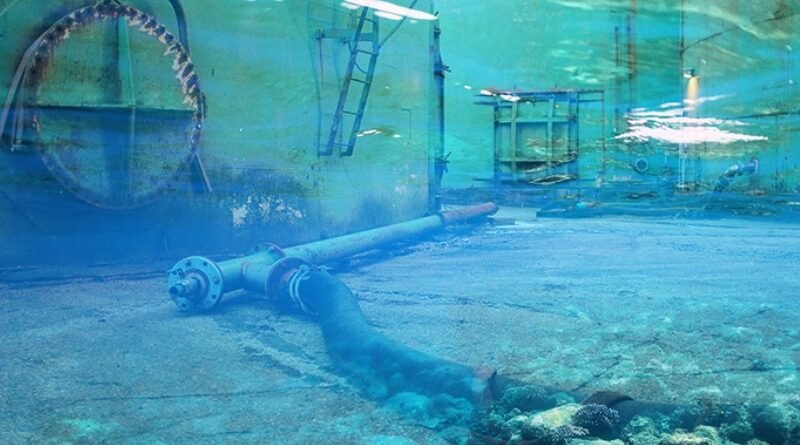
Japan’s security depends not only on ships patrolling its waters, aircraft guarding its skies and personnel monitoring its thousands of miles of coastline. It also depends on a largely invisible network resting on the ocean floor. These cables have become strategic lifelines because the country’s economy, government operations and international communications rely heavily on them.
Japan’s dependence on submarine cables is partly a consequence of its geography. As an island nation, it does not have the extensive cross-border terrestrial fiber networks available to continental countries. Satellites provide important backup and specialized services, but they currently cannot replace the capacity, speed and cost-effectiveness of modern fiber-optic cables.
Japan is also a major node in the global submarine cable network, with at least 20 international cable landing stations connecting the country with North America, Southeast Asia, Australia, Taiwan, South Korea and other destinations.
A major vulnerability is the geographic concentration of these connections. Many international cables land in relatively limited areas, particularly around the Boso Peninsula in Chiba Prefecture and the Shima Peninsula in Mie Prefecture. This creates potential points of failure because a major earthquake, tsunami, coordinated sabotage or attack on landing facilities could disrupt several systems simultaneously.
Japan’s seismic environment adds another layer of risk. The 2011 Great East Japan Earthquake demonstrated that communications networks can have significant redundancy, but it also showed that electricity supplies, coastal facilities and terrestrial connections can be affected at the same time. An anticipated Nankai Trough earthquake could similarly damage cable routes and landing stations along the Pacific coast.
More frequent threats come from fishing equipment and ship anchors. Worldwide, submarine cables suffer roughly 150 to 200 faults each year, with more than 80% attributed to human maritime activity, principally fishing and dragged anchors, according to the International Telecommunication Union.
The same types of maritime activity, however, could potentially be used deliberately while allowing those responsible to characterize the damage as accidental. Recent incidents around the Baltic Sea and Taiwan have highlighted this challenge.

In January 2025, four international cables near northern Taiwan were damaged. Another cable incident the following month led Taiwanese authorities to prosecute the captain of a Chinese-owned vessel. Investigations must distinguish carelessness from hostile intent, but repeated damage involving vessels with opaque ownership, unusual movements or links to potentially hostile states presents an additional concern for maritime security.
In a crisis involving Taiwan or the East China Sea, Japan’s submarine cables could become targets. An adversary would not necessarily need to disconnect the country completely. Cutting selected routes, damaging landing facilities, attacking network-management systems or creating uncertainty over communications reliability could slow financial markets, disrupt logistics, complicate Self-Defense Forces operations and weaken public confidence.
Cable security also extends beyond physical damage. Landing stations and network-management systems face risks from cyberattacks, espionage and supply-chain compromise. Ownership and maintenance arrangements frequently cross national jurisdictions, making responsibility and coordinated responses more complicated.
Japan also faces a potential shortage of submarine cable repair capacity during a major crisis. Repairs require specialized ships, trained crews, replacement cable and permits from countries whose waters may need to be entered. If a regional disaster or deliberate attacks damaged several systems simultaneously, Japan could face delays while competing for limited international repair capacity.
To strengthen resilience, Japan should accelerate the geographic diversification of cable routes and landing stations. New connections should be distributed beyond the traditional Boso and Shima clusters, with greater use of Kyushu, Hokkaido, the Sea of Japan coast and strategically appropriate islands. Terrestrial backhaul routes from landing stations should also be diversified because moving the landing point provides limited protection if communications ultimately converge through the same vulnerable corridor.
The government should also support sufficient Japanese-controlled cable-laying and repair capacity, including trained crews, domestically produced components and protected stocks of replacement equipment. Cable repair should be incorporated into national emergency exercises alongside disaster response, cyber defense and continuity planning.
Improved maritime monitoring around critical cable routes and landing points is another priority. The Japan Coast Guard, Maritime Self-Defense Force, police, telecommunications companies and intelligence agencies need mechanisms to rapidly share vessel-tracking data, cable fault information and indicators of suspicious activity.
Institutional responsibility must also be clarified. The Ministry of Internal Affairs and Communications regulates telecommunications, while the Japan Coast Guard has primary responsibility for maritime law enforcement. The Self-Defense Forces also have important surveillance and emergency-response capabilities. Japan should establish clear procedures for determining when an ordinary cable accident becomes a national security incident and which authority should take the lead.
Because responsibility is divided among multiple agencies and ministers, the government could consider temporarily creating a “special minister for undersea cables” who could devote full attention to the issue.
Japan should further strengthen cooperation with the United States, Australia, Taiwan, European partners and Pacific island countries. Cooperation could include intelligence sharing, coordinated repair arrangements, joint exercises, trusted supply chains and assistance in developing secure regional cable networks.
Satellite communications, including low-Earth-orbit systems, can provide emergency redundancy, but they should be regarded as supplements rather than substitutes for fiber-optic cables.
Japan has traditionally placed significant emphasis on economic efficiency in infrastructure policy. The current security environment requires greater emphasis on resilience. Redundant routes, reserve capacity and specialized repair ships may appear costly during normal conditions, but they could become essential following a natural disaster or deliberate attack.
Protecting Japan’s undersea cables is ultimately about maintaining the country’s ability to communicate, govern, trade and defend itself during a crisis. Although these networks remain largely invisible beneath the ocean, their importance to national security, maritime security, international trade, telecommunications and the digital economy makes their protection a strategic priority.