Grounded MSC Container Ship to be Dismantled in Newfoundland under Major Salvage and Recycling Plan
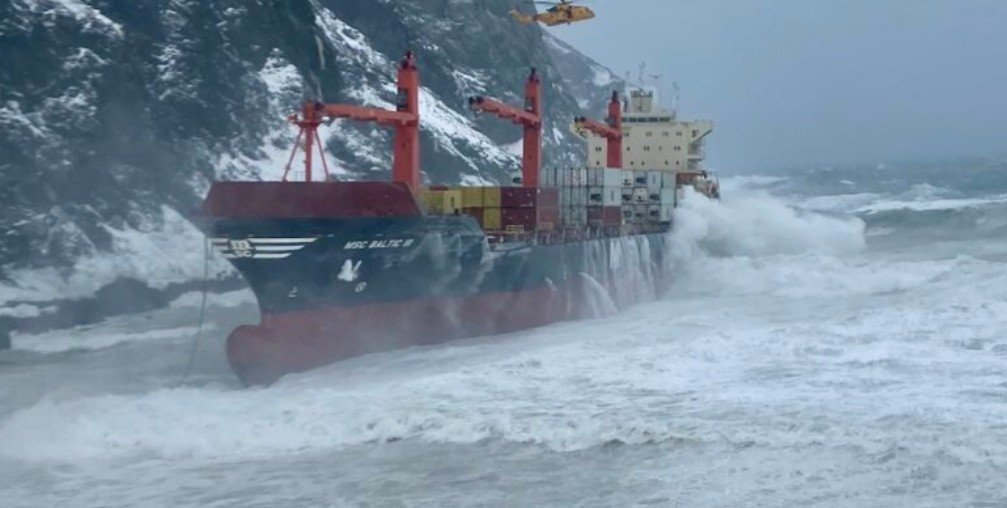
Authorities in Newfoundland and Labrador have approved a comprehensive salvage strategy to remove the grounded container vessel MSC Baltic III, marking a significant step in one of the region’s most closely watched maritime recovery operations.
Under the finalized plan, the stranded MSC boxship will be dismantled directly at the site, with salvage crews cutting the vessel into manageable sections before hauling them ashore for recycling. This approach has been selected as the safest and most environmentally responsible solution, minimizing the risks associated with refloating a structurally compromised hull in the harsh North Atlantic.
The containership ran aground in February last year, prompting months of technical assessments and maritime risk analysis. While initial options included refloating and towing, experts determined that severe structural damage and continuous exposure to strong Atlantic currents made those alternatives impractical. By opting for on-site dismantling, authorities aim to prevent further deterioration and reduce the likelihood of marine debris spreading along the coastline.
Preparatory operations are already underway, including site stabilization and advanced environmental protection measures. Salvage teams have focused on removing residual pollutants and securing the wreck area ahead of deploying heavy cutting equipment. The next phase will involve precision segmentation of the hull, followed by the controlled removal of each section using specialized lifting and hauling systems.
Officials emphasized that the salvage plan prioritizes both environmental safety and the protection of local fishing communities. The grounding site is known for volatile weather conditions and powerful currents, factors that have complicated earlier intervention efforts and reinforced the need for a controlled dismantling process.
The project is expected to span several months, with progress heavily dependent on weather windows and sea state conditions. Once sections of the vessel are brought ashore, contractors will manage the logistics of transporting the scrap for marine recycling and disposal.
The second phase of the salvage operation has been awarded to Resolve Marine, following a competitive tender process led by MSC Mediterranean Shipping Company and its insurers. Earlier response efforts, including fuel extraction and cargo removal, were conducted by T&T Salvage.
Read: Comoros-Flagged Cargo Ship Grounded Off Bosphorus, Istanbul
During 2025, salvage crews successfully discharged 409 out of the vessel’s 472 containers, many of them empty, though some contained hazardous materials. Attention now turns to the remaining 63 containers still onboard, most of which are damaged and waterlogged. These units are expected to be removed first, clearing the way for the cutting phase to begin.
As the bow section is gradually hauled ashore, crews will also open fuel tanks for additional clean-up operations. The dismantling will proceed in stages, with sections of the hull removed progressively as the operation advances,ensuring strict compliance with marine environmental protection standards and international salvage best practices.