Maersk and Seaspan Invest $75 Million in Container Ship Upgrades to Boost Fuel Efficiency and Cut Emissions
Global shipping leaders are accelerating efforts to modernize existing container vessels as the maritime industry prepares for stricter environmental regulations and rising operating costs. Maersk and Seaspan have launched a major vessel upgrade program valued at at least $75 million, targeting long-term chartered container ships with advanced energy-efficiency technologies, increased cargo capacity, and future-ready decarbonization solutions.
The initiative will initially cover 18 container vessels operating under long-term charter agreements with Maersk. The modernization program is designed to improve overall vessel performance by increasing fuel efficiency, expanding cargo carrying capacity, enhancing operational flexibility, and reducing greenhouse gas emissions. The investment reflects the growing trend among global shipping companies to extend the commercial life of existing fleets through advanced retrofits instead of relying solely on newbuild vessels.
A key element of the program focuses on four 13,000 TEU container ships, where the companies will implement a comprehensive retrofit package. Planned upgrades include the installation of a shaft generator to reduce auxiliary engine fuel consumption, optimization of the main engine for improved performance, a new high-efficiency propeller, and a pre-swirl device that enhances propulsion efficiency. The vessels will also be prepared with carbon capture readiness, enabling future compliance with evolving international emissions regulations.
Beyond propulsion improvements, the retrofit will increase cargo handling capability through the elevation of the lashing bridge and an increase in vessel deadweight. These enhancements are expected to improve slot costs by approximately 10–13 percent while delivering better fuel efficiency, stronger operational performance, and improved regulatory preparedness.
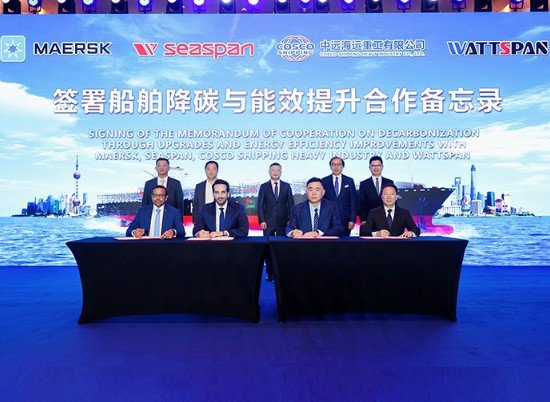
Supporting the initiative, Maersk and COSCO Shipyard have signed a one-year non-binding Memorandum of Cooperation with WattSpan, Seaspan’s strategic maritime technology and engineering joint venture. The collaboration will focus on vessel modernization, energy-efficiency improvements, and the development of maritime decarbonization technologies. The partners also plan to strengthen information sharing and prepare future upgrade projects under separate commercial agreements.
The program highlights the broader transformation underway across the global container shipping industry, where shipowners and operators are investing heavily in fleet optimization to meet tightening environmental standards while controlling operating expenses. Retrofitting existing vessels has become a strategic priority as shipping companies seek practical pathways toward lower emissions and greater operational efficiency.
Maersk has already begun converting several container ships to methanol dual-fuel capability, completing its first conversion in late 2024 as part of its long-term decarbonization strategy. Seaspan has also completed its first methanol dual-fuel vessel conversion under a separate partnership with Hapag-Lloyd, with five additional retrofits scheduled this year. That project builds on an agreement announced in 2023 with engine manufacturer Everllence (formerly MAN), covering the retrofit of 15 vessels with an option for an additional 45 engine conversions.
Meanwhile, Hapag-Lloyd continues to expand its own fleet modernization program, announcing plans in 2025 to upgrade more than 100 container vessels to reduce fuel consumption, lower emissions, improve cargo capacity, and decrease transportation costs per tonne-mile. Together, these investments underscore the shipping industry’s accelerating shift toward more efficient and environmentally sustainable maritime operations.